

Health
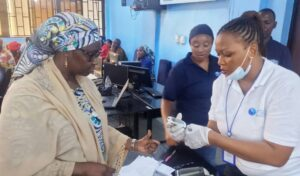
Hajiya Hadiza Moammed-Aliyu, NAN Editor-in-Chief (l), undergoing a free medical screening during a health check and lecture organised by the News Agency of Nigeria (NAN) Chapel of the Nigerian Union of Journalists (NUJ), in collaboration with the hospital in Abuja.
A medical doctor, Dr Fatima Kabiru, on Wednesday in Abuja urged journalists to prioritise regular health checks, warning that hypertension, diabetes and other chronic diseases could develop without obvious symptoms.
Kabiru, of Nisa Premier Hospital, Abuja, offered the advice during a free medical screening and health lecture organised by the News Agency of Nigeria (NAN) Chapel of the Nigerian Union of Journalists (NUJ), in collaboration with the hospital.
The exercise, held at the News Agency of Nigeria (NAN), featured health talks, blood pressure and blood sugar checks, medical consultations and interactive sessions. It was organised to promote preventive healthcare and encourage media practitioners to adopt healthier lifestyles.
Mr Segun Ojo, a representative of the hospital’s Business and Media Department, introduced the medical team and reaffirmed the hospital’s commitment to quality healthcare delivery.
Ojo said the team comprised experienced professionals responsible for health education, screening, laboratory investigations, and other clinical services.
He said the hospital brought them in to provide participants with appropriate medical attention and answers to health-related questions.
In her welcome address, NAN Editor-in-Chief Hajiya Hadiza Mohammed-Aliyu described the exercise as an important opportunity for journalists to understand health conditions, particularly hypertension, diabetes and cardiovascular diseases.
Mohammed-Aliyu urged participants to pay attention to the presentations, noting that some people could be living with high blood pressure without knowing it.
She said the exercise would also provide free screening, professional medical advice, and guidance on healthy diets and living.
In her lecture, Kabiru identified excessive thirst, frequent urination, persistent hunger, tiredness, weakness, and unexplained weight loss as possible warning signs of diabetes.
She said uncontrolled blood sugar can damage small blood vessels and nerves, causing numbness, tingling, and delayed wound healing, particularly around the feet.
She advised people living with diabetes to monitor their blood sugar, observe portion control, take prescribed medications and follow medical advice.
She stressed that the condition could be managed with appropriate care.
On cardiovascular diseases, Kabiru identified hypertension, diabetes, high cholesterol, physical inactivity, obesity and smoking as major risk factors.
She explained that cholesterol deposits could block coronary arteries, restricting blood supply to parts of the heart and potentially causing a heart attack.
She added that prolonged hypertension could force the heart to work harder, leading to enlargement of the heart muscle and other complications.
Addressing concerns about palpitations, she said the condition could result from emotional factors such as anxiety and nervousness, as well as medical conditions including thyroid disorders and anaemia.
On medication side effects, she advised patients experiencing reduced libido or other complications from hypertension drugs to consult their doctors rather than stop treatment without professional guidance.
She said stomach ulcers result from damage to the stomach lining, citing Helicobacter pylori infection as one possible cause.
She advised people with persistent abdominal discomfort to seek proper medical evaluation.
Kabiru also warned against indiscriminate use of herbal medications, noting that their composition and dosage were often uncertain and could expose users to serious complications, including kidney damage.
She added that low blood pressure was not necessarily dangerous for everyone but could require medical attention when accompanied by weakness, dizziness, tiredness and blurred vision.
Speaking on the screening, some NAN staff said it was timely, even though many of them were absent for the routine medical checks because of work schedules.
They said the screening allowed them to understand their health conditions instead of attributing every discomfort or illness to common infections such as malaria.
The staff commended management and the NUJ NAN Chapel for prioritising staff welfare and appealed for future medical outreach to enhance productivity.
In his closing remarks, NUJ Chairman, Mr Collins Hammer, thanked Nisa Premier Hospital and the medical team for the collaboration.
He described the exercise as necessary for journalists whose duties often expose them to stress and prolonged sitting.
Hammer said journalists frequently spent long hours on assignments and worked under pressure, making regular health checks and preventive healthcare essential.
“As we are leaving this place, let us take this message to our houses. It should not just be us. We should pass this message to other people who were not here,” he said.
He urged participants to share the health information with their families and communities, stressing that good health was essential for effective service delivery and productivity. (NAN)
A.I
Nov. 11, 2026
Tags: Dr Fatima Kabiru Hajiya Hadiza Moammed-Aliyu