

Africa, Environment
MILLIONS of small holder farmers across Africa could benefit from Artificial Intelligence-driven climate information and digital advisory services, says Microsoft.
Dr Jimaw Tadesse, Lead Microsoft AI for Goodlife in Nairobi, made this known in a statement made available to newsmen in Lagos on Saturday.
He revealed that increasingly unpredictable rainfall, prolonged dry spells and recurrent flooding continue to threaten agricultural productivity and rural livelihoods.
He said that for farmers whose families depended on seasonal harvests for food and income, uncertainty over when the rains arrived could determine whether a planting season would produce a successful harvest or financial hardship.
According to him, planting too early can expose seeds to prolonged dry spells, while delayed planting may leave crops with insufficient time to mature before the end of the rainy season, threatening household food supplies and farmers’ ability to invest in subsequent farming seasons.
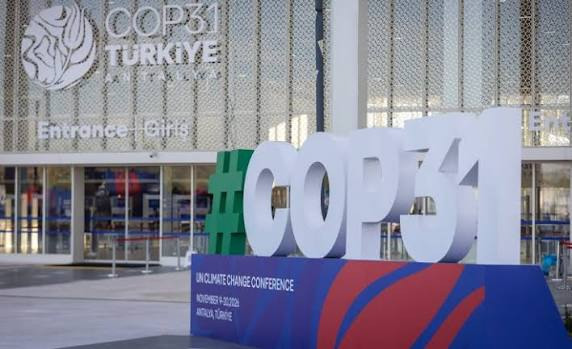
He added that as African governments prepared for the 31st Conference of the Parties (COP31), attention was increasingly turning to how AI and climate intelligence could help farmers anticipate weather-related risks and make informed decisions before they developed into agricultural crises.
Tadesse explained that in Nigeria, where millions of people depended on agriculture for their livelihoods, limited access to timely, reliable and location-specific climate information remained a major challenge.
“This is particularly for small holder farmers who often lack the resources to respond effectively to changing weather conditions.”
According to him, one emerging solution is the application of AI to improve the accuracy of weather forecasts and translate climate information into practical agricultural advice.
He revealed that Microsoft Research’s Probabilistic Bias Correction, which used machine learning to correct recurring errors in existing weather models, was one approach being explored to improve forecast reliability and help farmers make better-informed decisions about planting periods and anticipated dry spells.

He, however, said that experts noted that accurate weather predictions alone might not be sufficient to protect agricultural livelihoods as farmers also required guidance that considered local soil conditions, crop varieties, water availability, production costs and existing farming practices.
He explained that in Nigeria, the Digital Climate Advisory Services initiative, involving the Nigerian Meteorological Agency (NiMet) and MTN Nigeria, was seeking to bridge the gap by delivering location-specific weather information to farmers through mobile communication channels.
He said the initiative was designed to help farmers make informed decisions about planting, irrigation and harvesting by bringing meteorological information closer to agricultural communities.
”Similarly, Pula, Leadway Assurance, Bayer Foundation and government partners are advancing data-driven agricultural insurance and climate-risk management initiatives.
“There are aimed at strengthening the resilience of approximately 250,000 small holder farmers across eight Nigerian states,” he said.
The initiatives reflected growing recognition that climate information could become more valuable when connected to services that enabled farmers to act, including access to agricultural inputs, financial support, insurance and timely planting advice.
He said that earlier efforts by Nigerian agritech company, Farmcrowdy , also demonstrated how digital technology could connect farmers to financing and agricultural support, although its platform focused more directly on digital agricultural finance than AI-powered weather forecasting.
In spite of these developments, accessibility remained a significant obstacle to the effective adoption of agricultural technology across the continent.
“Language barriers, high connectivity costs, limited digital literacy and inadequate agricultural extension services can prevent farmers from accessing or understanding information that could improve their productivity and protect their investments.
“This has increased the importance of developing AI systems capable of communicating agricultural and climate information in languages farmers understand.
“One such effort is LINGUA Africa, supported by Microsoft’s AI for Good Lab and partners, which is advancing the development of AI tools that reflect Africa’s linguistic diversity”.
Tadesse revealed that in Nigeria, projects such as AgroLingua Africa were exploring how AI could deliver agricultural information in indigenous languages, including Hausa, Yoruba and Igbo, while HausaNLP’s DialectBridge was working to improve AI capabilities across regional Hausa dialects.
“The development of these tools is particularly relevant to rural farmers who may have limited access to digital information delivered exclusively in English.
“However, agricultural technology advocates emphasise that AI should complement rather than replace the knowledge and experience of farmers, agricultural researchers and extension workers, whose understanding of local farming conditions remain essential to effective decision-making.
“Beyond accessibility, fragmented agricultural records, inadequate institutional capacity and limited information-sharing among government agencies responsible for agriculture, meteorology and disaster management also threaten the effective deployment of AI-driven climate solutions”.
He noted in the statement that against this backdrop, African governments and development partners were being urged to prioritise agricultural data systems as essential infrastructure for climate adaptation.
“This would require adaptation financing to support interconnected agricultural databases, accessible digital infrastructure, affordable connectivity and continuous training for government analysts and agricultural extension workers,” he said.
He explained that responsible data-sharing arrangements and national ownership of agricultural information are also considered necessary to ensure that climate intelligence systems remain sustainable beyond individual development projects.
”Although AI cannot prevent droughts, replace irrigation infrastructure or eliminate the financial difficulties confronting small holder farmers, it could improve their ability to anticipate climate risks and respond before weather disruptions destroy their investments,” he said.
Tadesse noted that, “ for millions of African farming households, the ultimate value of such technology will, therefore, not be measured solely by how accurately it predicted rainfall, but by whether the information reached farmers early enough, in a language they understand, and provides practical guidance that helps them protect their crops, incomes and food security. (NAN)
A.I
Nov. 14, 2026
Tags: Dr Jimaw Tadesse Dr Jimaw Tadesse Microsoft