

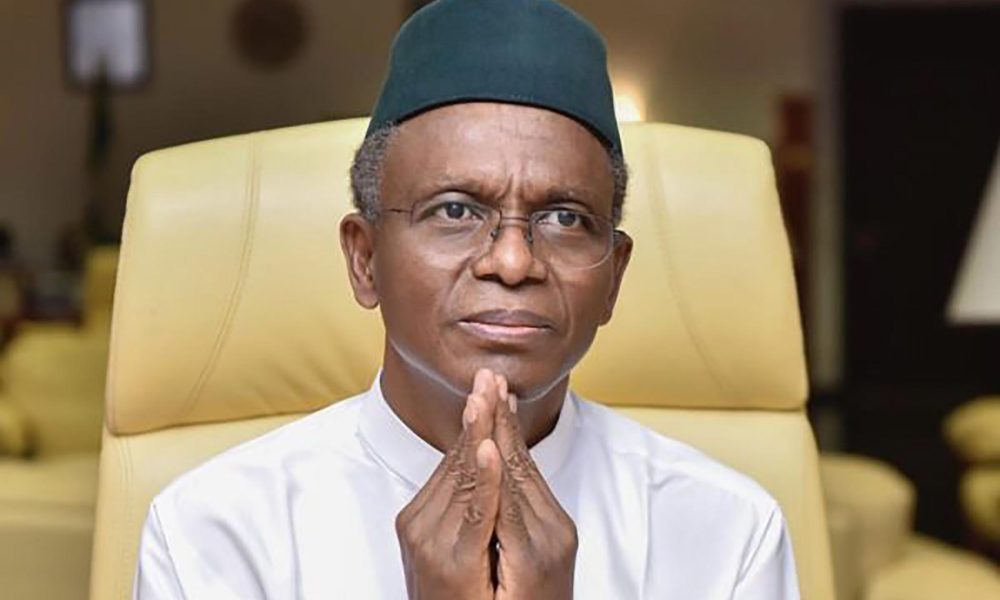
Hundreds of supporters of former Kaduna State Governor, Nasir El-Rufai, alongside former candidates and executives of the African Democratic Congress (ADC), have defected to the All Progressives Congress (APC), pledging their support for Governor Uba Sani ahead of the 2027 general elections.
The defectors, operating under the Coalition of El-Rufai Youth Groups, announced their decision on Thursday at the Nigeria Union of Journalists (NUJ) Press Centre in Kaduna.
Led by Ibrahim Khalil Dan Kasa, a former ADC House of Assembly candidate for Unguwan Sanusi Constituency, the group also announced its withdrawal of support for the ADC governorship candidate, Isa Ashiru Kudan.
Dan Kasa said the decision followed consultations across Kaduna State’s three senatorial districts. He claimed that the movement involved more than 2,000 ward coordinators, former candidates, political aspirants, youth mobilisers and party executives.
The group attributed its departure from the ADC to alleged internal divisions, marginalisation of members, disagreements over candidate selection and what it described as the absence of a clear policy direction within the party.
Dan Kasa particularly cited dissatisfaction with the party’s decision not to consider candidates reportedly recommended by El-Rufai for the Kawo and Doka Gabasawa State Assembly constituencies.
He also alleged that despite supporting Ashiru’s political campaign for seven months, the group had not seen a clearly defined manifesto or policy blueprint outlining the candidate’s plans for Kaduna State.
According to him, some members of Ashiru’s campaign team had also made disparaging remarks about El-Rufai’s political legacy despite relying on his supporters for grassroots mobilisation.
The group further complained about inadequate logistical, security and welfare support for its grassroots coordinators.
Explaining their decision to join the APC, Dan Kasa praised Governor Sani’s administration for what he described as its commitment to infrastructure development, rural transformation, continuity and inclusive governance.
He specifically commended the governor for completing more than 80 per cent of critical urban and infrastructure projects initiated by the previous administration.
The defectors also praised Sani’s efforts to promote religious and ethnic harmony and increase youth participation in governance.
Although the group said its respect for El-Rufai remained intact, Dan Kasa maintained that personal loyalty would not prevent its members from making independent political decisions.
The group subsequently announced the dissolution of its political support structures within the ADC and pledged to integrate its grassroots mobilisation and media networks into the APC.
Reacting to the development, the spokesperson for the ADC governorship candidate, Abdulwaheed Olayinka Adubi, played down the impact of the defections, describing them as part of the normal political process.
Adubi said the party continued to receive new members, including individuals moving from other political parties, and insisted that the departure of a faction of the El-Rufai support group would not weaken its political standing in the state.
He expressed confidence in the party’s grassroots presence and its ability to compete in the 2027 governorship election.
The latest movement represents another significant realignment in Kaduna’s evolving political landscape, where former political allies of El-Rufai are increasingly taking different positions ahead of the next general elections.
In October, Muhammad Bashir Sa’idu, a former commissioner for finance and chief of staff under El-Rufai, also defected from the ADC to the APC alongside former commissioner Jafaru Sani, former Senator Suleiman Abdu Kwari and other supporters.
Sa’idu claimed at the time that more than 200,000 ADC members and supporters had moved with his political group to the APC. That figure, however, has not been independently verified.
The latest defection could strengthen the APC’s grassroots mobilisation network if the defectors successfully transfer their political structures and supporters to the ruling party.
For Governor Sani, the development offers an opportunity to consolidate support across the state ahead of the 2027 governorship election and strengthen the APC’s campaign machinery.
The governor had previously announced that the party was raising its projected vote target in Kaduna from two million to three million following earlier defections.
However, the actual electoral impact of the latest movement will depend on whether the defectors can translate their claimed membership and political networks into votes at the polls.
For the ADC, the departure of former candidates, party executives and youth mobilisation groups presents a challenge to its organisational strength, particularly at the grassroots level.
Nevertheless, the party’s dismissal of the development suggests it does not consider the defections a decisive setback.
The unfolding realignments highlight the growing competition among political parties to secure influential figures, local structures and voter support as preparations for the 2027 elections intensify.