

By Ogundele Eniola
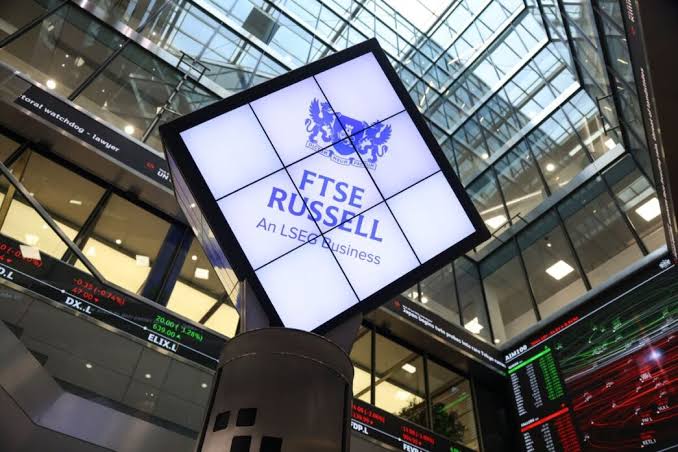
Nigeria is set to return to the FTSE Russell Frontier Market classification on September 21, 2026, marking a major development for the country’s capital market after it was removed from the index series in 2023.
The reclassification will move Nigeria from its current “Unclassified” status back into the global frontier-market universe, following improvements in foreign exchange liquidity, capital repatriation and overall market accessibility.
Nigeria’s 2023 removal was largely linked to difficulties faced by international investors in converting naira into foreign currency and repatriating investment proceeds.
The challenges meant that although foreign investors could enter the Nigerian market, they faced uncertainty over their ability to exit and transfer their funds abroad.
FTSE Russell’s latest assessment concluded that Nigeria had made sufficient progress in addressing the concerns that led to its previous exclusion.
The index provider also reviewed the country’s transition from a T+2 to T+1 securities settlement cycle, determining that the change had not created significant settlement, operational or funding challenges for international investors.
The return is expected to improve Nigeria’s visibility among global fund managers, particularly those whose investment strategies track FTSE Russell’s frontier-market benchmarks.
READ ALSO; Foreign investors pull back as domestic funds drive NGX rally
However, the reclassification does not automatically guarantee a surge in foreign capital.
Foreign investors accounted for only 10.79 per cent of trading on the Nigerian Exchange during the first seven months of 2026, with domestic investors continuing to dominate market activity.
Nevertheless, analysts expect Nigeria’s return to the index to improve international visibility and potentially encourage more global investors to reassess Nigerian equities.
The development also comes against the backdrop of strong performance on the Nigerian Exchange.
The NGX recorded a N1.91 trillion increase in market capitalisation on August 31, extending a recent rally that has coincided with renewed optimism over Nigeria’s return to the FTSE Frontier Market universe.
Much of the rally has so far been driven by domestic investors, potentially creating room for additional demand if foreign participation increases following the reclassification.
Greater international participation could improve market liquidity, increase demand for Nigerian stocks and provide companies with broader access to capital for expansion.
However, Nigeria’s return to the frontier market classification does not by itself resolve the economic challenges that influence foreign investment decisions.
International investors are expected to continue monitoring the naira, inflation, interest rates, economic growth, corporate earnings, political stability and the ease of moving funds into and out of the country.
The Federal Government has indicated that it ultimately wants Nigeria to progress beyond frontier-market status and achieve Emerging Market classification.
Such a move would require sustained improvements in market liquidity, regulation, transparency, investor participation and accessibility.
For now, the September 21 reclassification represents a significant step in rebuilding Nigeria’s position within the global investment community.
After being removed from the FTSE frontier indexes because of market-access concerns, Nigeria is preparing to re-enter the investment universe—giving the country another opportunity to convince international investors that its capital market is increasingly accessible and ready for busine