
“Capital Cannot Rescue a Business That Was Never Built to Scale” – Sunday Dare Tells Global Investors in London

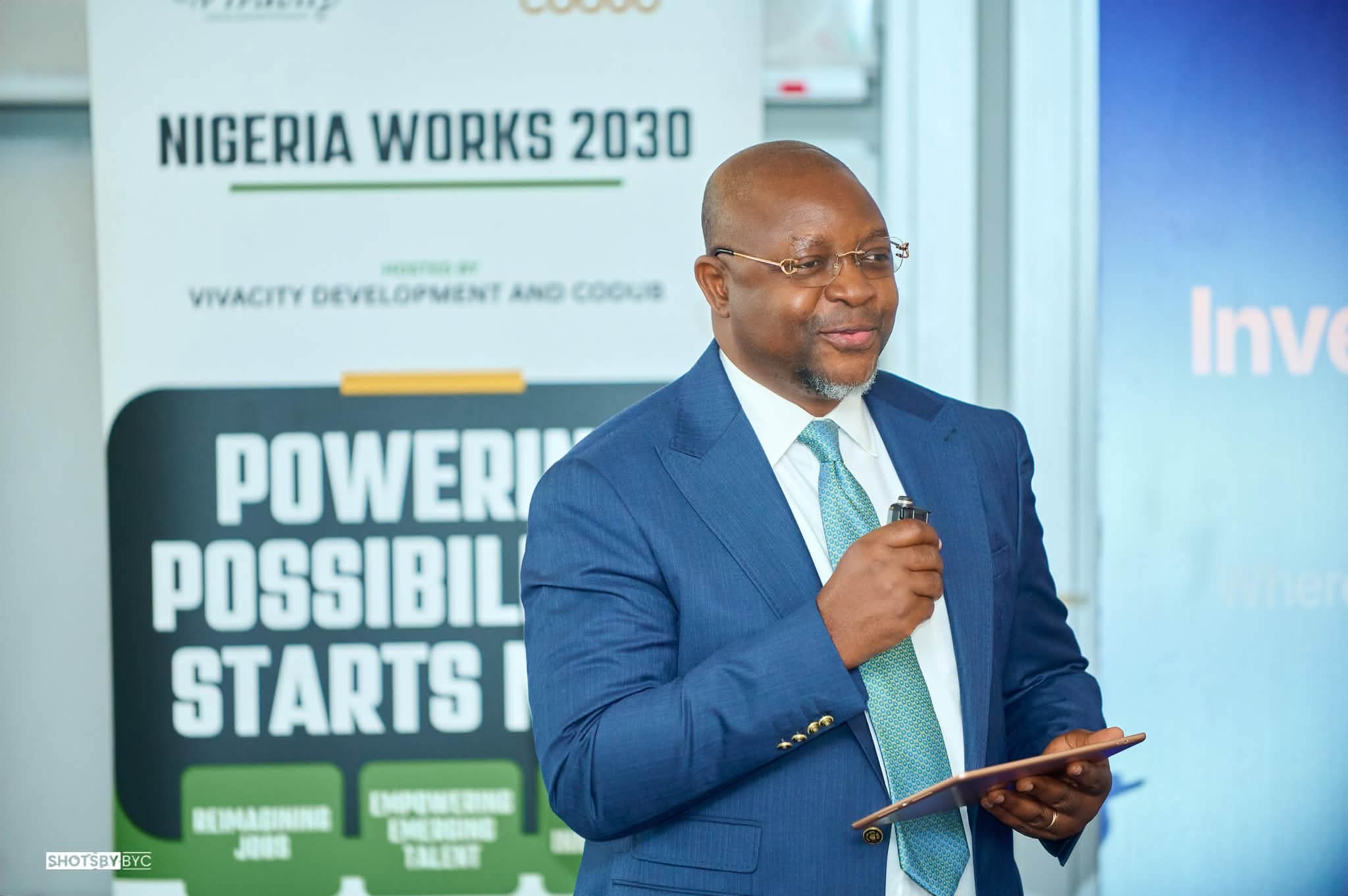
LONDON — Nigerian public policy expert and presidential adviser Sunday Dare has challenged entrepreneurs, governments and investors to look beyond ambitious ideas and short-term successes, warning that neither capital nor market size can compensate for a weak institutional foundation.
Dare delivered the keynote address at the 2026 Investors Connect held at Imperial College London on Thursday, September 10. His presentation, titled “Building for Global Scale: The Venture Architecture That Attracts Institutions and Funds,” examined what businesses and governments must do to turn promising ideas into sustainable, investable institutions.
“Scale is not simply a function of ambition; it is a function of architecture,” Dare declared, stressing that a good idea or successful pilot should not automatically be mistaken for a scalable enterprise.
According to him, funding remains essential to growth, but money alone cannot transform an inadequately designed business.
“Capital is indispensable to growth, but capital does not automatically create scalability. It accelerates what has already been designed and built to scale,” he said.
Dare also cautioned entrepreneurs against confusing market reach with sustainable growth, noting that a large customer base means little unless an organisation can convert demand into access, transactions, trust and lasting value.
“The real question is not simply whether the market exists, but whether you have built an enterprise capable of serving that market at scale,” he stated.
He urged start-ups to pursue strategic partnerships instead of attempting to develop every capability internally. According to him, businesses can expand more quickly by leveraging existing infrastructure, expertise, networks and market access.
“An idea may begin with an individual, but if it is to achieve genuine scale, it must eventually become bigger than its originator,” Dare said. “Institutional capital ultimately wants to invest in an institution, not permanent dependence on an individual.”
Turning to the role of government, Dare said the state does not always have to drive expansion directly. Its most important responsibility may be to establish policies, regulations and infrastructure that allow private enterprises to flourish.
“Government does not always have to be the entity doing the scaling. Sometimes its most consequential role is to create the conditions in which others can scale,” he explained, adding pointedly: “Regulatory risk is investment risk.”
Dare further warned that Nigeria’s large population would not automatically translate into economic prosperity unless citizens were equipped with the skills, opportunities and productive capacity required to create value.
“Population by itself is not an economic advantage,” he said. “Demography becomes an advantage when people are equipped with the skills, opportunities and productive capacity to create value.”
On international expansion, he argued that global scale does not mean imposing an identical business model on every country. Successful enterprises, he said, must preserve their core value while adapting to the economic realities, consumer behaviour and institutions of individual markets.
Concluding, Dare said the ultimate measure of innovation is not merely whether an idea works once, but whether it can deliver repeatedly, reach significantly more people and survive changing market conditions.
“The real test of an idea is whether the architecture exists for it to work under greater pressure and complexity and long after the individuals who first conceived it have moved on,” he said.
Dare, is the Special Adviser to President Bola Ahmed Tinubu on media & Public Communications/ Spokesperson. He was Nigeria’s former Minister of Sports.