

If anyone should ask me now what is the centrepiece of Nigeria’s foreign policy, I am afraid I will not be able to coherently and confidently offer a response! This is despite the fact that I read – and still read – Political Science, teach it, and was a Foreign Affairs correspondent for two reputable national newspapers for many years. In school and out of it, International Relations has always been my forte.
I know that Africa used to be the centrepiece and cornerstone of Nigeria’s foreign policy; is it still so? . A country’s foreign policy is its soul – you live it; you breathe it; it is your very essence. That was the case especially with the Murtala Muhammed/Olusegun Obasanjo regime, which many still regard as the golden age of Nigeria’s foreign policy.
Who can easily forget the Nigerian Head of State, Gen. Murtala Muhammed’s “Africa has come of age” speech at the first extraordinary meeting of the Organization of African Unity (OAU), on January 11, 1976, in Addis Ababa, Ethiopia? The speech, fiery as Murtala himself, was a fitting response to a patronizing letter from the United States president, Gerald Ford, opposing the Soviet-backed Movement for the Popular Liberation of Angola (MPLA), which had just assumed power in Angola after decades of gruesome guerrilla warfare against Western-backed Portuguese colonialism.
Ford had ordered African leaders to follow in America’s footsteps. Nigeria not only led the African continent to say “No” to the Yankees’ directives, it also followed it up by mobilizing all level of support (short of putting boots on ground) for the liberation movements in the entire southern Africa sub-continent – Mozambique, Angola, Namibia, Rhodesia (now Zimbabwe) and South Africa itself. Murtala was assassinated in a failed military coup a month after (on February 13, 1976) – any connection? – but the speech lives after him.
Go to hell!
Let us quote a little from the historic “Go to hell” speech: “… When I contemplate the evils of apartheid, my heart bleeds and I am sure the heart of every true-blooded African bleeds…We cannot pretend that we are unaware of the machinations and conspiracies against our Continent by not just the racists of South Africa but even by those who pretend to be the friends of this Continent but whose sole interest is in what they can get out of us…Not content with its clandestine support and outpouring of arms into Angola to create confusion and bloodshed, the United States president (Gerald Ford) took upon himself to instruct African heads of state and government, by a circular letter, to insist on the withdrawal of Soviet and Cuban advisers from Angola as a precondition for the withdrawal of South African and other military adventurers. This constitutes a most intolerable presumption and a flagrant insult on the intelligence of African rulers…Africa has come of age. It is no longer under the orbit of any extra-continental power. It should no longer take orders from any country, however powerful. The fortunes of Africa are in our hands to make or mar. For too long have we been kicked around: for too long have we been treated as adolescents who cannot discern their interests and act accordingly. For too long has it been presumed that the African needs outside ‘experts’ to tell him who are his friends and who are his enemies. The time has come when we should make it clear that we can decide for ourselves; that we know our own interests and how to protect those interests; that we are capable of resolving Africa problems without presumptuous lessons in ideological dangers which, most often than not, have no relevance for us, nor for the problem at hand…”
Every line of that speech packed punches delivered masterfully and with precision at Western imperialism. The result: A bloodied nose for Gerald Ford and his co-travellers! The way some Nigerian newspapers celebrated the speech, especially with screaming headlines such as “Shut up; Get out – Nigeria tells US president” added petrol to an inferno. That was when Nigeria was Nigeria and leadership was properly so-called!
We went on from there without looking back, throwing our weight behind the liberation struggles in southern Africa; throwing everything into the battle, including the nationalization of British economic interests (British Petroleum, in July 1979), boycott of the 1978 Commonwealth Games in Edmonton, Canada, and mobilization of the entire Nigerian citizenry in support of the struggle.
Our involvement was so phenomenal that we were accorded the same status of a “Frontline state” as the other free African countries sharing borders with the southern African countries still under colonial rule and apartheid colonialism.
Pax Nigeriana
Should we say that Nigeria’s foreign policy was more dynamic and Afro-centric under the military than it has been since the return to “civilian rule” – to quote the exact words (and aptly so!) of President Bola Ahmed Tinubu in his last Democracy Day speech on June 12 this year? It was also under the military that we intervened and restored, almost single-handedly, peace to war-torn Liberia and Sierra-Leone in what came to be known as Pax Nigeriana? After that, we appear to have gone to sleep! Or is it that we have, since the start of the Fourth Republic in 1999, reviewed and shifted the focus of our foreign policy?
What is the new focus: Economic diplomacy – the 4D framework of Demography, Development, Democracy and Diaspora? With the collapse of the Non-Aligned Movement (NAM), in which we played an important role, have we elected, like India and some other Third World countries, to now pursue a policy of multi-alignment?
Two months ago, I commented on the yet-to-abate xenophobic attacks on Nigerians and some other African nationals in the former apartheid enclave of South Africa. See “Many angles to the xenophobic attacks in South Africa”, in my TREASURES column in the New Telegraph newspaper edition of Wednesday, 12 May, 2026). In it, I played the devil’s advocate, offering possible explanations for why the present generation of South Africans are behaving like the Biblical Pharaoh that knew not Joseph. I also asked Nigerians to introspect and remove the log in their own eyes.
That we are members of the same family does not qualify anyone to dangle a leg riddled with sores over our dinner! “A o kii ba’ni tan ka fa ni n’itan ya! Familiarity should not breed contempt. You cannot build a house and turn around to destroy it. I ended by advocating that both countries, being the powerhouses of black Africa and its hope for resurgence, must find a way around this catastrophe. It is, therefore, with sadness and a heavy heart that I report that, rather than improve, relations between both countries appear to have deteriorated!
Tinubu snubs Ramaphosa?
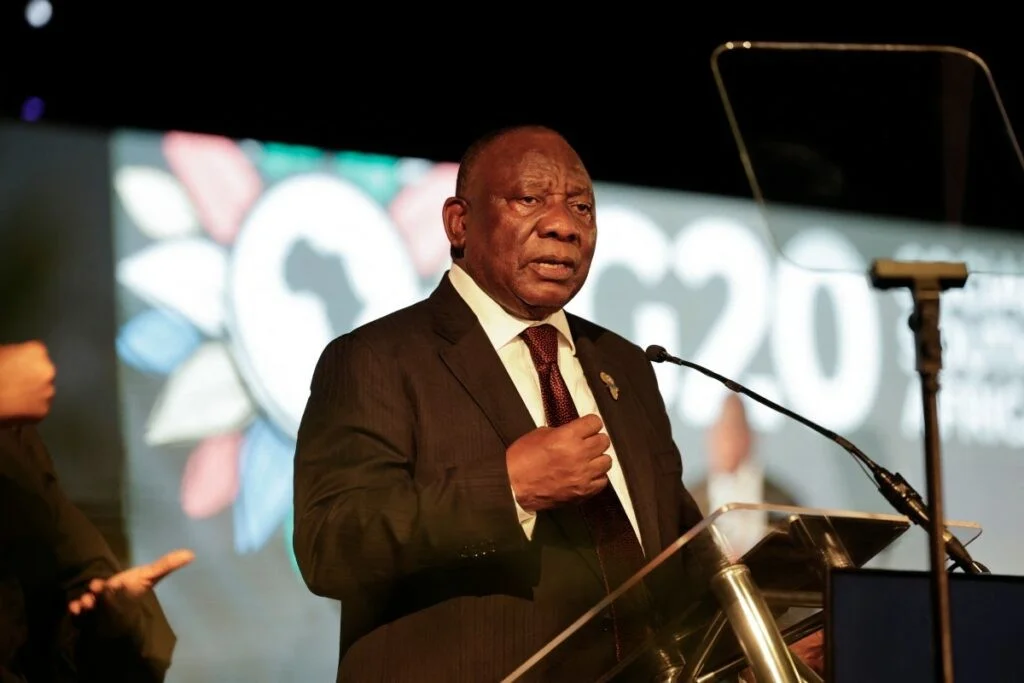
Last week, the South African president, Cyril Ramaphosa, sent a special envoy to his Nigerian counterpart, President Bola Ahmed Tinubu, but Tinubu snubbed the envoy and directed him to a lesser government official. Is it that Tinubu felt that sending an envoy, instead of Ramaphosa coming in person, was an insult? Or that Tinubu doubts Ramaphosa’s sincerity or is unhappy with his handling of the burning issue so far? Can it be that Tinubu thinks a higher level of representation – a face-to-face between the two leaders – was preferable?
I asked Google: When a president sends a special envoy to another president, what does it mean in diplomatic terms?
Google: “Sending a special envoy means a president is opening a direct, high-level channel to address a specific, urgent, or sensitive issue outside normal diplomatic routines…. It shows the issue is a top priority for the head of state and demands immediate attention…It works around standard embassy staff when regular channels are too slow, rigid, or public…It creates a private way to negotiate, especially if official relations are tense, frozen, or distrustful…The envoy focuses on one exact goal—such as a peace negotiation, a hostage release, or delivering a confidential message—and returns once the job is done…The envoy usually has a close personal or political bond with the sending president, which signals that their words carry the direct authority of the leader.”
Can a sitting president decide to refuse to meet a special envoy sent by another president?
Google: “A sitting president can legally and diplomatically refuse to meet a special envoy from another head of state at any time, as sovereign immunity and domestic executive authority grant absolute discretion over the president’s personal schedule and diplomatic engagements. Under international diplomatic custom and the Vienna Convention on Diplomatic Relations, receiving a foreign representative is a matter of state courtesy and political choice, not a legal obligation… A president may decline a meeting to express severe displeasure over a foreign government’s actions, policies, or failure to address a bilateral crisis. If a sending nation has not met prior diplomatic preconditions, or if the rank/nature of the delegation does not align with the gravity of the issue, a president may demand the envoy deal with lower-level cabinet officials instead…Envoys arriving without proper diplomatic clearance, inadequate preparation, or during domestic political crises can be turned away or rerouted to a foreign minister…”
What are the implications when a sitting president refuses to meet an envoy sent by another president?
Google: “It typically functions as a sharp diplomatic rebuke, signaling deep political dissatisfaction, strained bilateral relations, or a protest over specific national grievances…Rejecting a face-to-face meeting is a deliberate choice to withhold presidential-level validation. It visually and formally communicates that relations are strained or that the sending government’s recent actions are unacceptable… Redirecting an envoy to a lower-ranking official—such as a Minister of State or Foreign Affairs Minister—strips the visit of its highest-level prestige. It indicates that the matter is being handled through bureaucratic or standard diplomatic channels rather than high-level political negotiation… Refusing an envoy allows a leader to project strength and resolve to their domestic audience. It signals to citizens at home that the government is taking an uncompromising stance on contentious issues (but) rather than resolving a dispute, the refusal can temporarily freeze progress, requiring lower-level diplomats to work harder behind the scenes to rebuild a baseline of trust…The media visibility of a snub often forces both governments into public posturing, making immediate compromise harder until tensions cool down.”
Will Ramaphosa fight back?
Can a president whose special envoy is rebuffed by another president retaliate? How?
Google: “Yes, a president can diplomatically and politically retaliate when another nation rejects a special envoy, using measures ranging from diplomatic downgrades to economic sanctions. While a physical or military retaliation for a diplomatic snub violates international law, nations have several standard tools to show displeasure.”
Google listed some of such retaliatory actions to include diplomatic retaliation (expulsion or recall of diplomats), downgrading relations, economic retaliation (e.g. imposition of sanctions, restriction of trade and visas, withholding of aid), political and strategic retaliation (e.g. public condemnation, use of international forums like the United Nations to criticize the other government’s behavior, block international support, among others.
Has Africa truly come of age?
My take: Nigeria and South Africa are too important to the future of Africa and the Black race in general to let this feud escalate beyond control. Both leaders should revisit Murtala Muhammed’s rebuke to Gerald Ford and demonstrate that Africa has come of age and can settle its differences without external interference.
Nigeria must not forget its huge investment and sacrifice in the entire southern Africa sub-region.
Let us, therefore, resist the temptation of throwing the baby away with the bathwater.
South African leaders also owe it a duty to teach their citizens its country’s history. Was it not only as recent as 1994 that the country, with the help of Nigeria and others, threw away the crippling, crushing, and dehumanizing yoke of apartheid colonialism, thereby affording them their present platform? A river that forgets its source…
* Former editor of PUNCH newspapers, Chairman of its Editorial Board and Deputy Editor-in-chief, BOLAWOLE was also the Managing Director/Editor-in-chief of The Westerner news magazine. He writes the ON THE LORD’S DAY column in the Sunday Tribune and TREASURES column in New Telegraph newspaper on Wednesdays. He is also a public affairs analyst on radio and television.