

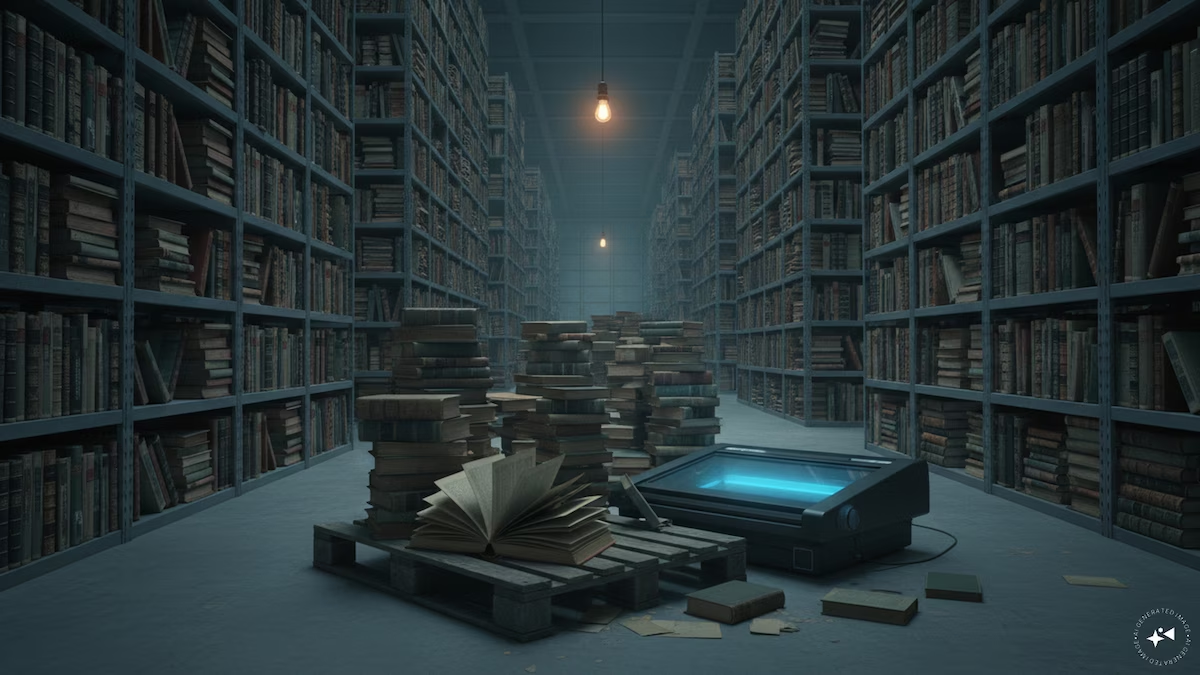
AI companies are running out of clean data to train their models on. Their surprising fix? Buying up old, printed books by the millions. A 2025 court …

 1/8
1/8As the internet becomes saturated with AI-generated content, developers are turning back to physical bookshelves. These printed works serve as a “premium source” of authentic human writing needed to build smarter, more capable AI models.
 2/8
2/8AI companies are keen to avoid “model collapse,” a phenomenon where AI performance degrades after being repeatedly trained on AI-generated text. To prevent this feedback loop, they are hunting for “clean” data found in books published before the generative AI boom of 2022.
 3/8
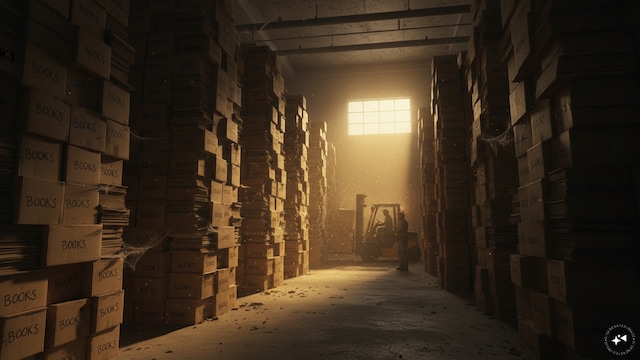
3/8Books published before 2022 are highly prized because they offer professionally edited, human-written text guaranteed to be free of AI contamination. This has turned old libraries and warehouses into the tech industry’s new “gold mines.”
 4/8
4/8In June 2025, a landmark US federal court ruling gave AI companies the “green light” to use legally purchased physical books for training without author permission. The courts distinguish these purchased physical copies from pirated digital libraries, encouraging companies to buy books by the million.
 5/8
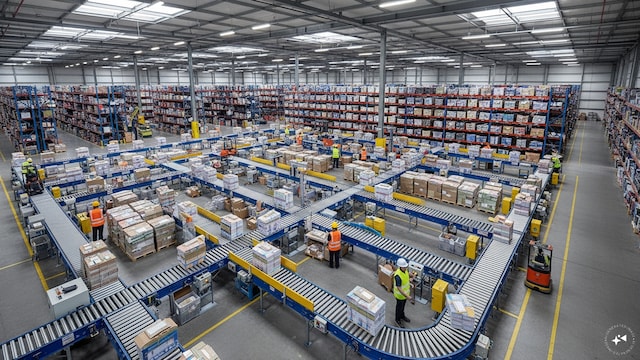
5/8Demand for physical books has surged, with some booksellers reporting a five-fold increase as of April 2026. Databases such as ISBNdb now market themselves as industrial-scale suppliers, facilitating transactions of up to one million books at a time.
 6/8
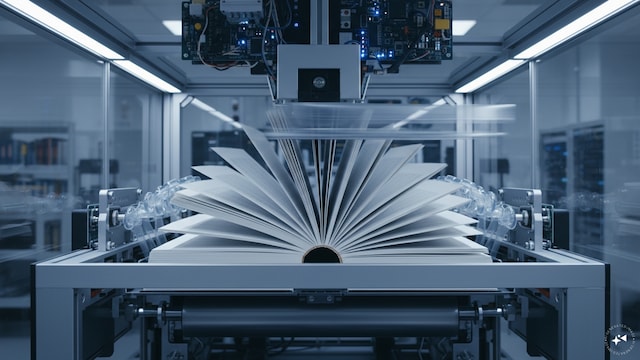
6/8To digitise these books at high speed, companies use a destructive scanning process. By removing the spine, high-speed scanners can process hundreds of pages in minutes which is a method far faster and cheaper than non-destructive alternatives.
 7/8
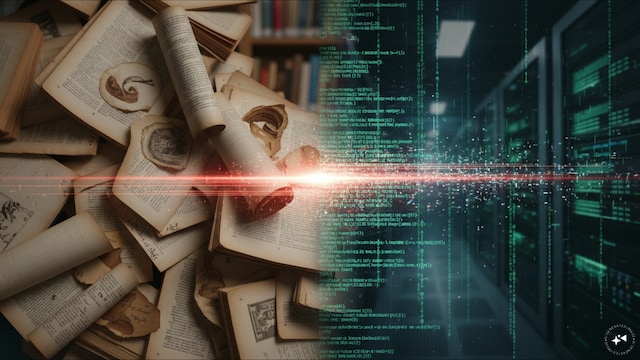
7/8Once the spines are removed and the pages scanned, optical character recognition (OCR) converts the images into digital text for AI training. The original physical pages, now separated and scanned, are typically recycled or discarded.
 8/8
8/8While these books live on in AI models, their destruction as physical objects raises concerns about the scarcity of rare and out-of-print works. Aware of the “optics problem” of being seen as book destroyers, many AI companies operate under strict NDAs to keep their identities and the scale of these harvests hidden from public view.