

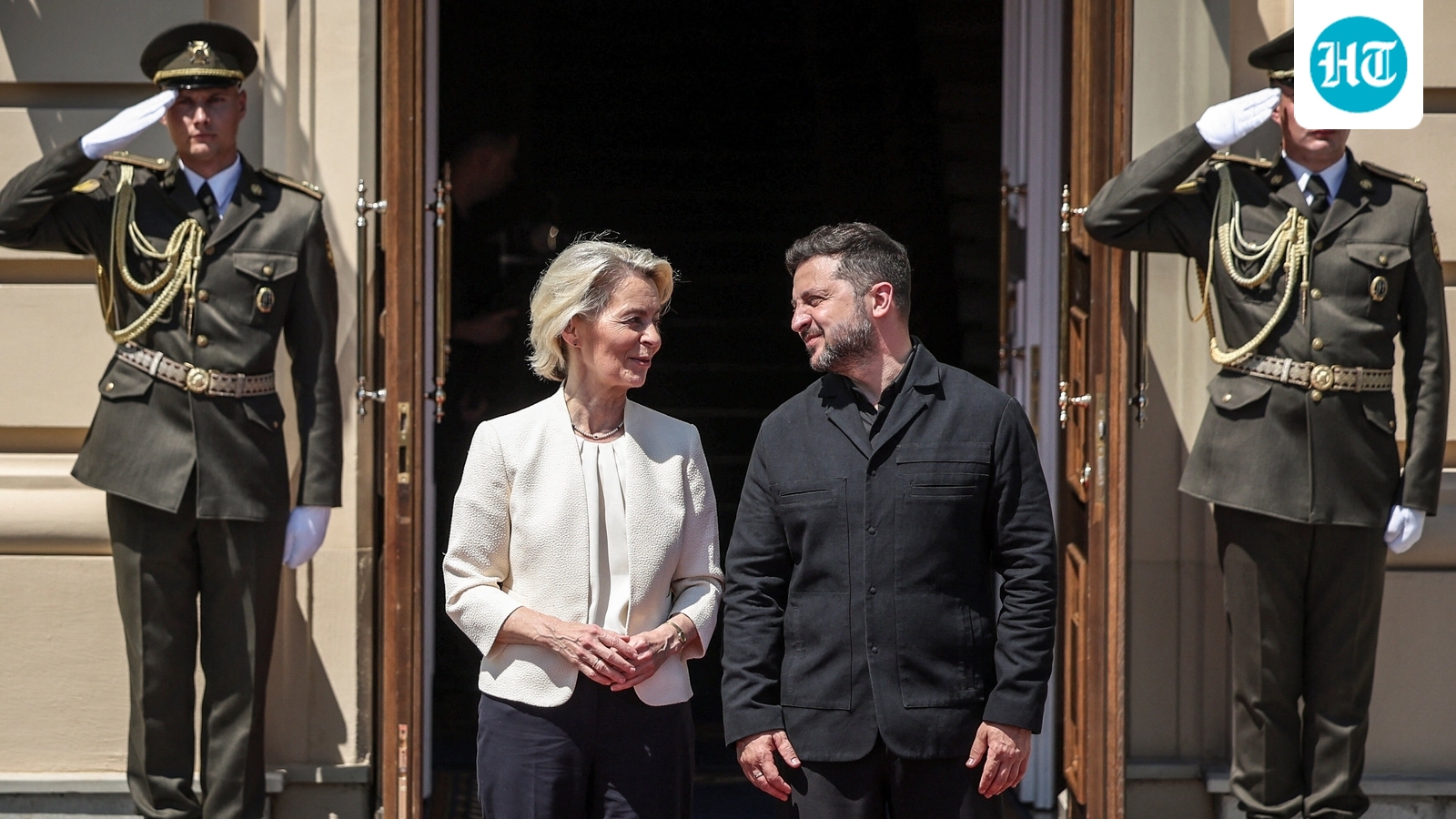
THE BAROQUE stucco of Kyiv’s Mariinsky Palace is aquamarine blue, and the blue folders handed over to Volodymyr Zelensky and Ursula von der Leyen, the president of the European Commission, were just a few shades darker. The signing ceremony on July 15th marked the launch of a new deal that will provide €10bn ($11.5bn) for joint production of drones and long-range missiles. The financing is part of the European Union’s €90bn Ukraine Support Loan.
But the leaders’ smiles concealed an awkward fact: although Ukraine’s ultimate ambition is membership in the EU, it is dragging its feet on the reforms required. Negotiations on an initial “fundamentals cluster”, including provisions on the rule of law, democracy, corruption-fighting and public administration, formally opened in June. But Ukraine was supposed to have started passing the necessary legislation six months earlier, under a much-trumpeted ten-point plan signed last December by the EU’s enlargement commissioner and Ukraine’s minister for European integration. Instead only four bills have so far been put forward by the government, and just two have been passed by parliament. One of those, watchdogs complain, is riddled with loopholes. A scorecard published by a coalition of Ukrainian NGOs rates the progress at 15 out of 100.