

CEUTA, Spain—By Sunday morning, nearly all of the tens of thousands of migrants who flooded into this tiny Spanish city were gone. But the trauma of the sudden influx lingered.
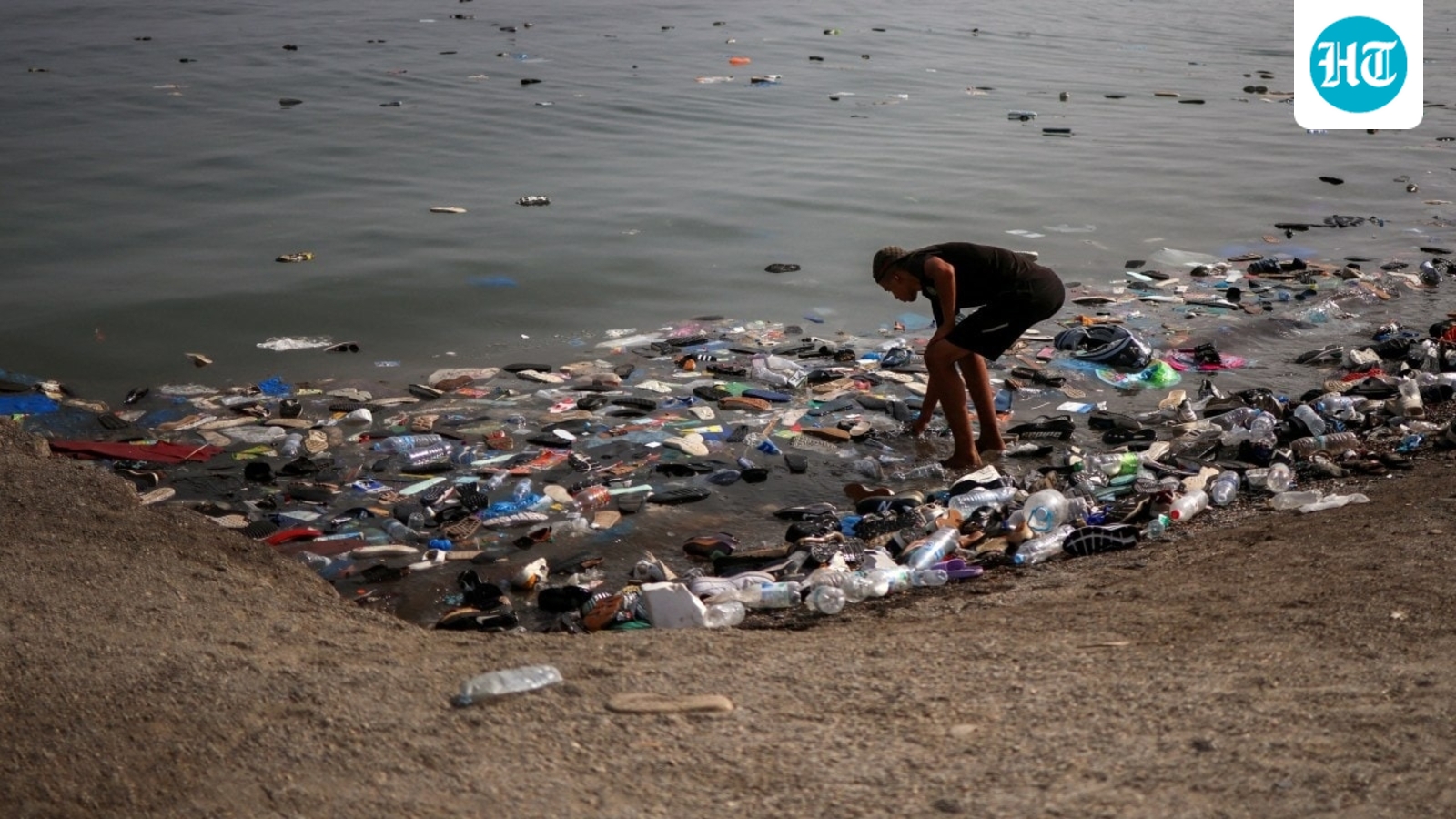
Off a Mediterranean beach, countless shoes bobbed in the blue waters, abandoned by migrants who had swum to this slice of Spanish territory along the Strait of Gibraltar, just off the coast of Morocco. Evaristo Casares Fernandez, a sanitation worker, noted that it would fall to him to clean up the floating mass of footwear.
“It used to be a very tranquil place,” said Casares Fernandez, 55 years old, a Ceuta native. “That’s no longer the case.”
For centuries, this city has been a multiethnic melting pot where European and African, Muslim and Christian cultures converged, and coexisted mostly peacefully. Its mix of Spanish military fortifications, churches, mosques and even a synagogue is unusual for North Africa.
Now, it is a symbol of the chasm that migration has opened between the two continents.
For several chaotic days, migrants flooded into Ceuta, overwhelming the border guards and sending many of the 80,000 permanent residents to the safety of their homes. Shops closed, the enclave’s bustling street life receded.
Mercedes Cabrera Lafaro was hoping to reopen her beauty parlor now that the large groups of young men were no longer roaming the streets. But the 67-year-old said the fear remained that such an influx could happen again.
“We feel abandoned,” she said, echoing a widely shared grievance among Ceutíes, as the locals call themselves.
Spanish authorities estimated that 60,000 migrants breached the border and entered Ceuta, but some residents said it seemed like more. Madrid deployed police and military forces to round up most migrants and escort them to the border with Morocco by Saturday evening.
The migrant incident highlights the tense relationship between Spain and Morocco, which doesn’t recognize the Spanish claim to Ceuta. Migrants say Morocco allowed them to cross the border for reasons that remain unclear. Morocco’s government didn’t respond to questions seeking comment.
Political analysts have pointed to Spanish Prime Minister Pedro Sánchez’s recent visit to Algeria, Morocco’s neighbor and rival. Algeria supports a rebel faction trying to gain independence for Western Sahara, a former Spanish colony that Morocco claims as its own. Though Spain recognizes Morocco’s claim, Sánchez’s visit to Algiers to upgrade ties rankled Morocco’s government.
Under Sánchez, Spain has also taken a critical line toward Israel, which has relations with Morocco through a Trump-brokered diplomatic pact. Spain has also irked the Trump administration by banning U.S. military aircraft involved in the Iran war from its airspace and refusing to allow American forces to use joint bases on Spanish territory for the conflict.
“The mass migration undermines Sánchez and curries favor [for Morocco] with the U.S. and Israel,” said Geoff Porter, president of consulting firm North Africa Risk Consulting.
A previous migrant crisis in Ceuta was tied to the decision by Spain to allow medical treatment for an insurgent leader from Western Sahara. In May 2021, thousands of Moroccans swam or scaled border fences into Ceuta, much as they did last week.
The crises have shattered Ceuta’s sense of security.
“We have become victims of a geopolitical chess game that’s bigger than us,” said Rashid Sbihi, a spokesman for a union representing most Ceuta officers of the Guardia Civil, a police force.
The seven-square mile enclave on a peninsula jutting into the Strait of Gibraltar has been Spanish since 1580. Today, close to half the population are Spanish Christians who came from mainland Spain, with about the same number of Arab Muslims. There are also small minorities of North African Jews and Hindus from what is now Pakistan.
“All these communities live in harmony,” said Sbihi, an Arab Muslim.
Ceuta’s unique location has long been an advantage for Spain, giving it a foothold on the southern coast of the Strait of Gibraltar, the strategic waterway that separates the Mediterranean from the Atlantic Ocean.
Yet its geographical position as a magnet for illegal immigration has turned what was once an asset into a liability—and a flashpoint for political tensions.
Morocco has been making a renewed push to claim Ceuta and Melilla, another Spanish enclave in North Africa. The kingdom has received a sympathetic ear from the U.S. An April congressional report on national security acknowledged Morocco’s longstanding claim on the two enclaves. It urged Secretary of State Marco Rubio to encourage diplomatic talks on their future.
Spanish politicians have descended on Ceuta in recent days to criticize Sánchez for allowing the migrant influx. “Any responsible government in the face of a crisis of this nature would have resigned,” said Alberto Núñez Feijóo, leader of Spain’s conservative Popular Party, in an interview.
The Sánchez government has defended its migration policies and blamed smuggling mafias instead. On Saturday, Spanish officials said they began installing a makeshift, inflatable barrier that extends out some 500 yards from a breakwater where many of the migrants had swum to the enclave.
The Spanish prime minister’s office didn’t respond to a request for comment.
The tensions in Ceuta are far from over. Late Sunday, locals clashed with anti-Muslim protesters who arrived from mainland Spain, prompting the police to deploy.
Moroccan authorities were also on high alert. At the border town of Fnideq, anti-riot vehicles were stationed along the beach where the migrants had swum to Ceuta.
Write to Benoit Faucon at [email protected]