
Spokane wildfire update: Which US states are seeing air quality impacts and are under warnings?

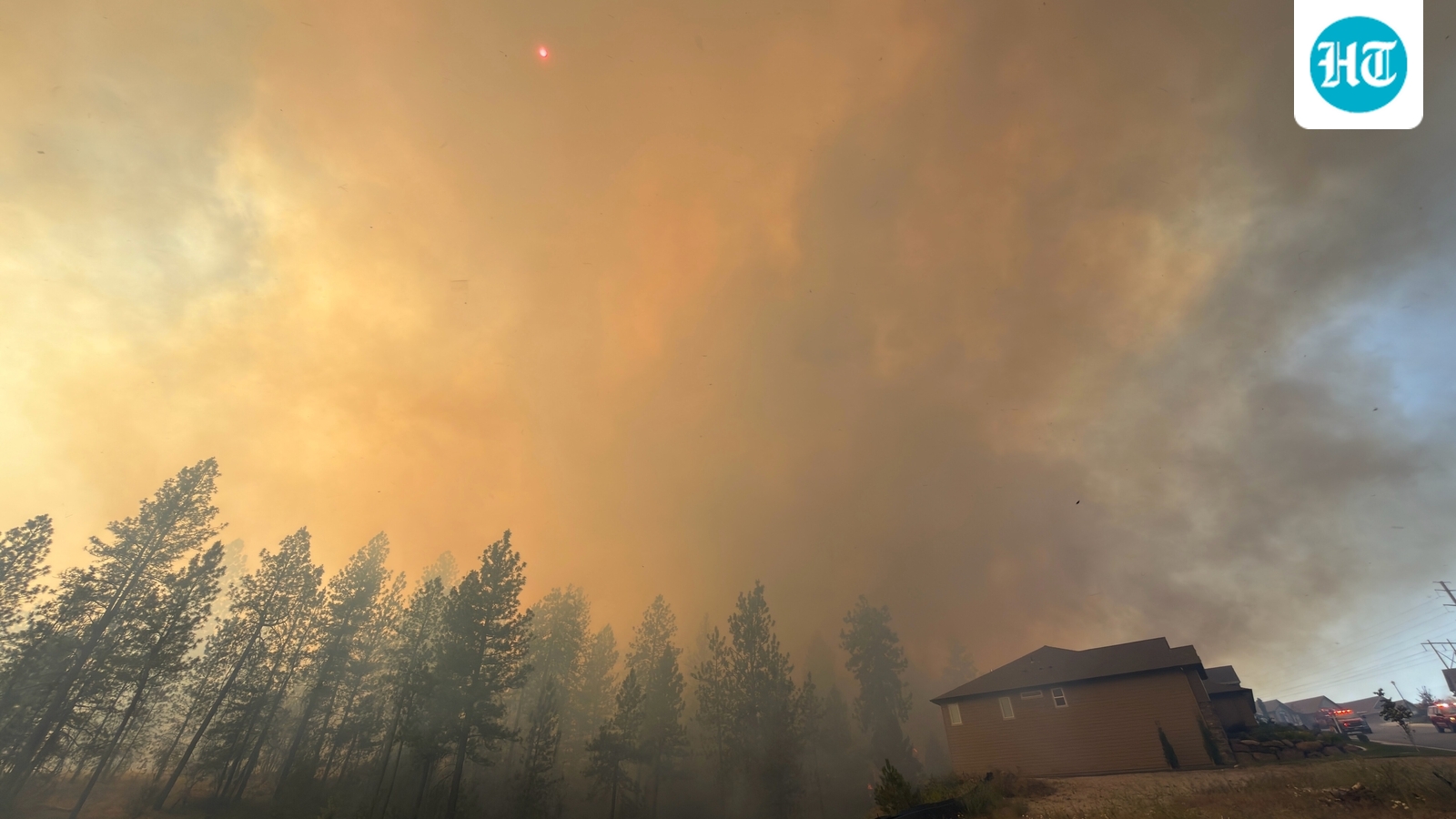
Authorities are struggling to contain several large wildfires in the Spokane, Washington area that have forced roughly 65,000 people from their homes, destroyed hundreds of buildings, and sent plumes of toxic smoke into the air.
Which states are affected?
Three wildfires have consumed more than 12.5 square miles of land in and around Spokane, the second largest city in the state, according to the National Interagency Fire Center. The blazes were 0% contained as of August 3.
The fires have burned between 700 and 1,100 structures, including homes and businesses, according to the California Interagency Incident Management Team 7, which is leading the response effort.
Officials said the numbers were preliminary as crews were still working to contain the wildfires.
States with active wildfires:
- Washington – Spokane Complex fires, plus a fire about 80 miles northwest of Spokane that has burned about 210 square miles
- Idaho – Grassland fire in western Idaho, burning alongside the Oregon fire, caused by lightning
- Oregon – Same grassland fire extends into eastern Oregon; a separate fire in the Stinkingwater Mountains has burned about 336 square miles.
Also Read: Super El Nino update: Which 4 US states could be buried in snow this winter?
Which states are seeing air-quality impacts?
As per AccuWeather, satellites showed a massive area of smoke stretching eastward as the sun rose on Monday morning. AccuWeather’s air quality maps showed “very unhealthy” air quality in several areas, with pockets of “dangerous” air quality in northeastern Washington.
States and areas seeing air-quality impacts:
- Washington – Spokane’s AQI was 218, with an Air Quality Alert issued (Air quality was expected to remain very unhealthy in the city through Tuesday night)
- Oregon – “Very unhealthy” air quality, including in Portland
- Idaho – Among the hardest-hit areas through midweek
- Utah – Smoke stretching in from the north
- Montana – Smoke extending eastward
- Northwestern Colorado – Smoke reaching this region, with haze as far as Denver
- Nevada – Poor air quality extending south
- South Dakota – Hazy conditions in Rapid City
- Minnesota – Haze reaching as far as Minneapolis
AccuWeather Meteorologist Breanna Grill said, “The thickest smoke is forecast across Washington, Oregon and Idaho through midweek, reducing air quality in cities like Spokane, Portland and Seattle.” She added that poor air quality is also expected to spread into Nevada and Utah. Hazy skies could also reach parts of the Plains and central Rockies, including Rapid City, Denver and even Minneapolis later this week.
The Idaho Department of Environmental Quality said in a statement, “Air pollutants can cause breathing difficulties for children, the elderly, as well as persons with respiratory problems. Those individuals who are sensitive to increased particulate matter or smoke are encouraged to avoid prolonged or strenuous outdoor activity.”
Also Read: ‘Sadly our apartment…’: Residents flee Spokane County wildfire as devastating videos emerge
Which states are under warnings?
As per AP, the National Weather Service issued several types of warnings across the region:
Air quality warnings:
Eastern Washington
Eastern Oregon
Western and central Idaho
Western Montana
Red flag fire warnings:
Utah
Montana
Western Nebraska
The weather in the fire-hit areas is expected to remain sunny and dry well into the week, with temperatures rising above 90 degrees Fahrenheit on Wednesday.
Since the start of summer, more than 1,000 fires have burned about 450,000 acres in Washington, said Dave Upthegrove, the state’s commissioner of public lands, at a news conference on August 1. “This is an extraordinary fire season,” he said. “This is not normal.”