

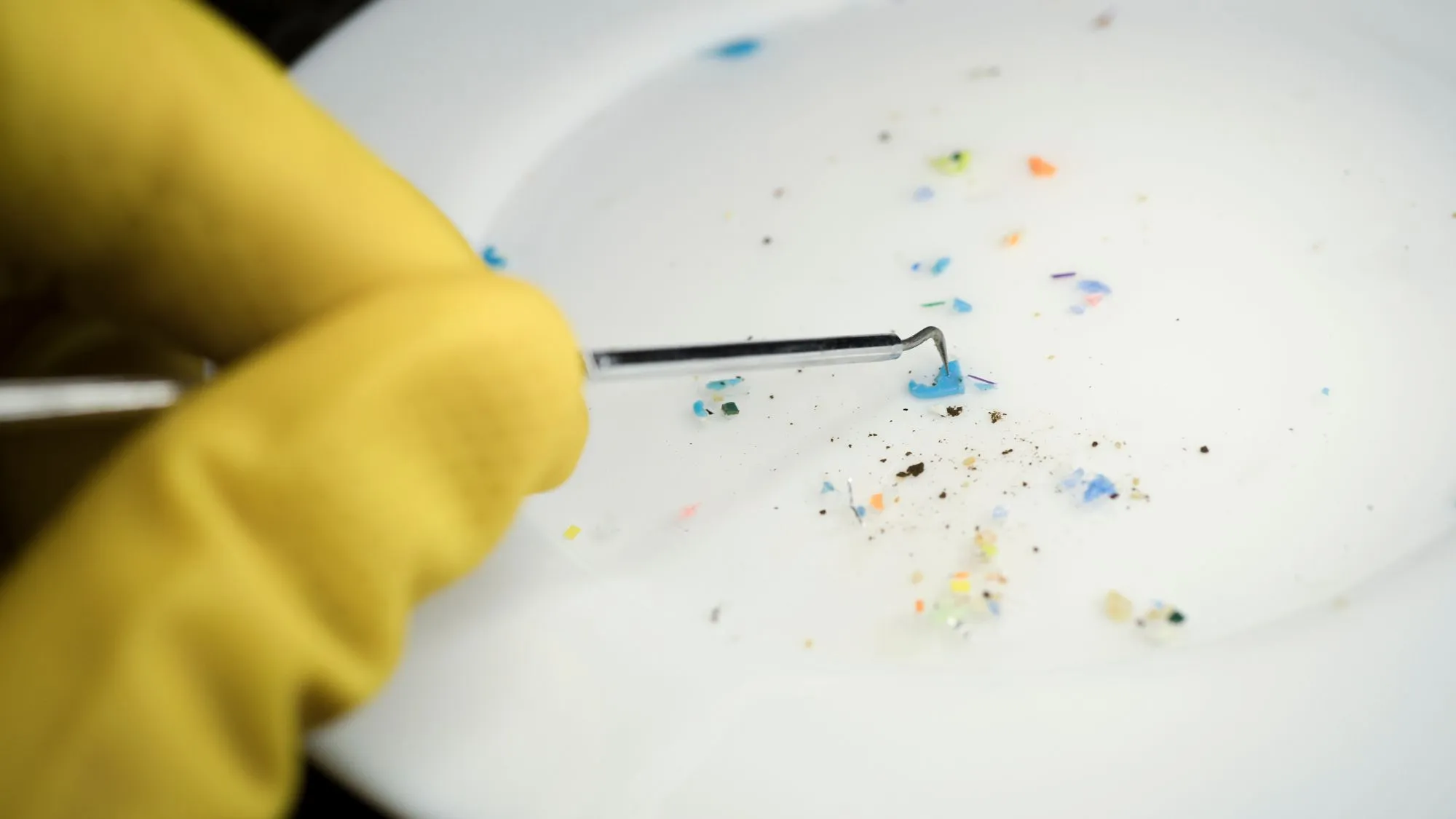
Research teams around the world are hard at work trying to come up with ways to eliminate microplastics from all the stuff they’re in. It’s a tall task, one that’s likely going to need to be approached from different angles using a variety of technologies and methods.
One such method, devised by researchers in the Czech Republic, who published their work in npg Asia Materials, involves using a tiny robotic swarm that moves through soil and water, filtering out microplastics as they go.
Microplastics are defined as plastic particles that are five millimeters or smaller. We’ve rapidly gone from having no idea they existed to finding out they were in absolutely everything, from food, all of our products, and all of our organs. They can damage soil, harm wildlife, disrupt nutrient cycling, and move easily throughout the food chain and throughout our environments.
They’ve been found everywhere, from isolated caves to the deep-sea. Since they get wedged between soil minerals and organic matter, removing them is a bit more difficult than just removing a plastic bottle that’s been floating in the ocean.
Scientists Built Tiny Robots That Could Remove Microplastics From Soil and Water
The researchers’ solution comes in the form of microscopic MXene particles, a material with a surface that naturally attracts plastic. They coated those particles with magnetic nickel nanoparticles that let external magnetic fields make the little robots spin and tumble around through environments teeming with microplastics.
In lab tests, the robots removed around 94 percent of polystyrene and 89 percent of PET from water in about an hour. In the lab soil test, the micro-robots removed 81 percent of polystyrene and 89 percent of PET.
Actual oceans and rivers and lakes and whatnot would be much more challenging environments for the micro-robots to roam around within. The researchers need to test them within real-world environments to determine how well they can handle a beating from harsh elements.
It’s going to need to, because it could be that the best way to fight a microscopic problem is with a microscopic solution.