

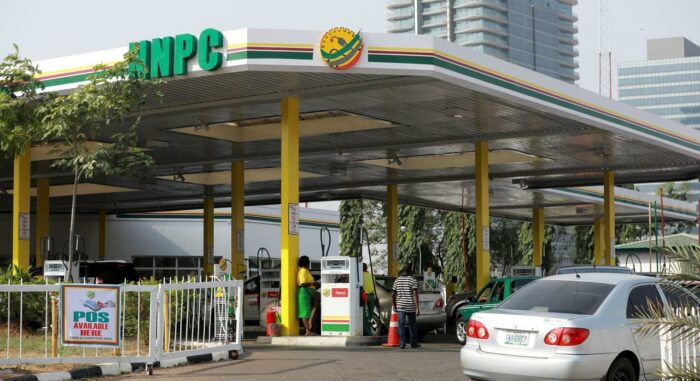

The Nigerian National Petroleum Company Limited (NNPCL) has reduced the pump price of Premium Motor Spirit (PMS), popularly known as petrol, at its retail outlets, marking another shift in Nigeria’s downstream petroleum market amid growing competition among fuel marketers.
The latest price adjustment saw the national oil company’s retail stations in Abuja and surrounding areas lower the pump price from N1,335 per litre to N1,299 per litre, representing a reduction of N36 per litre.
The development comes just days after Dangote Refinery-backed MRS filling stations announced a N40 reduction in the price of petrol, further intensifying competition in the deregulated downstream sector.
New pump price takes effect
Checks at several NNPCL retail outlets confirmed that the new price has already taken effect in parts of the Federal Capital Territory.
Motorists who visited NNPCL stations in Lugbe, Kubwa Expressway, Wuse Zone 3 and other locations in Abuja were seen purchasing petrol at the new rate of N1,299 per litre.
The reduction is expected to provide modest relief for consumers who have continued to grapple with high transportation and living costs driven largely by rising fuel prices since the removal of petrol subsidy.
Although the N36 reduction may appear modest, industry observers believe it reflects increasing competition among marketers following the expansion of local refining capacity.
Dangote Refinery’s influence
The latest adjustment by NNPCL follows a similar move by MRS Oil Nigeria Plc, one of the marketers supplied by Dangote Refinery.
MRS had, two days earlier, reduced its petrol pump price by N40, bringing the retail price down to N1,265 per litre at its filling stations.
The move was widely interpreted as part of the ongoing price competition triggered by Dangote Refinery’s growing presence in Nigeria’s fuel supply chain.
Since the refinery began supplying petroleum products to the domestic market, fuel marketers have increasingly adjusted their prices in response to changing ex-depot costs and market conditions.
Analysts say the competition is gradually replacing the era of uniform pricing, giving consumers the opportunity to compare prices across different filling stations.
Pressure on other marketers
The reduction by NNPCL is also expected to mount pressure on other independent and major fuel marketers that continue to sell petrol between N1,300 and N1,310 per litre.
With consumers becoming increasingly price-sensitive, marketers maintaining higher prices may be forced to review their rates to remain competitive.
Industry experts note that the deregulation of the downstream petroleum sector allows marketers to determine prices based on supply costs, logistics and market realities, making price adjustments more frequent than in the past.
This has resulted in varying pump prices across different cities and even among filling stations located within the same area.
What the price cut means for Nigerians
For many Nigerians, the latest reduction offers a measure of financial relief, particularly for commercial transport operators and private vehicle owners whose operating costs have surged over the past year.
Lower fuel prices could also help ease transportation fares if the reductions are sustained across the country, although experts caution that broader economic factors, including foreign exchange rates and crude oil prices, will continue to influence petrol pricing.
Market watchers expect further adjustments in the coming weeks as competition among marketers intensifies and local refining capacity continues to improve.
While consumers have welcomed the latest development, many hope additional price reductions will follow to lessen the burden of rising living costs and support economic activities nationwide.