

By Andra Oriyomi
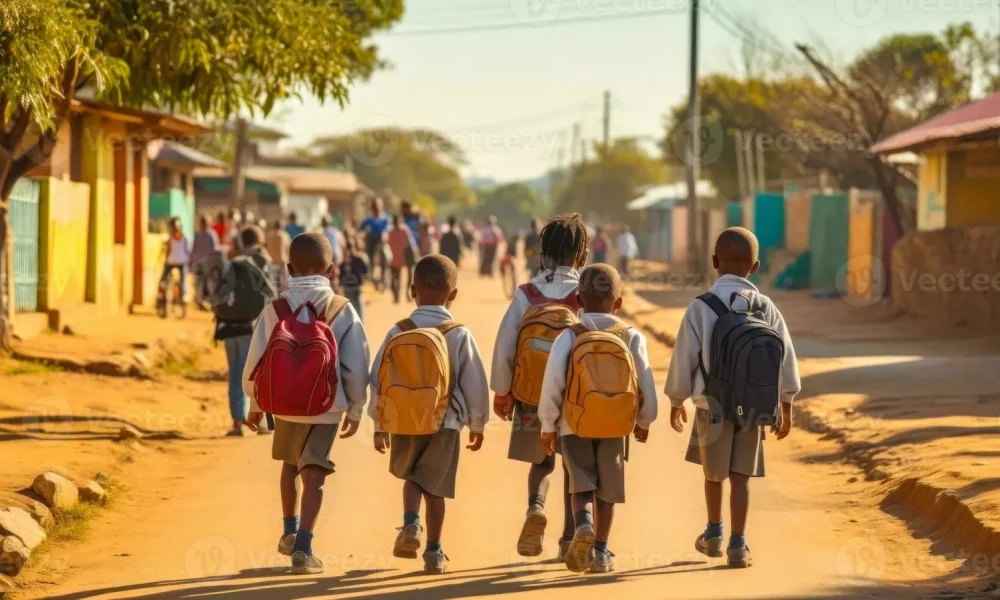
A Nigerian child entering Primary One today could be joining the workforce around 2040. By then, artificial intelligence, automation, biotechnology, robotics, renewable energy and digital industries are likely to have transformed the nature of work far beyond what many schools currently prepare children to handle.
That raises a difficult question for Nigeria’s education system: Are schools preparing today’s children for the economy of 2040, or for a world that has already disappeared?
The answer may lie not only in what happens inside classrooms, but in the curriculum documents, textbooks, laboratories and examination systems that determine what teachers are expected to teach and what students are expected to remember.
Nigeria’s education system therefore requires more than another minor curriculum adjustment. It needs a fundamental reassessment of what children learn, how knowledge is applied, how science is taught, what textbooks contain and how learning is assessed.
Schools can only teach within the framework provided by the system. When curriculum content, instructional materials and examinations reward memorisation more than application, even the most committed teacher operates within severe limitations.
This is consequently not simply a teacher problem. It is a system-wide education challenge.
The Nigerian Educational Research and Development Council (NERDC) occupies a central position in the development of Nigeria’s curriculum and instructional framework.
The council has undertaken curriculum reforms, including revisions to Basic and Senior Secondary curricula, with greater emphasis on competencies and skills and efforts to reduce subject overload.
But an important question remains: Will changing curriculum documents automatically change what happens in Nigerian classrooms?
A genuinely transformed education system requires simultaneous changes in curriculum, textbooks, teacher preparation, school infrastructure, laboratories, digital access and examination methods.
Without those supporting structures, a new curriculum risks becoming another policy document that looks progressive on paper while classroom practices remain largely unchanged.
The Cockroach Is Not the Problem
Consider the familiar Biology lesson on the cockroach.
READ ALSO; Nigeria’s education system must go beyond university admission — Cambridge expert
There is nothing inherently wrong with teaching students about cockroaches, amoeba, plants or other organisms. Biology requires students to understand living systems and their relationships with the environment.
The problem begins when learning stops at memorising diagrams and labels.
A student may be able to draw a cockroach, identify its body parts and reproduce textbook definitions perfectly in an examination, yet struggle to explain the relevance of insects to agriculture, ecology, disease control, environmental management or scientific research.
That is not necessarily a failure of Biology. It is a failure to connect knowledge with application.
The same problem occurs across science education.
Laboratories Must Become Places of Discovery
Science laboratories should be spaces where students investigate questions, test ideas and learn how evidence is generated.
Yet practical science in many schools remains dominated by predictable experiments designed primarily around examination requirements.
A future-focused curriculum should expose students to practical investigations involving water quality, soil health, pollution, food production, renewable energy, electronics, data analysis and technology.
A student studying environmental science, for instance, should be able to collect and analyse water samples from a nearby community and investigate possible sources of contamination.
Agricultural science should connect classroom learning to food production, irrigation, soil management and agricultural technology.
Physics should not end with formulas. Students should encounter electricity, electronics, energy efficiency and emerging technologies.
The laboratory should be where students learn to ask: What is the problem? What evidence do we need? How do we test it? What solution can we develop?
What Should the Nigerian Child Learn?
At the primary level, children need age-appropriate exposure to digital literacy, financial literacy, communication, creativity, collaboration and problem-solving.
By Junior Secondary School, coding, entrepreneurship, critical thinking, digital design, environmental sustainability and practical technology should become increasingly normal components of learning.
At Senior Secondary level, Nigeria could offer more flexible pathways reflecting the realities of the modern economy.
The traditional division of children into rigid Science, Arts and Commercial categories may no longer adequately reflect the complexity of modern careers.
READ ALSO; Nigeria seeks stronger partnerships on education, digital creative economy
A student could be interested simultaneously in biology, programming and entrepreneurship. Another could combine engineering with creative design. Education should provide room for such combinations.
The Textbook Problem
Curriculum reform will have limited impact if textbooks remain centred on obsolete examples, rote learning and examination preparation.
Textbooks should become tools for investigation.
They should contain projects, experiments, case studies, research exercises, digital resources, problem-solving activities and examples drawn from Nigerian realities.
A child learning entrepreneurship should not encounter only stories about foreign corporations.
There should be lessons about Nigeria’s fintech companies, agricultural businesses, manufacturers, technology startups and creative industries.
Similarly, science textbooks should demonstrate how scientific principles are applied to Nigerian challenges.
The objective should be to make children see problems differently.
A polluted water source should not simply be something to complain about. It could become a research project.
When Examinations Become the Curriculum
One of the most powerful forces shaping Nigerian education is the examination system.
What examinations reward, schools tend to teach.
When students’ success depends heavily on reproducing predetermined answers, teachers and parents naturally focus on examination preparation.
This creates a cycle in which memorisation becomes more valuable than experimentation, creativity and independent thinking.
WAEC, NECO and other examinations remain important, but certificates should not be the only evidence of what a student can do.
A school leaver should ideally have a portfolio containing practical projects, research assignments, presentations, digital competencies, technical skills or other evidence of capability.
The Federal Ministry of Education, state education authorities, examination bodies, universities, teacher-training institutions, publishers, schools and employers must work together.
Curriculum developers need regular input from academics and industry leaders so that what students learn reflects emerging economic realities.
There is little value in introducing an ambitious digital curriculum in schools without electricity, computers, internet access or trained teachers.
Preparing for 2040
Artificial intelligence is already changing the workplace. Automation is redefining routine jobs, while employers increasingly value adaptability, digital competence, creativity, communication and the ability to solve unfamiliar problems.
Nigeria cannot prepare children for this environment by continually adding subjects to an already crowded timetable.
The objective is to ensure that studying the cockroach leads somewhere—to an understanding of biology, ecology, agriculture, public health, environmental management and potentially innovation.
Nigeria needs an education system that goes beyond producing children skilled in the art of cramming.
It needs a system that produces young Nigerians who can think critically, create, investigate, solve problems, build businesses, work with technology and compete in a rapidly changing global economy.
The child entering Primary One today deserves nothing less than an education designed for the world he or she will inherit—not the one Nigeria has already left behind.