

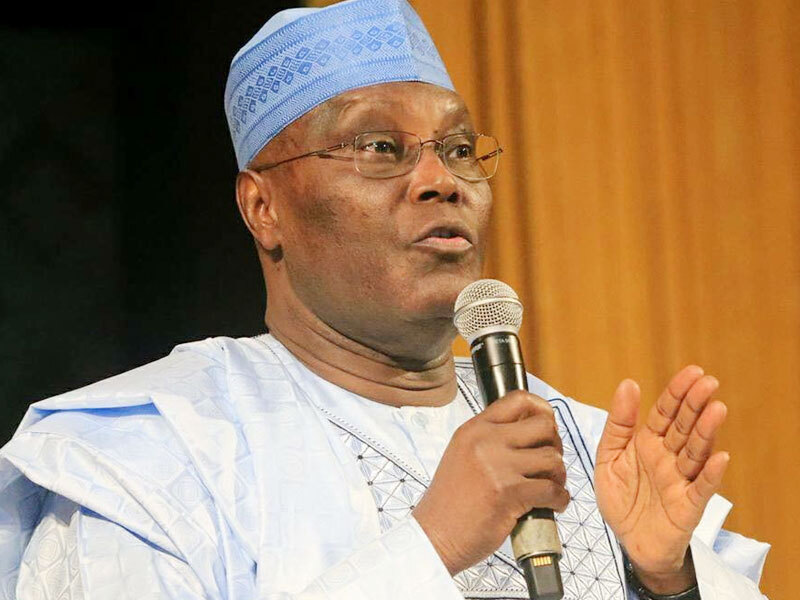
Former Vice President Atiku Abubakar has accused the Bola Tinubu administration of eroding Nigerians’ purchasing power, warning that households are increasingly unable to afford homes, vehicles and essential household assets.
In a statement issued Saturday by his Senior Special Assistant on Public Communication, Phrank Shaibu, Atiku referenced the Central Bank of Nigeria’s latest Household Expectations Survey, which he said laid bare the mounting economic pressures facing families.
According to the CBN data, buying conditions registered 28.7 points for motor vehicles, 28.9 points for consumer durables, and 30.0 points for buildings and landed property – figures Atiku argued debunked official claims of improved economic wellbeing.
“These are not figures manufactured by the opposition. They are the verdict of Nigerian households captured by the Central Bank under President Tinubu’s own government,” he said.
The former vice president linked the findings to escalating food costs, citing the SBM Jollof Index, which estimates that preparing jollof rice for a family of five now costs an average of ₦29,578 – a sum that consumes a substantial chunk of the ₦70,000 minimum wage.
“What the figures tell us is simple: Nigerians are being priced out of decent living. A home is becoming a fantasy. A car is becoming a luxury. Household appliances are increasingly beyond reach,” Atiku added.
The 2023 presidential candidate also criticised the administration’s emphasis on macroeconomic indicators such as GDP growth and foreign reserves, insisting that such metrics must translate into tangible improvements in citizens’ living standards.
The Federal Government has continued to defend its economic reforms, including petrol subsidy removal and foreign exchange market liberalisation, maintaining that while the transition period poses difficulties, the measures are essential for long-term stability, investment attraction and sustainable growth.
Atiku, however, countered that the true measure of any economic policy lies in its impact on ordinary citizens and their capacity to meet basic needs and improve their quality of life.