

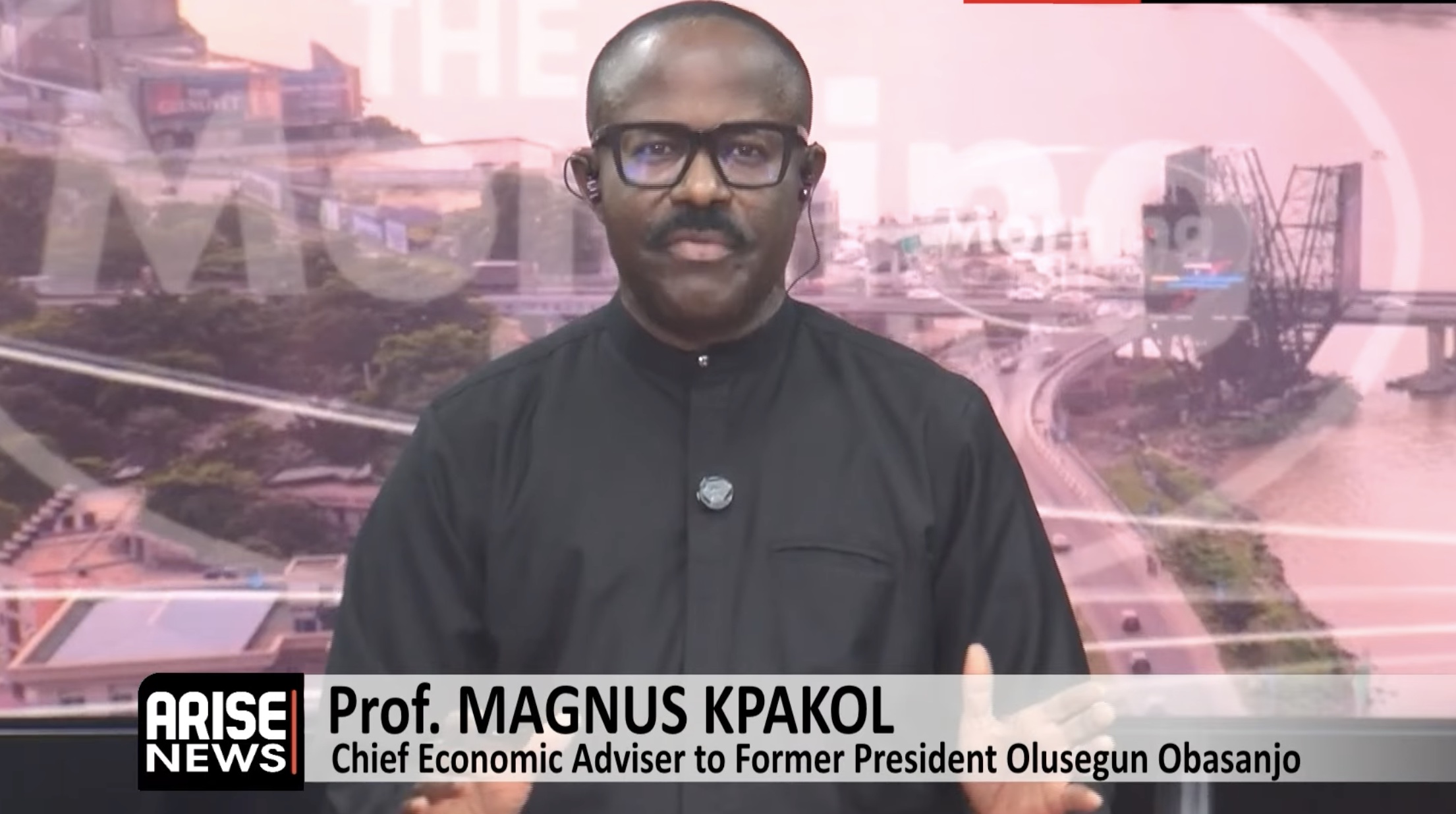
Former National Coordinator of the National Poverty Eradication Programme (NAPEP), Professor Magnus Kpakol, has identified access to capital as a key pathway to ending poverty in Nigeria.
Kpakol, who is Chairman and Chief Executive Officer of the Economic Growth and Development Centre, said poor Nigerians must be given greater access to capital to enable them participate in economic activities.
Speaking during an interview on ARISE News on Monday, Kpakol said capital remains the most important tool for tackling poverty, pointing to the experience of countries that have successfully reduced extreme poverty.
“And as I say everywhere, that always and everywhere, the number one antidote to poverty is capital. So if we’re going to end poverty, we’re going to have to find capital. We’ve got to get people access to capital.
“That’s what the other countries have done that have overcome poverty.”
He said Nigeria’s poverty rate remains above 60 per cent, depending on the measurement used, while a higher poverty threshold could place the figure considerably higher.
According to him, the challenge is not only to improve the broader economy but to ensure that economic gains reach households.
“The problem is how do we translate that, this sort of stability that we have now in the macroeconomy, how do we translate that into the microeconomy? How do we get that to households? And then how do we shift the conversation from an economy of statistics to an economy of households?”
Kpakol said Nigerians, including people living in poverty, could participate in the capital market if they are given the necessary access and financial literacy.
“But we have to get, even poor people can be, I have a programme that I’m running right now, where poor people are being brought into the capital market. They can do it.”
He stressed that access to capital must be taken closer to Nigerians, particularly at the local government and community levels.
“So because, as I said, what’s the antidote to poverty? It’s capital. Where is capital? It’s in the capital market. So we’ve got to get people there.”
Kpakol also said greater collaboration between government, the private sector and academia would be needed to expand access to capital and drive economic development.
“There is an arrogance that tends to persist at the level of the federal government, where the federal government feels that they can do everything, but they cannot. They just obviously definitely can’t. And they need a lot of collaboration with state governments, with local governments, and with the private sector, and with academia.”
He said Nigeria must therefore focus on creating systems that allow more people to participate in the financial market and benefit from economic growth.
“People can go there. You’d be surprised how well we can do with that.”
Faridah Abdulkadiri
Follow us on: