

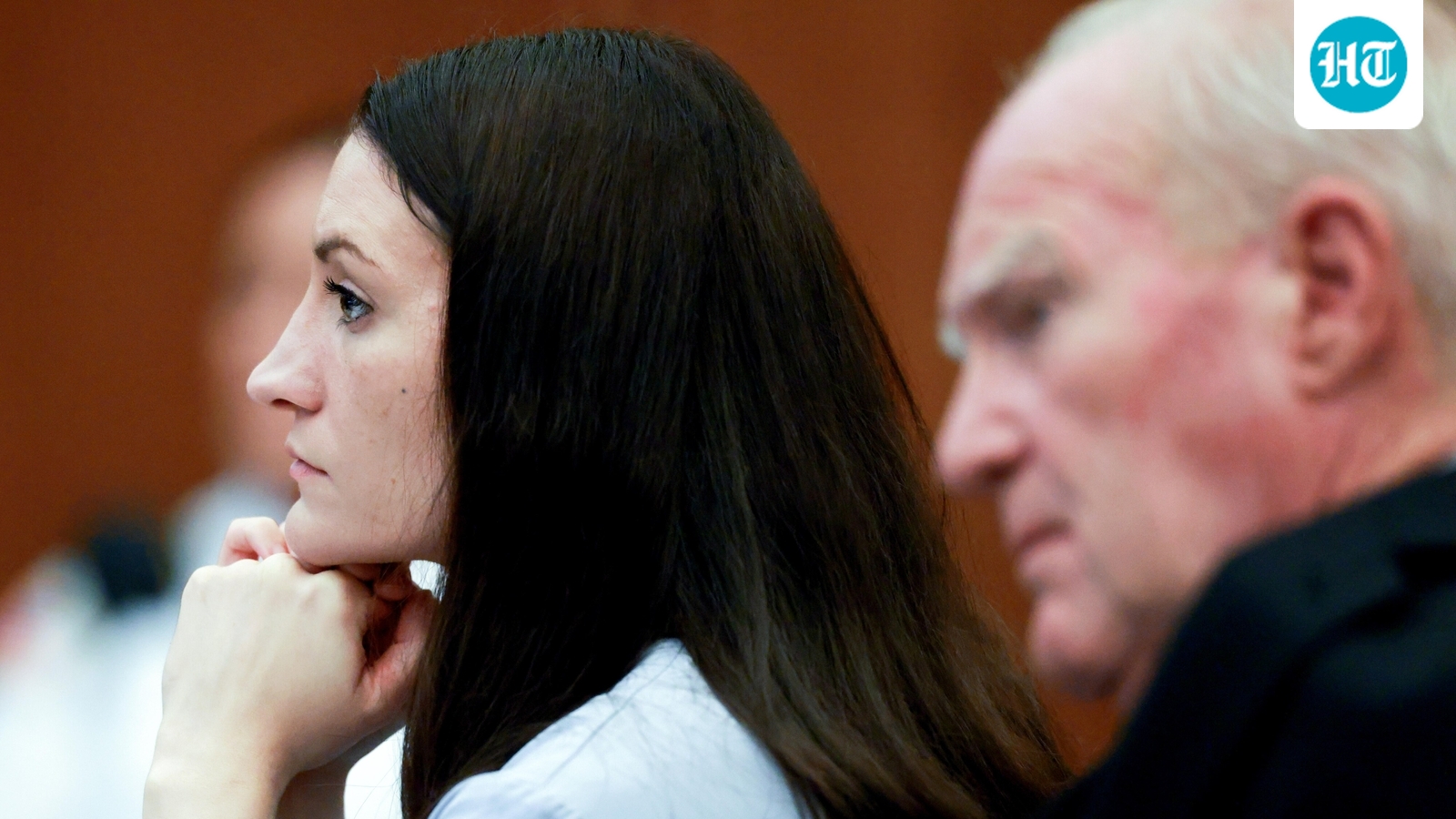
Lindsay Clancy’s ability to speak after she suffered severe injuries to her neck has become a point of discussion amid her trial. Some have questioned if a person could talk after sustaining what has been described as a “crushed thyroid.”
The Massachusetts mother is facing three counts of murder in the killings of her children Cora, 5; Dawson, 3; and Callan, 8 months. The proceedings are taking place in a Plymouth, Massachusetts, courtroom.
James J. Chao, M.D., FACS, Chief Medical Officer and Co-Founder of VedaNu Wellness, spoke to Parade and explained what the phrase actually means in the trauma world.
“Thyroid crushed almost always refers to the thyroid cartilage: the shield-like structure that surrounds the voice box. It does NOT refer to the thyroid gland located in front of it,” Dr. Chao explained. “Blunt trauma to the front of the neck will fracture the thyroid cartilage—falling against a window sill/ledge, steering wheel, sometimes during an attempted strangulation.”
Chao added that an individual’s speech is “often preserved” despite suffering a crushed thyroid, adding that the voice can become “hoarse, breathy, or weak.”
Also Read | Is Patrick Clancy going to be investigated? What we know amid online theories about Lindsay Clancy’s ex-husband
“Swelling is the danger with any disrupted cartilage as the airway can close, part of the reason we tend to intubate these patients early,” he explained.
Lindsay Clancy’s injuries
Lindsay is reportedly paralyzed from waist down. She was left permanently paralyzed after attempting suicide by jumping from a second-story window on January 24, 2023, the same day she killed her children.
Prosecutors said that after the murders, Lindsay cut her wrists and neck and jumped from a second-story window. This left her partially paralyzed.
Lindsay was first taken to South Shore Hospital and then transferred to Brigham and Women’s Hospital in Boston for treatment. She had a thoracic spine injury from her fall. However, the cuts on her neck and wrists were considered “superficial,” said Dr. Kelly McDonough, a physician at South Shore Hospital. Physician associate Eitan Negri said that the cuts on Lindsay’s wrists required several sutures.
Also Read | Lindsay Clancy trial: Why psychiatrist Jennifer Tufts is under fire, expertise questioned, ‘Box-checking robot’
Once Lindsay was moved to Boston, she went into cardiac arrest and had to be revived with CPR and chest compressions, ICU nurse Rachelle Amedee said. She received several blood transfusions.
According to prosecutors, Lindsay, 35, “acted intentionally, rationally and swiftly” when she fatally strangled her three children at their Duxbury home on January 24, 2023. Her defense attorneys, on the other hand, argued that she is not criminally responsible because she was in the midst of a psychotic episode that stemmed from postpartum mental illness.
Lindsay has pleaded not guilty to the murder charges. If convicted of murder, she faces life in prison without parole. In case she is found not guilty due to a lack of criminal responsibility, she would be committed to a state mental health facility.