

By Segun Adebayo
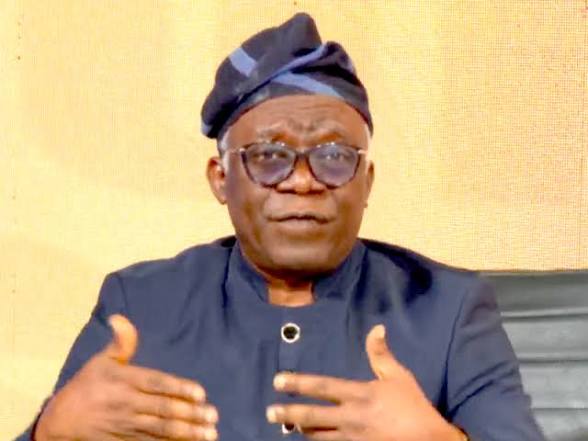
Human rights lawyer Femi Falana (SAN) has accused the Federal Government of surrendering control of Nigeria’s economy to the International Monetary Fund (IMF) and the World Bank, saying the country is no longer fully in charge of its economic policies.
Falana made the assertion while speaking on Channels Television on Sunday night in an interview monitored by Per Second News, where he assessed the state of the Nigerian economy, the impact of government policies on citizens and the need for greater accountability in the management of public resources.
According to him, several economic decisions being implemented by the Federal Government were dictated or strongly influenced by international financial institutions, particularly the IMF and World Bank, rather than policies designed primarily around the welfare of Nigerians.
Falana said the consequences of such policies were being felt by ordinary Nigerians, who, despite repeated assurances from the government that they should be patient, were increasingly finding it difficult to survive.
He said: “Nigerians are being told to wait, to exercise patience, but Nigerians are dying. You cannot continue to ask people who are hungry, people who cannot afford food, people who cannot afford to send their children to school, to continue to wait.”
The lawyer insisted that the worsening hardship made it imperative for Nigerians to begin demanding accountability from all levels of government, stressing that governments at the federal, state and local levels were receiving substantial public funds.
He argued that while revenue accruing to the Federal Government and states had increased, local governments were also receiving more money on paper, making it necessary for citizens to demand explanations on how the funds were being utilised.
“People must begin to ask questions. The state is making more money, the Federal Government is making more money, and even the local governments are making more money on paper. So, Nigerians must ask: where is our money going? How is it being spent?” PerSecondNews quotes Falana as saying.
Falana also questioned the handling of huge sums earmarked for critical sectors of the economy, insisting that public officers responsible for managing such funds must be made to account for them.
He specifically said he would demand explanations from the Nigerian National Petroleum Company Limited (NNPCL) over what happened to the crude oil allocation meant for domestic consumption, recalling the 450,000 barrels-per-day provision.
“I will ask the NNPC what happened to the 450,000 barrels of crude oil meant for local consumption. Nigerians deserve to know what happened to that crude,” Falana said.
He also said the government must stop relying on imported petroleum products and instead ensure that Nigeria’s refineries and domestic refining capacity are fully restored, arguing that a major oil-producing country should not remain dependent on fuel imports.
Falana said Nigeria must “stop the importation of fuel” and begin to take advantage of its crude oil resources to meet domestic energy needs, create jobs and reduce pressure on the country’s foreign exchange.
The senior lawyer further called on the Federal Government to enforce the Supreme Court judgment affirming the financial autonomy of local governments, arguing that the constitutional rights of the third tier of government must not remain on paper.
According to him, genuine local government autonomy would allow councils to receive and control their statutory allocations directly, thereby making it easier for residents to hold local officials accountable for the resources entrusted to them.
Falana, therefore, urged Nigerians to become more active in demanding transparency and accountability from public officials, saying citizens should not remain passive while public resources are being appropriated without adequate explanations.
“Nigerians have a responsibility to ask questions about how their money is being spent. We cannot continue to fold our arms and watch while the resources belonging to the people are managed without accountability,” he said.