

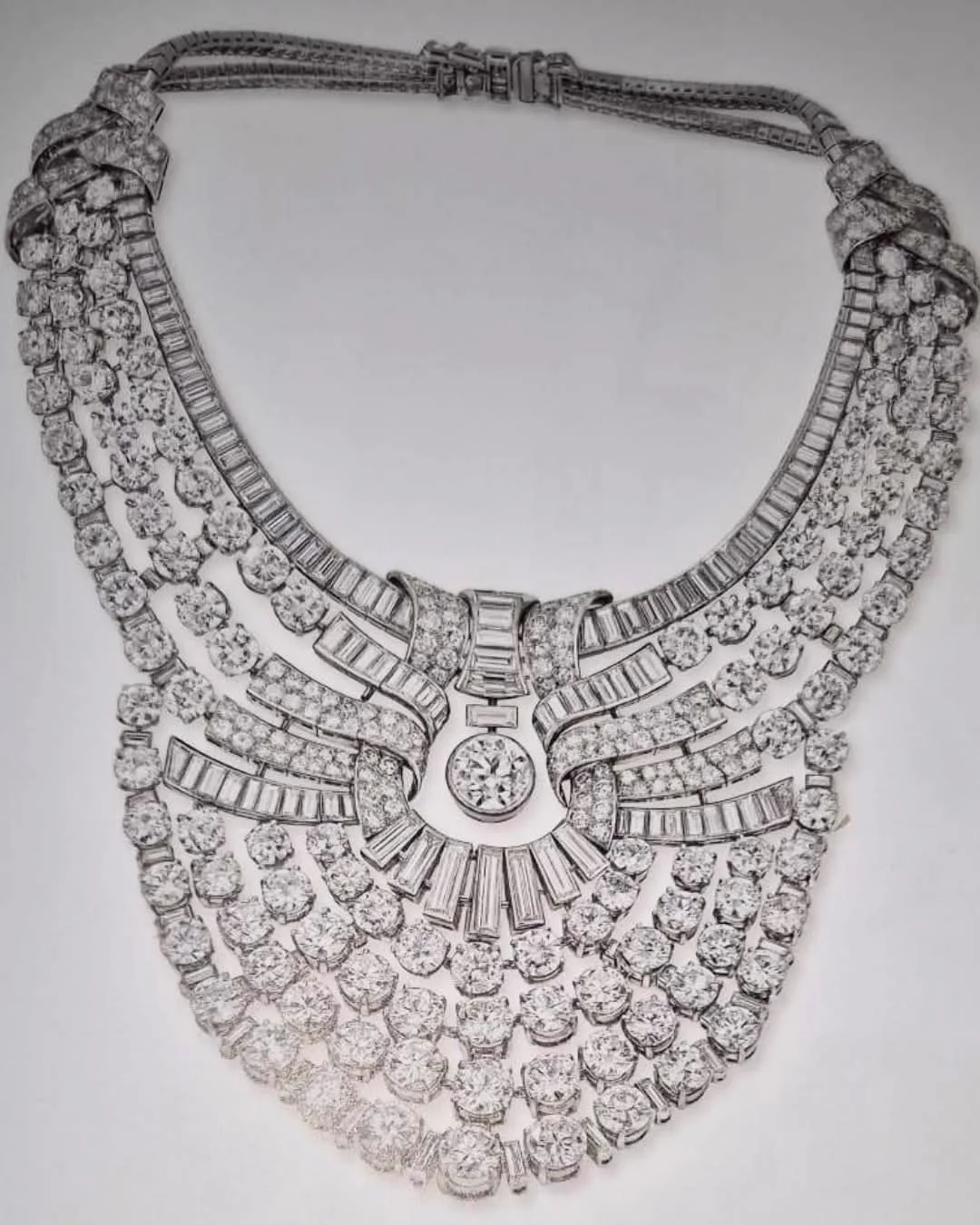
The International Criminal Police Organisation (INTERPOL) has launched an international search for a priceless diamond necklace once owned by Queen Nazli of Egypt after the jewellery was stolen from an exhibit at Vienna’s Museum of Applied Arts in Austria.
The necklace, which is adorned with 673 diamonds, has now been entered into INTERPOL’s Stolen Works of Art database following its listing by Austrian authorities.
INTERPOL announced the development on Saturday, in a post on its social media handle, urging law enforcement agencies to use the international database to help identify and recover the stolen piece.
“This necklace, stolen from an exhibit at Vienna’s Museum of Applied Arts, has been added to INTERPOL’s Stolen Works of Art database by Austrian authorities,” the organisation said.
INTERPOL further disclosed that the valuable jewellery “once belonged to Queen Nazli of Egypt.”
The theft has elevated the necklace from a museum security case to an international cultural-property alert, with details of the piece now circulated through INTERPOL’s global network of law enforcement agencies.
The Stolen Works of Art database is designed to facilitate the exchange of information on missing cultural property and assist police authorities in tracing stolen artworks, antiques and other objects of historical and cultural significance.
With its distinctive provenance and hundreds of diamonds, the necklace is among the latest high-value cultural objects to be placed on the international watch list as authorities intensify efforts to recover stolen heritage items.
The inclusion of Queen Nazli’s necklace in the INTERPOL database means that police and relevant authorities in member countries can cross-check information about the jewellery against objects encountered during investigations, seizures and border checks.
Queen Nazli, who was the last queen consort of Egypt, was known for her association with the Egyptian royal family before the monarchy was abolished in 1953.