

By Maryanne Awuya
In a strategic effort to enhance public accountability, the Office of the Auditor-General for the Federation has advocated for an expanded partnership with civil society organizations (CSOs).
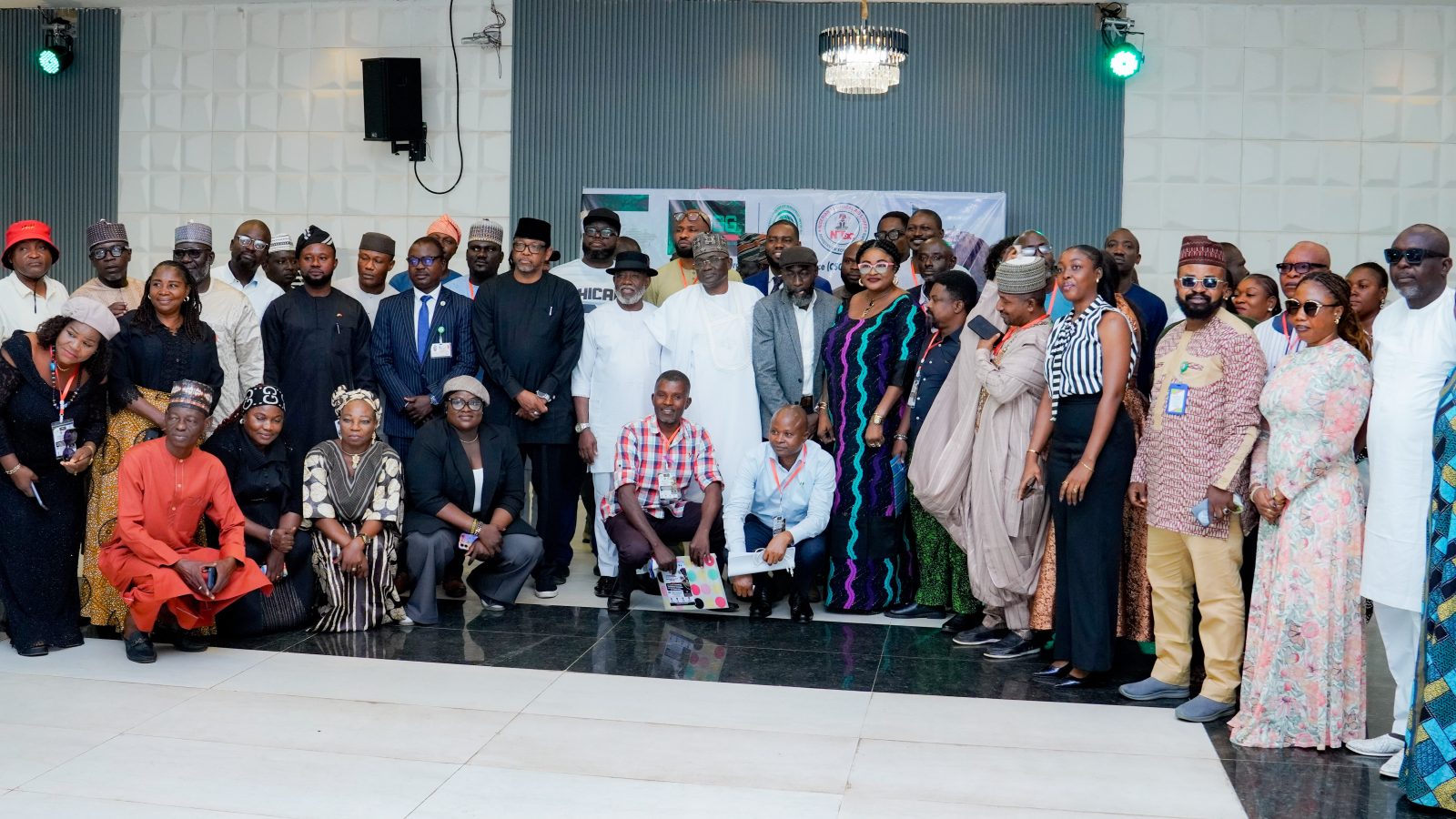
The initiative was highlighted during a specialized one-day CSO Stakeholders’ Engagement in Abuja—co-hosted by the Civil Society Groups for Good Governance (CSGGG) and the Integrity Advocacy for Development Initiative (IADI)—centered on institutional oversight and good governance.
Persecondnews reports that the engagement is the second in a series of stakeholder dialogues organised by the Civil Society Groups for Good Governance (CSGGG) as part of its governance and accountability initiative.
The first session focused on the Nigerian Technical Aid Corps (NTAC), while the latest engagement spotlighted the Office of the Auditor-General for the Federation.
Representing the Auditor-General for the Federation, Dr. Shaakaa Kanyitor Chira, Elisha Kyeani said government alone cannot achieve accountability, stressing that citizens and civil society groups have a constitutional responsibility to hold public institutions accountable.
He explained that while Section 85 of the 1999 Constitution empowers the Office of the Auditor-General to audit public funds, Section 24 also places a civic responsibility on Nigerians to ensure accountability in governance.
According to Kyeani, information provided by members of the public and civil society organisations often serves as the basis for investigations into suspected cases of financial misconduct.
He urged civil society groups to promptly report cases of alleged embezzlement, misappropriation of public funds and other financial irregularities, noting that such reports enable auditors to carry out independent investigations and produce reports capable of protecting public resources.
Kyeani noted that the Office of the Auditor-General derives its mandate from the Constitution and the Audit Act of 1956 but acknowledged that the legislation has become outdated.
He disclosed that a new Audit Bill is before the National Assembly to strengthen the office’s operations and improve its ability to carry out effective oversight of public finances.
The representative of the Auditor-General said the agency’s work extends beyond financial audits to include value-for-money audits, environmental audits, information technology audits and disaster management audits, particularly in tracking funds released for emergency interventions and donor-supported programmes.
He identified procurement irregularities, contract splitting, inflation of contract values, payment without due process, unretired advances, revenue leakages, weak internal controls and poor asset management as some of the recurring issues uncovered in audit reports between 2020 and 2023.
According to him, many government assets remain poorly documented, uninsured or inadequately maintained, while some agencies fail to remit internally generated revenue into the Consolidated Revenue Fund as required by law.
Kyeani stressed that the Office of the Auditor-General cannot effectively monitor every ministry, department, agency, state and local government without support from citizens and civil society organisations.
He urged CSOs to complement government efforts through community project monitoring, audit tracking, civic education, whistleblowing and independent oversight aimed at promoting transparency and prudent management of public resources.
He also encouraged civil society actors to participate more actively in governance and leadership, saying their involvement would strengthen democratic accountability and improve service delivery across the country.
Persecondnews reports that CSGGG said the initiative will continue with direct engagements involving heads of Ministries, Departments and Agencies (MDAs) to deepen accountability, strengthen institutional partnerships and promote inclusive governance through sustained civil society participation.