

The Federal Government has projected that Nigeria’s creative sector will contribute about 2.3 per cent to the country’s Gross Domestic Product (GDP) and generate two million jobs by 2030 as part of efforts to diversify the economy and boost employment.
Minister of Art, Culture, Tourism and Creative Economy, Hannatu Musawa, said the target aligns with the Renewed Hope Agenda of the Tinubu administration, which seeks to position the creative economy as a major driver of national growth.
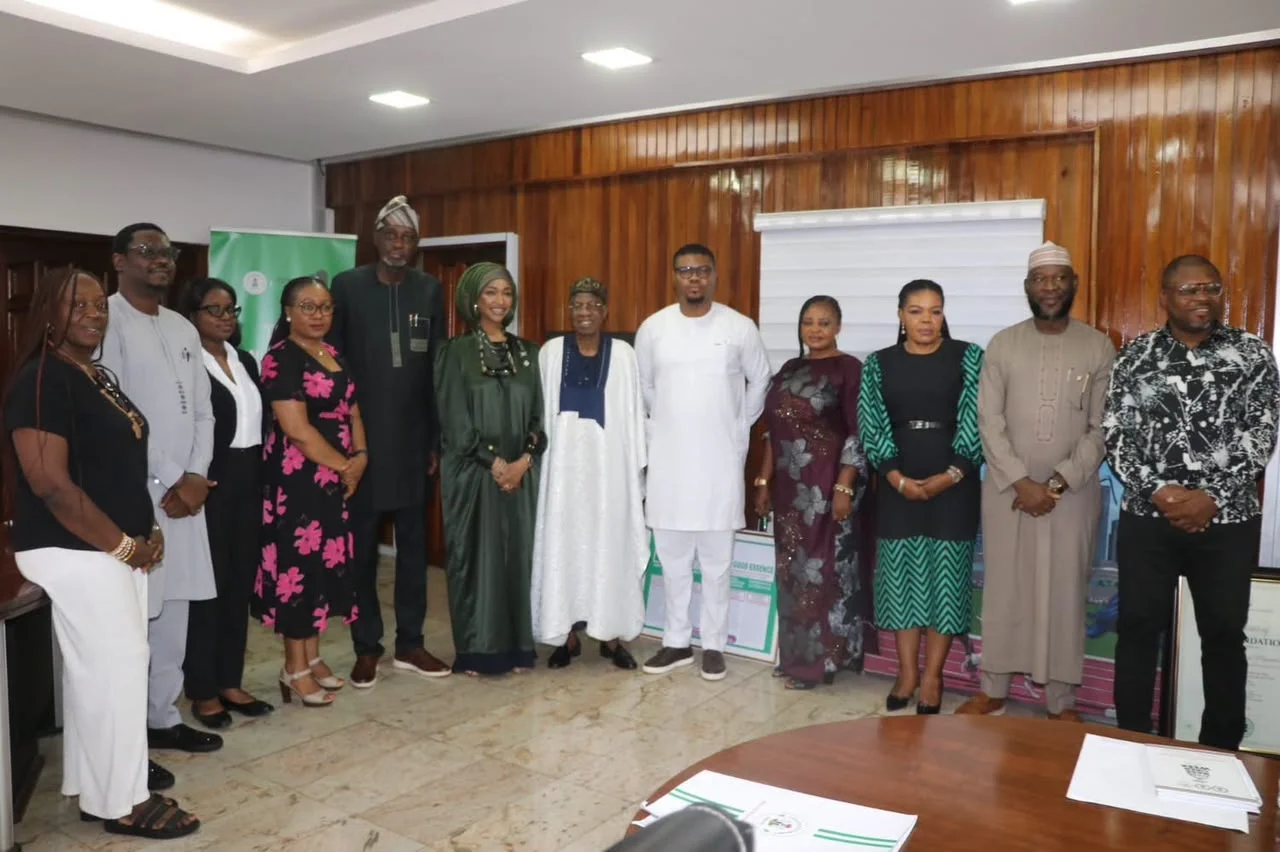
Musawa disclosed this in Abuja on Tuesday while receiving the Director-General of the National Institute for Policy and Strategic Studies (NIPSS), Prof. Ayo Omotayo, and former Minister of Information and Culture, Lai Mohammed, who visited to discuss a proposed National Summit and Exhibition on the Orange Economy.
She said the ministry had inaugurated four drafting committees focused on policy and strategy, programmes and implementation, stakeholder engagement, and monitoring and evaluation to strengthen the institutional and financial framework of the creative industry.
The minister also revealed that work was nearing completion on a National Tourism Policy designed to provide a long-term framework for the growth and development of the tourism sector.
Musawa welcomed NIPSS’ decision to adopt the Orange Economy as the theme of its Section 48 study, noting that it aligns with the ministry’s mandate and the Federal Government’s broader economic diversification agenda.
According to her, the Orange Economy, which encompasses the creative, cultural and cultural-heritage sectors, has the potential to become a major engine of economic growth if properly developed and supported.
She assured NIPSS of the ministry’s readiness to partner with the institute as a technical collaborator and stakeholder convener for the proposed summit and exhibition.
Earlier, Omotayo said the visit formed part of preparations for the proposed National Summit and Exhibition on the Orange Economy, adding that NIPSS was seeking the ministry’s support in developing strategic policies and institutional frameworks for the sector.
Also speaking, Lai Mohammed said the summit could help unlock employment opportunities within the creative industry, stressing that the sector remains critical to Nigeria’s future economic growth.
He urged policymakers and stakeholders to give the creative industry greater attention in order to fully harness its economic and developmental potential.