

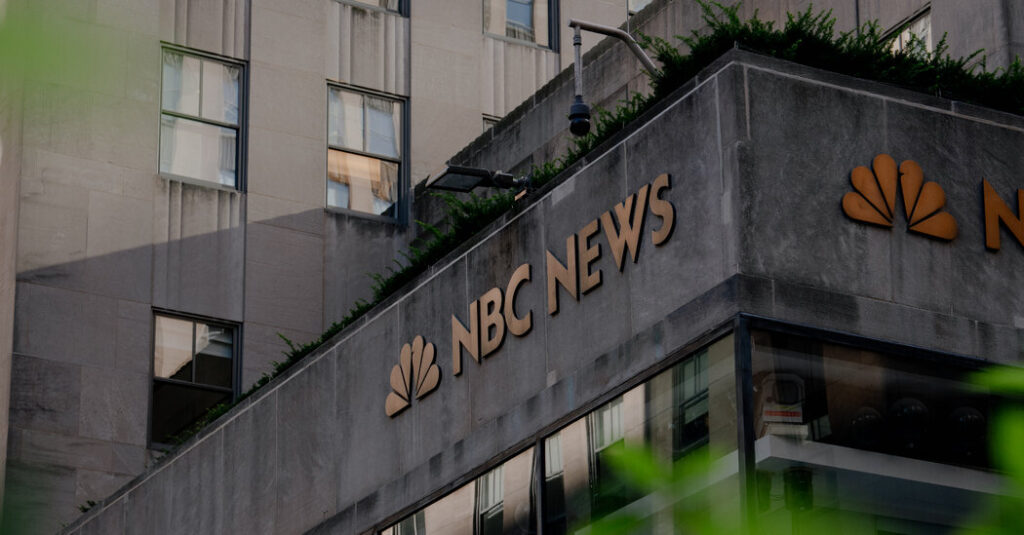
The Federal Communications Commission on Thursday removed a limit on broadcast television ownership, a move that could usher in more concentration in the media industry.
In a 2-to-1 vote, the agency lifted a cap that restricted a single television-station owner from reaching more than 39 percent of U.S. households. The agency will now review applications for mergers that go beyond that limit on a case-by-case basis.
The decision was widely expected and is aimed at encouraging consolidation among local television stations. Brendan Carr, the chairman of the agency who is a Republican, suggested in a recent opinion piece in the conservative publication Breitbart that by consolidating, local stations would be better empowered to reject shows from companies like Comcast or Disney that are distributed across the country.
“Local TV stations today lack the power to pre-empt or refuse to air national programming that does not fit their communities’ values,” Mr. Carr wrote. “Local TV stations are struggling to find the resources to produce live, trusted and local news programming.”
Mr. Carr has engaged in an aggressive campaign to combat what he sees as liberal bias in broadcast television. In September, when he took issue with some of the late night host Jimmy Kimmel’s comments, his show was temporarily pulled off the air. Mr. Carr celebrated, saying local stations were finally serving audiences tired of biased programming. He has also investigated and threatened to revoke the television licenses of ABC, NBC and CBS.
Mr. Carr has justified his actions by arguing that the F.C.C. is in charge of promoting the public interest in its oversight of television airwaves. Many legal scholars and Democrats say Mr. Carr’s moves violate the protections of free speech.
In 2004, Congress ordered the F.C.C. to set the ownership cap at 39 percent to promote a diversity of voices on TV and to ensure competition.
The move to scrap the ownership limit is a win for Nexstar, a television station group that currently reaches “nearly 39 percent of households,” according to its website. The television giant had moved last year to acquire a rival, Tegna, but the deal was frozen by a federal court in April while an antitrust lawsuit proceeded.
Anna Gomez, the lone Democrat on the F.C.C., voted against lifting the cap. She said the move would not free local broadcasters from economic pressure.
“It just changes who is doing the squeezing,” she said in a statement. “The large station groups positioned to grow even larger under this decision are not local broadcasters, they are national companies that own local stations and increasingly dictate what airs on them.”