


To the Editor:
Re “Help, I Might Be a Tradwife!,” by JoAnna Novak (Opinion guest essay, July 27):
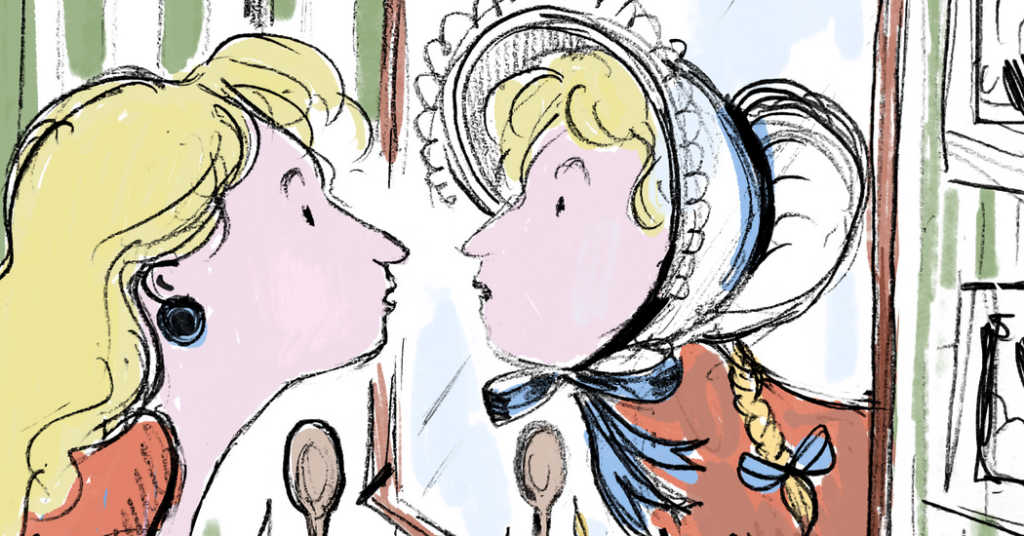
Ms. Novak slightly misses the point in her essay: She conflates simply being domestic with “tradwife tendencies” without clearly distinguishing how these should be considered entirely separate.
The danger of the tradwife content being sold in the media is the message of women losing autonomy — over themselves and their lives, from their control of their finances to their voting power. I am a 24-year-old woman in the early stages of my career, and the rustic kitchens and homemade sourdough that proliferate on my For You page do not feel like celebrating domesticity when their message is “be submissive to men.”
I grew up with chickens in the yard, growing seasonal produce and buying local raw milk from the farmers market; I love my family’s modern-rustic lifestyle. But never once was I taught to stop thinking for myself. Nourishing, homemade food and less time online are good things. They should not be associated with the tradwife trend, but as features of a good life for everyone.
Love of the slow, domestic life should be free from the tradwife label, especially for the sake of young women figuring out how to define themselves.
Emma Fallside Los Gatos, Calif.
To the Editor:
I enjoyed JoAnna Novak’s article and can certainly empathize with her. When did these domestic arts that many of us learned from our families become symbols of women’s subservience?
My grandmother and her sister were middle-class urban women born in the 1880s who were highly skilled fiber artists. They taught me these crafts that they loved, and so my life has always included so-called trad arts. I went to art school and worked as an art director until I retired a few years ago. I now indulge in these hobbies I learned as a child.
Ms. Novak’s life seems so much like those of women I know who either through their family or newfound interest enjoy these traditional arts and have meaningful careers as well as equal marriage partners. It’s a shame that these more traditional crafts have become associated with extreme right-wing ideology.
Linda Paine Garrett Park, Md.
Gen Z’s Sex Problem
To the Editor:
Re “Gen Z-ers Are Ditching Sex. They Might Be Onto Something” (The Opinions video, nytimes.com, July 22):
This discussion correctly identifies many of the trends shaping young adulthood, but then bends over backward to find a silver lining instead of confronting the problem.
Human connection doesn’t exist apart from sexual intimacy; it is one of its deepest expressions. Friendship, family and community matter enormously, but presenting them as substitutes for romantic and sexual connection ignores both common experience and a substantial body of psychological and sociological research.
The numbers are hard to dismiss. Roughly one in four Americans from 18 to 29 report not having had sex in the past year, about double the rate in 2010. More single men now describe themselves as involuntarily celibate than voluntarily celibate.
This isn’t about nostalgia for a different time or demographic panic. It’s about recognizing that intimacy, sexuality and romantic partnership are fundamental to human flourishing.
Too often we respond to difficult realities like this by redefining them instead of addressing them. Isolation doesn’t disappear because we justify it or find a more comfortable way to describe it. If our goal is to understand why so many young people are struggling, we shouldn’t minimize one of the most important parts of being human, that is at the very least the starting point.
Ruben Turok Culver City, Calif.
Pause and Meditate
To the Editor:
Re “I Stopped Talking and Began to Finally Hear,” by Boris Fishman (Opinion guest essay, Aug. 2):
I’ve been a psychotherapist for just over 50 years. The majority of my patients are looking for peace of mind but struggle with experiencing it. For three minutes during our 45-minute sessions, I ask them to be silent and notice their thoughts and feelings. I also ask them to let go of each thought and feeling after they notice it.
The majority of the time they feel some relief.
While meditation does not “fix” problems, it helps us cope with them. Pausing and taking slow breaths when we are struggling helps.
Beth Rosen Bronx