
Can you see today’s solar eclipse in California? Know timings for Alaska, Maine, New York and Massachusetts

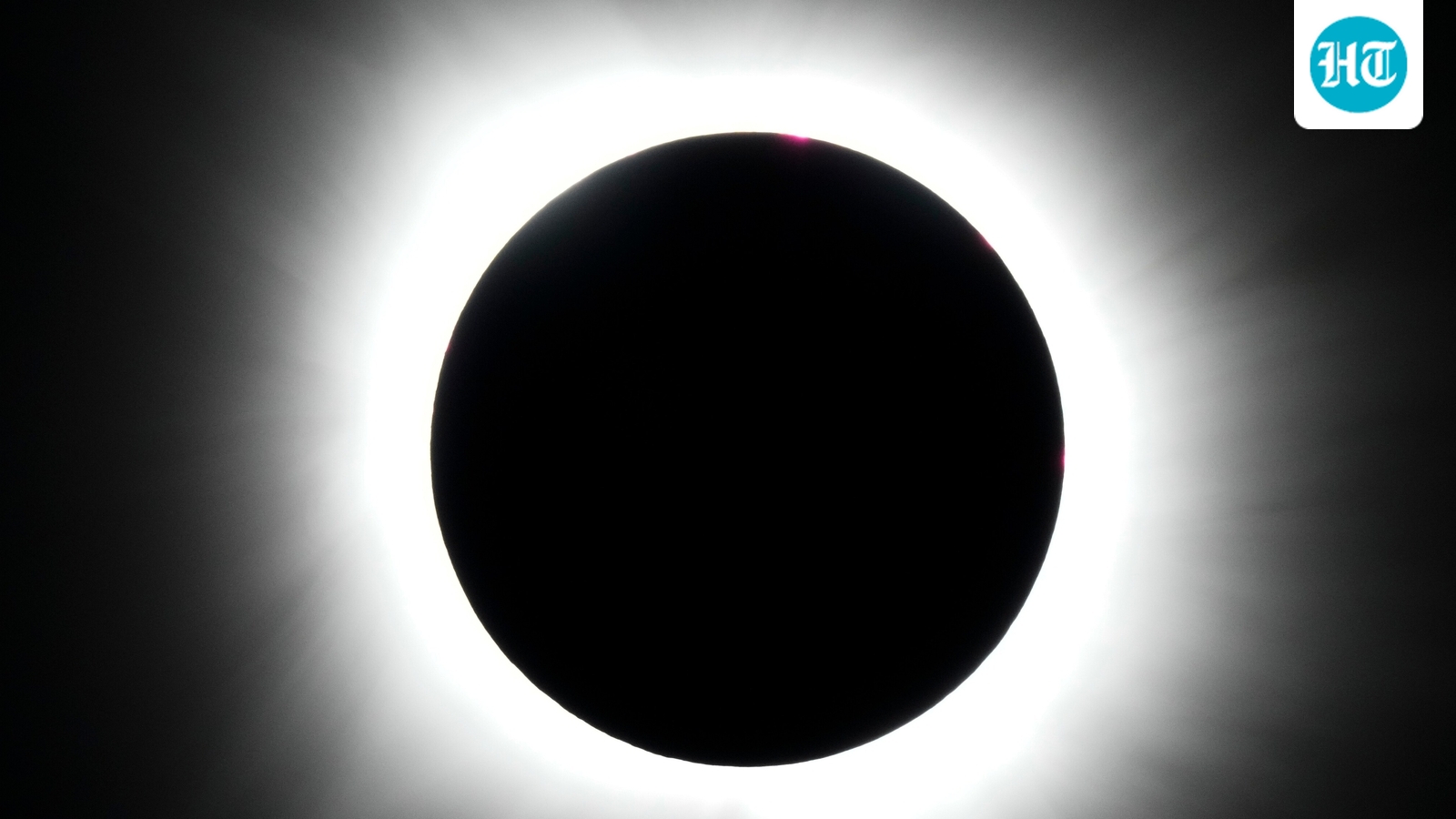
The August 12, 2026, solar eclipse will occur today in a few hours, giving skywatchers across the Northern Hemisphere a rare celestial event. But for people in the US, the view depends on where they live.
The event is a total solar eclipse, but totality will not be visible in the US. Here is everything skywatchers in America need to know, including the solar eclipse timings for Alaska, Maine, New York and Massachusetts.
Also Read Solar eclipse 2026 LIVE: Hotel costs skyrocket in Spain and Iceland as millions wait to see rare celestial event
What is a solar eclipse?
A solar eclipse happens when the Moon moves between the Sun and Earth, blocking some or all of the Sun’s light from reaching Earth.
The amount of the Sun that appears covered depends on where you are standing. People inside the Moon’s darkest shadow can see a total eclipse, while those farther away see only a partial eclipse. NASA says the August 12 eclipse will bring totality to parts of Greenland, Iceland, northern Russia, Spain and a small part of Portugal. Parts of the northern US will see only a partial eclipse.
Also Read August’s total solar eclipse will sweep over Spain, Iceland and Greenland
What is the path of totality?
The path of totality is the narrow strip of Earth where the Moon completely covers the Sun during a total solar eclipse.
The Moon’s shadow has a darker inner region called the umbra and a wider outer region called the penumbra. The umbra creates the path of totality. People outside that narrow path but within the penumbra see only a partial eclipse. NASA’s eclipse map shows the path of totality crossing Greenland, Iceland and Spain, while the partial eclipse extends across a much wider area.
Can you see the solar eclipse in California today?
No. California is outside the visibility zone of today’s Solar eclipse.
According to Time and Date, the total solar eclipse cannot be seen from California, while the partial eclipse is limited to parts of the northern United States.
That means cities including Los Angeles and San Francisco will not see the Moon pass across the Sun. But you can watch NASA’s live coverage at 1:15 p.m. EDT on August 12.
Solar eclipse August 12 timings in Alaska:
Alaska is among the best places in the US to see the partial eclipse. NASA lists these timings:
- Anchorage: 7:36 a.m. to 9:09 a.m. (Alaska Daylight Time)
- Fairbanks: The eclipse begins at 7:37 a.m., peaks at 8:27 a.m. and ends at 9:18 a.m.
Solar eclipse August 12 timings in Maine:
Maine will see a more noticeable partial eclipse than most of the northeastern US.
In Bangor, the eclipse starts at 12:54 p.m. EDT, reaches maximum at 1:53 p.m, and ends at 2:49 p.m.
Solar eclipse timing in New York:
New York will witness a partial solar eclipse.
In New York City, the eclipse begins at 1:07 p.m. EDT, reaches maximum at 1:54 p.m. and ends at 2:38 p.m.
So, New Yorkers will see only a small portion of the Sun disappear; there will be no period of total darkness.
Solar eclipse timing in Massachusetts:
In Boston, the partial solar eclipse begins at 1:01 p.m. EDT, reaches maximum at 1:55 p.m. EDT, and ends at 2:46 p.m.
Why is the August 12 eclipse a total solar eclipse?
The eclipse is called a total solar eclipse because totality occurs somewhere along its global path. During totality, the Moon completely covers the bright face of the Sun, briefly turning day into something resembling twilight.
According to NASA, totality will last less than two minutes for most people along the path, although it can last slightly longer near the centre of the eclipse path.
That does not mean every location experiencing the eclipse will see totality. In the US, observers will see only the partial phase.
Also Read Total Solar Eclipse August 12, 2026: Here’s why it’s a rare convergence in astrology
How to watch the August 12 solar eclipse safely
A partial solar eclipse should **never be viewed directly without proper eye protection**. Reuters’ current eclipse coverage also highlights the importance of certified solar viewing equipment and safe viewing methods.
- Use certified eclipse glasses
- Regular sunglasses may not be safe for viewing the Sun.
- Do not look at the Sun through a camera, telescope or binoculars unless the optical equipment has a proper solar filter.
- If you are outside the eclipse zone, watch NASA’s livestream instead.