

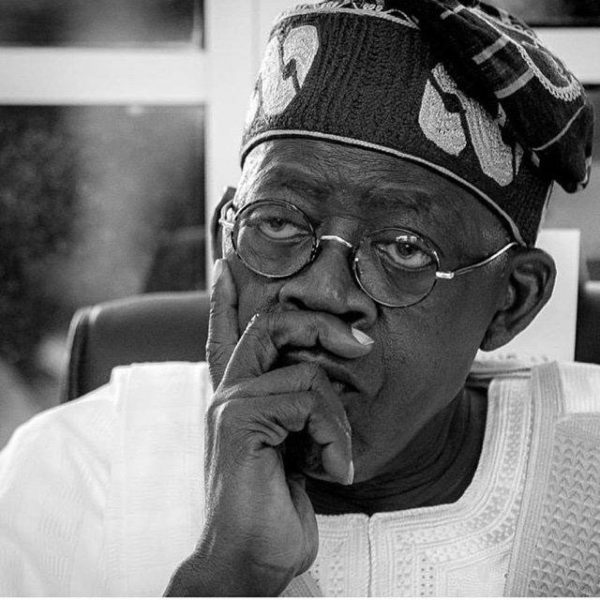
If there has been any time the President Bola Ahmed Tinubu administration is looking for anything to strengthen its credibility and showcase its scorecard, it is now—to enrich Mr. President’s manifesto, as he commences campaigns for the January 16, 2027 elections. Campaigns for the 2027 presidential elections officially commenced on Wednesday 19 August 2026.
In the build-up to the electioneering, President Tinubu and his Minister of Finance and Coordinating Minister of the Economy (who is also head of the Economic Management Team, EMT), Mr. Taiwo Oyedele, have practically been combing everywhere to enrich Mr. President’s scorecard—and boost his manifesto.
This explains why President Tinubu, who has also been the substantive Minister of Petroleum Resources from his inauguration day, decided barely a week to the beginning of campaigns for his re-election, to make a seemingly definitive statement on the fate of Nigeria’s public refineries that have remained moribund for a long while. A courtesy call on him by the new leadership of the Nigerian Union of Petroleum and Natural Gas Workers (NUPENG) provided Mr. President with the opportunity to give assurances that the redundant refineries would be revived.
Tinubu told the visiting NUPENG executives that “the refineries you mentioned are going to come back to work. We are just building a very firm reset and structural reworking of the economy,” adding that “ordinary flame and smoke of a refinery do not mean it is working, until it is profitable and yields the value for which it is built.” But these assurances are coming nearly two years after President Tinubu officially celebrated the “recovery of Port-Harcourt refinery” in November 2024, and now as he is commencing his re-election campaigns.
Specifically, the celebration was marked via a statement issued by Mr. President’s Special Adviser on Information and Strategy, Bayo Onanuga, following the official commencement of petroleum products loading at the facility on 26 November 2024. The statement was titled “President Tinubu celebrates revival of Port Harcourt refinery and directs NNPC Limited to promptly reactivate Warri and Kaduna refineries.” Alas, this became one of the several false starts or failed overhauls of the refineries for upwards of two decades.
The ‘refurbished’ refinery collapsed again no sooner than it commenced the heavily-hyped loading of refined products. Instructively, each of the state-owned refineries in Port Harcourt (two locations), Warri, and Kaduna, with combined installed capacity of 445,000 barrels per day (bpd) has undergone several turn-around maintenance (TAM) that left them more dysfunctional each time.
Successive chief executives of the Nigerian National Petroleum Company (NNPC) Limited—parent company of the refineries—usually conducted all manner of purported TAMs on each of the refineries—sinking trillions of Naira and billions of dollars into the project. The immediate past Group MD/CEO of NNPCL, Mele Kolo Kyari, for instance, who headed the organization from July 2019-April 2, 2025, has been under intensive probe for allegedly sinking huge sums of Naira and dollar into TAMs of the refineries without any recovery to show.
Till date, Kyari, and his chief executives of those refineries are yet under investigation by anti-graft agencies for over US$7.2 billion refineries failed TAMs funds. Before he was booted out of office by President Tinubu, and replaced with Bashir Ojulari, Kyari had all through his tenure (2019-April 2025) announced countless deadlines for the TAMs—but all failed. In fact, he left the refineries in worse state than he met them.
Ojulari who took over headship of the NNPCL on April 2, 2025, at the outset, was ambivalent on the fate of the state-owned refineries; not definitive as to whether they were going to undergo another TAM, or be sold-off or concessioned in their current states. However, by end-April 2026, Ojulari had signed a controversial Memorandum of Understanding (MoU) “for potential technical equity partnership” with two Chinese firms.
He said “This is an important step on the journey towards identifying potential technical equity partner or partners to restart and expand NNPC’s refineries.” But many Nigerians do not share in Ojulari’s optimism about the ‘promised’ revival of the recumbent refineries, given the past repeated failures. Prevarications, half-truths and outright lies have been the tools deployed by successive NNPCL heads regarding the moribund refineries.
On the current deal with Chinese firms, a former President of NACCIMA, Chief Dele Oye questioned why NNPCL is signing new deals without clarifying existing contracts and ongoing Economic and Financial Crimes Commission (EFCC) investigations. Chief Oye who also served as President of Organized Private Sector of Nigeria (OPSN) said investigations showed neither of the Chinese firm has “verifiable global refinery rehabilitation or operational experience.”
On its part, Center for Energy Sector Transparency called the deal with the Chinese firms “a costly recycling of failed policies and evidence of weak accountability,” stressing that “what Nigerians are witnessing is troubling pattern of policy repetition without reflection.” The Nigeria Employers Consultative Association (NECA) insisted that it is “unpatriotic to endorse another opaque deal while the past US$25 billion questions remain.”
Some other critics even insist that the two Chinese firms cannot compare with already established exploration, production and consulting (EPC) companies like Saipem and Tecnimont which handled previous rehab contracts on the refineries.
While this torrent of criticisms had hit the deal with the Chinese firms, five months down the line, Nigerians remain largely in the dark about the state of the ‘partnerships.’ Apparently, however, it is this much-excoriated deal, laden with Nigerians’ skepticism that President Tinubu was latching onto while giving assurances on the revival of the moribund refineries during NUPENG leaders’ orchestrated visit to him.
But Mr. President said nothing about the timeline or deadline for the full or partial rehabilitation of any of the three state-owned refineries, apart from the woolly promise that he was “expecting” the refineries to turn profitable after revival. Which government agency or business has turned profit-making in Nigeria over the years? So, the question remains: can President Tinubu really revive the refineries or is he merely boosting his manifesto for the 16 January 2027 presidential election? Time will tell!
- The author, Okeke, a practicing Economist, Business Strategist, Sustainability expert and ex-Chief Economist of Zenith Bank Plc, lives in Lekki, Lagos. He can be reached via: [email protected] (08033075697) SMS only