

Featured
By Augustine Idiagbon
FROM the Atlantic coastline of Lagos to the gully-ravaged communities of Anambra and Cross River, and from flood-prone Mokwa in Niger State to parts of Jigawa, erosion has become one of Nigeria’s most persistent environmental disasters, destroying homes, infrastructure, livelihoods and in many cases, claiming lives.
The challenge is no longer viewed as a seasonal occurrence, but as a growing consequence of climate change, poor urban planning, inadequate drainage infrastructure and human activities that continue to undermine environmental safeguards.
The World Bank estimates that more than 120 million people living along the West African coast face increasing risks from coastal erosion and flooding.
Across Nigeria, the warning is becoming a daily reality as communities battle advancing coastlines, expanding gullies and collapsing infrastructure.
Recent incidents have further highlighted the human cost of the crisis.
In Lagos, coastal communities continue to experience shoreline recession.
Reports by TheCable documented the plight of residents, including the family of a widow whose home was reportedly swept away by coastal erosion along the Okun-Ajah axis.
Similarly, the Nigerian Conservation Foundation, NCF, has repeatedly warned that the Atlantic Ocean is gradually moving inland along sections of the Lekki-Ajah coastline, threatening homes, businesses and critical infrastructure if urgent adaptation measures are not implemented.
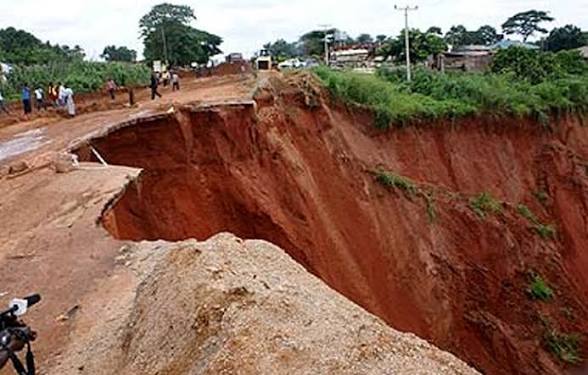
In Cross River, severe gully erosion has displaced residents and damaged roads and buildings. While some initially attributed the disaster to superstition, emergency assessments by the National Emergency Management Agency, NEMA,and the Cross River State Emergency Management Agency concluded that poor drainage design and improperly managed runoff significantly contributed to the disaster.
Environmental experts note that the Cross River experience mirrors similar situations in Oraifite in Anambra State, parts of Niger and Jigawa states, where inadequate drainage systems have allowed stormwater to carve deep gullies through communities.
According to experts, erosion occurs when rainwater is not safely channelled through properly engineered drainage networks into rivers, lagoons or other receiving water bodies. Instead, uncontrolled runoff gains destructive force, washing away roads, homes and farmlands.
Climate change has worsened the situation by increasing the intensity of rainfall events across many parts of Nigeria. Heavier downpours generate larger volumes of runoff, exposing weaknesses in the existing drainage infrastructure.
Environmental advocates argue that many of the disasters could have been prevented through proper planning and maintenance.
Philip Jakpor, Executive Director of the Renevlyn Development Initiative, an environmental advocacy organisation, has consistently urged governments to ensure that drainage construction projects meet engineering standards capable of handling increasing rainfall volumes.
Experts also emphasise that infrastructure alone cannot solve the problem without responsible public behaviour.
In Lagos, the authorities have repeatedly removed illegal structures obstructing drainage channels and served contravention notices on property owners who built on designated waterways and flood plains.
The Lagos State Ministry of the Environment and Water Resources has consistently warned that blocked drains remain one of the leading causes of urban flooding and erosion during heavy rainfall.
Urban planners observe that wetlands, which naturally absorb excess floodwater before it reaches lagoons and the Atlantic Ocean, are increasingly being reclaimed for residential and commercial developments.
The destruction of these natural buffers has reduced the city’s ability to cope with heavy rainfall, increasing pressure on drainage systems.
The Human and Environmental Development Agenda, HEDA Resource Centre, has also advocated stricter enforcement of urban planning regulations, warning against indiscriminate development on wetlands and drainage alignments.
According to the organisation, consistent enforcement of building regulations and adherence to approved master plans remain essential to reducing future flooding and erosion risks.
The emergency management agencies are continuing to carry out sensitisation campaigns, early warning dissemination and mitigation activities across vulnerable communities.
However, specialists maintain that disaster response should not replace long-term prevention.
They advocate routine desilting of drainage channels, investment in modern stormwater infrastructure, protection of wetlands, enforcement of environmental laws and greater community participation in safeguarding drainage corridors.
Nigeria has also implemented intervention programmes to address erosion. Among them is the Nigeria Erosion and Watershed Management Project NEWMAP, supported by the World Bank, which has rehabilitated numerous erosion sites and strengthened watershed management across several states.
Building on these efforts, the Agro-Climatic Resilience in Semi-Arid Landscapes, ACReSAL, Project is supporting landscape restoration, sustainable land management and climate resilience in northern Nigeria and other vulnerable areas.
The National Policy on Erosion and Flood Control, the National Adaptation Plan Framework, the Climate Change Act 2021, the National Environmental. Soil Erosion and Flood Control, Regulations, and Nigeria’s commitments under the Paris Agreement all provide policy direction for addressing erosion and building resilience against climate impacts.
Environmental experts agree that the effectiveness of these frameworks depends largely on implementation, sustained funding and cooperation among federal, state and local governments.
Ultimately, erosion control is not solely a government responsibility. Residents also have critical roles to play by avoiding indiscriminate refuse disposal into drains, refraining from building on waterways and wetlands, reporting blocked drainage channels and complying with environmental regulations.
As rainfall patterns become more intense under a changing climate, experts warn that the cost of inaction will continue to rise.
They stress that proactive investment in resilient infrastructure, strict enforcement of planning laws and responsible environmental stewardship offer Nigeria the best opportunity to reduce erosion, protect vulnerable communities and safeguard lives, property and economic assets for future generations.
F.O
Tags: erosion