

KEY POINTS
- Atiku says he will restore a targeted petrol subsidy if elected president.
- The Presidency estimates the proposal could cost Nigeria ₦19.1 trillion annually.
- Accord candidate Gbenga Olawepo-Hashim separately promises petrol at about ₦605 per litre, with prices potentially falling further.
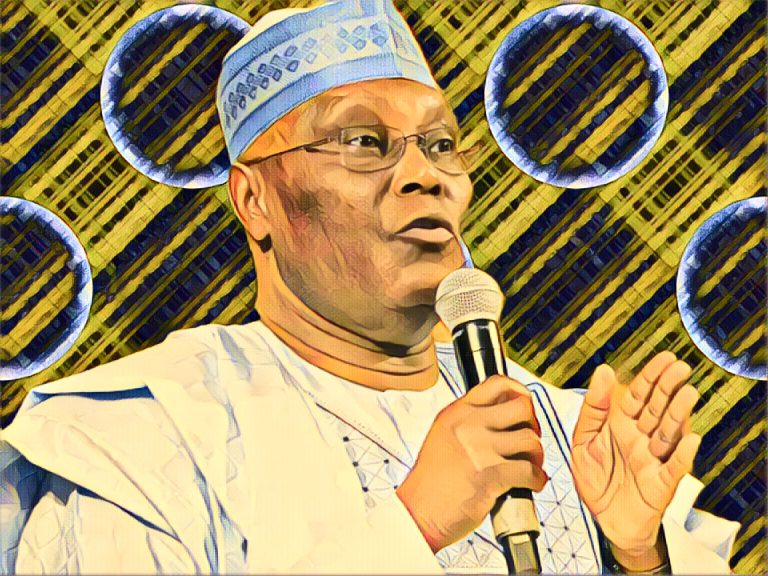
Former Vice President and African Democratic Congress (ADC) presidential candidate Atiku Abubakar has reaffirmed his plan to restore a targeted petrol subsidy if elected president, arguing that the policy is necessary to reduce the rising cost of living and protect Nigerians from the impact of high fuel prices.
Atiku’s position has triggered a fresh political and economic debate, with the Presidency questioning how the proposed subsidy would be financed and claiming that the programme could cost the country about ₦19.1 trillion annually.
The dispute comes as fuel prices, transportation costs and food prices remain major concerns for Nigerian households and businesses.
Atiku said the removal of petrol subsidy had placed additional financial pressure on Nigerians by contributing to higher transportation and food costs and weakening workers’ purchasing power.
He argued that Nigeria, as an oil-producing country, should be able to provide targeted relief to citizens while pursuing policies that increase domestic production and strengthen the economy.
According to the former vice president, his proposed subsidy would be targeted rather than an unrestricted intervention. He maintained that his position had not changed despite conflicting explanations from members of his political team about whether the subsidy would eventually be phased out.
Atiku also promised to support local production and businesses, saying stronger domestic economic activity would help make wages more valuable and reduce the pressure on households.
The Presidency has challenged Atiku to provide details of how his proposed subsidy would work.
Bayo Onanuga, Special Adviser to President Bola Tinubu on Information and Strategy, said Nigerians needed to know the expected cost of the programme, how it would be financed, who would benefit and what conditions would determine when the subsidy would be withdrawn.Onanuga’s criticism followed differing statements from Atiku’s aides.
Atiku’s spokesperson, Paul Ibe, initially said the former vice president would restore the subsidy and later phase it out after giving Nigerians and businesses time to recover. However, another aide, Phrank Shaibu, rejected that explanation, saying Atiku would not commit to a fixed deadline for ending the policy.
Shaibu argued that subsidy support should remain until domestic refining capacity improves, fuel supply becomes stable, competition increases and market forces can deliver affordable prices without government assistance.
Atiku subsequently clarified that his position remained unchanged and that he supported a targeted subsidy.
Presidency Raises ₦19.1tn Funding Concern
The Special Assistant to the President on Digital and New Media, Otega Ogra, separately estimated that Atiku’s proposed subsidy could cost Nigeria approximately ₦19.1 trillion annually.
Ogra said the figure was based on an estimated subsidy of about $40 per barrel when crude oil sells for around $80 per barrel.
He claimed the projected cost would amount to roughly ₦52.3 billion every day or about ₦1.5 trillion each month.
Ogra also argued that such expenditure could consume resources that could otherwise be directed towards wages, infrastructure and other public needs.
He criticised Atiku’s proposal for not specifying a clear subsidy cap, the amount of crude required or the precise funding structure.
Onanuga also challenged the argument that reducing petrol prices would automatically resolve Nigeria’s broader cost-of-living crisis.
He acknowledged that fuel and transportation costs influence the prices of food and other goods but noted that inflation is also affected by agricultural production, insecurity, exchange rates, logistics, storage, flooding, input costs, money supply and other supply constraints.
The Presidency therefore argued that reducing petrol prices alone would not be sufficient to address the country’s wider economic difficulties.
Onanuga further pointed out that international crude prices, exchange rates, refining expenses, transportation and distribution costs all influence the final price of petrol.