

Annual inflation ticked down in July, extending a run of high year-over-year price increases that have frustrated Americans and soured their view of the economy heading into November’s midterm elections.
The Labor Department’s consumer price index rose at a 3.4 percent annual pace for the year ending in July, down slightly from 3.5 percent in June, as energy prices held roughly level and housing prices rose only moderately.
Drivers are paying an average of just over $4 per gallon for gas, according to AAA, down about 50 cents from this year’s peak. But that’s still nearly a dollar more than Americans were paying a year ago, before the U.S. and Israel attacked Iran in late February, disrupting the global oil market.
While gas prices have surged, things would be worse if financial markets were not “anticipating that there could be further de-escalation of the conflict ahead, which has prevented prices from rising more,” said Bill Adams, chief U.S. economist at Fifth Third Commercial Bank.
Rises in home prices, which account for a big chunk of measured inflation, also have been slow recently, Adams said. “The combination of more housing supply and higher mortgage rates keeping a lid on buying power for people who would like to buy a home is translating into modest increases on average for housing prices across the United States.”
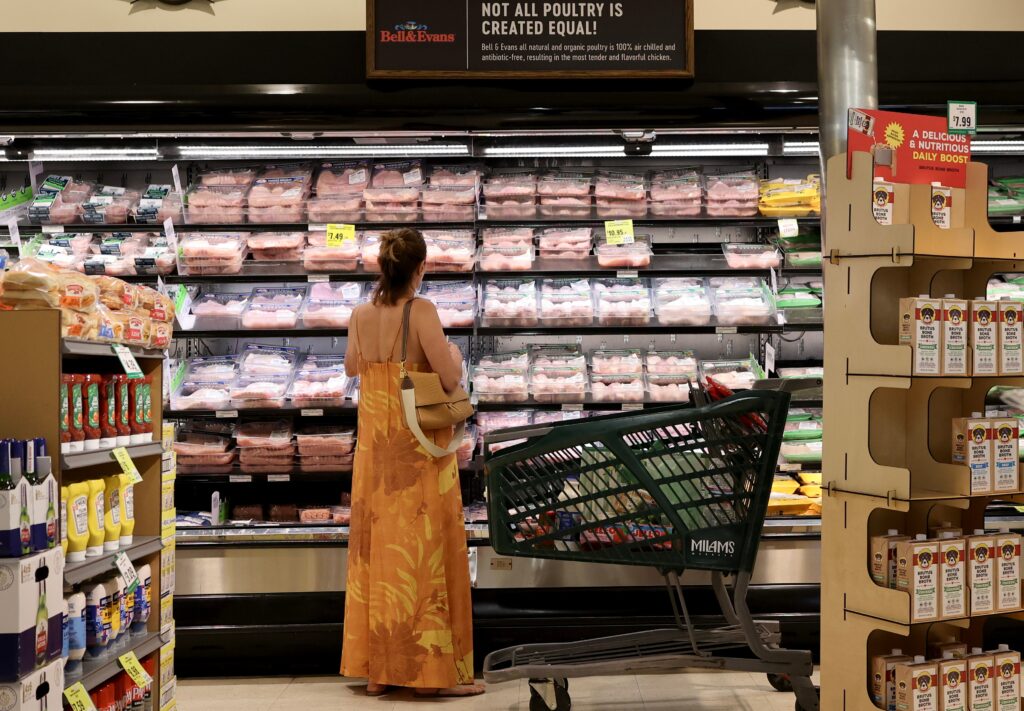
Higher energy prices and other factors have pushed up the cost of Americans’ groceries. Prices for beef have risen 9.4 percent over the past year, while those for tomatoes and lettuce have risen 12.8 percent and 7.5 percent, respectively.
Coffee prices jumped last year because of tariffs imposed by President Donald Trump. Coffee later was exempted from tariffs, and prices declined slightly in June and July. But they were still 10.3 percent higher in July than one year earlier.
Overall, prices for July were up 0.1 percent over June, but the annualized inflation rate ticked down. Core prices, which exclude volatile food and energy prices to give a more stable reading of underlying inflation, were up 2.5 percent for the year. Wednesday’s report was in line with economists’ expectations.
Inflation has now run persistently above the Federal Reserve’s 2 percent annual target for more than five years, complicating the political message for Republicans heading into the Nov. 3 midterms. Americans voted Trump into office last year in part because he promised to fix an inflation-battered U.S. economy. But his war in Iran — and its effect on gas and groceries prices — has caused that support to erode.
A Washington Post-Ipsos poll last month found that 18 percent of Republicans — nearly a fifth — are feeling worse off financially since Trump started his second term. That’s compared to just 4 percent who said the same thing in September 2018, at the same point in Trump’s first term.
Theresa Gibson, 68, helps watch eight grandchildren in her home in Whitesburg, Kentucky. She is one of millions of Social Security recipients who received a 2.8 percent cost-of-living increase in their monthly checks this year — a rate that trails inflation.
“It ain’t much compared to prices, you know how everything went up,” Gibson said. She likes Dove body wash, but it’s not a luxury she can afford routinely, so she opts for a cheaper brand.
“Sometimes I have to do without things, because you’ve got to have certain things first,” she said. “Sometimes I might have to let a bill go a month and then try to catch it up the next month. It’s a struggle, every day.”
Others with 401(k) retirement accounts fare better, but it doesn’t always alleviate the sticker shock. Bob Murray, 70, of Inver Grove Heights, Minnesota, is a retired sales rep whose wife still works as a nurse.
“The market’s up, but then prices are up too,” Murray said. “We’re not living high. We’re kind of watching what we do.”
Murray, who gives Trump low marks on his handling of the economy, declined to reveal who he and his wife supported in the last presidential election, saying he didn’t want to alienate friends. But he said his wife regrets her vote so much she’s gone to confession over it.
“Overall, inflation is just crazy,” Murray said. “I would give him like maybe a C minus to a D.”
The Trump administration acknowledges grocery prices are a problem, but blames them on former president Joe Biden.