

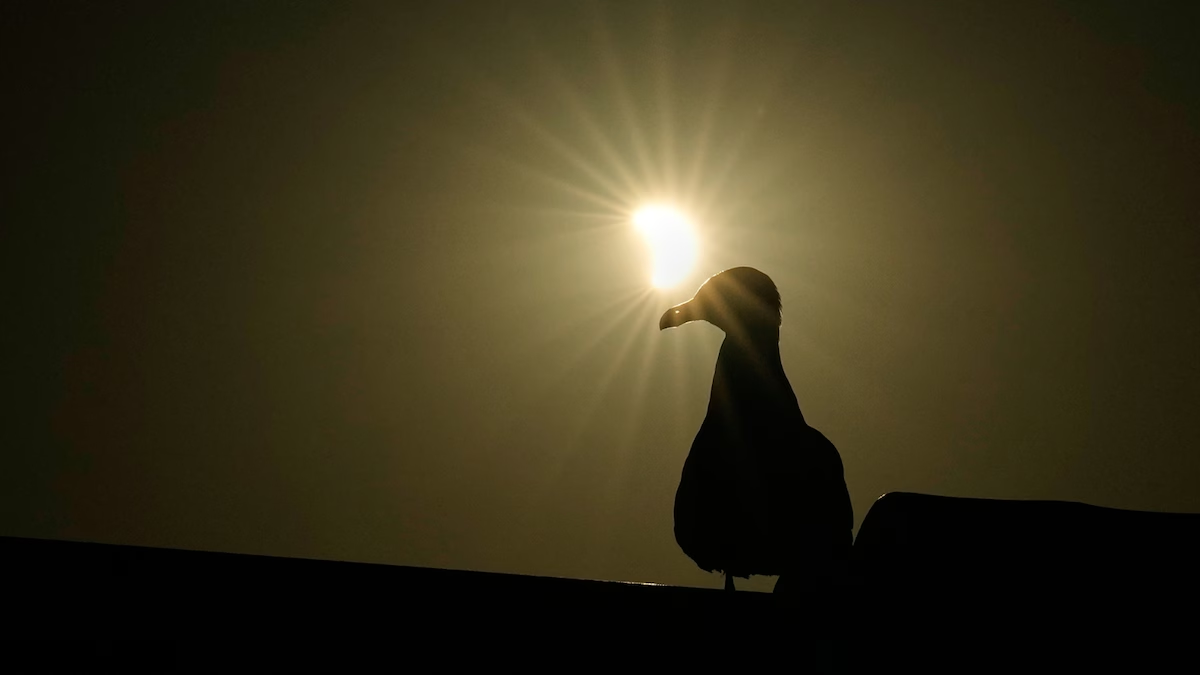
The Total Solar Eclipse 2026 crossed Greenland, Iceland, Spain and Portugal on August 12, drawing millions of viewers as parts of Europe witnessed day…
 1/10
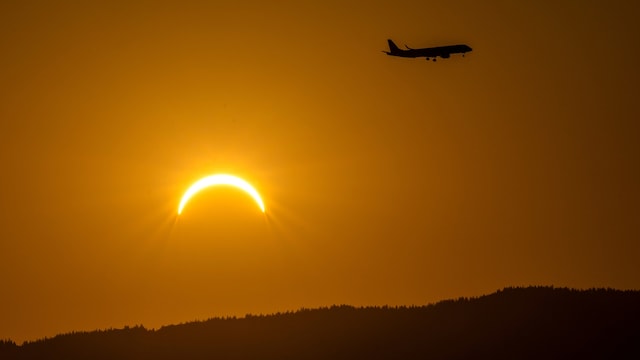
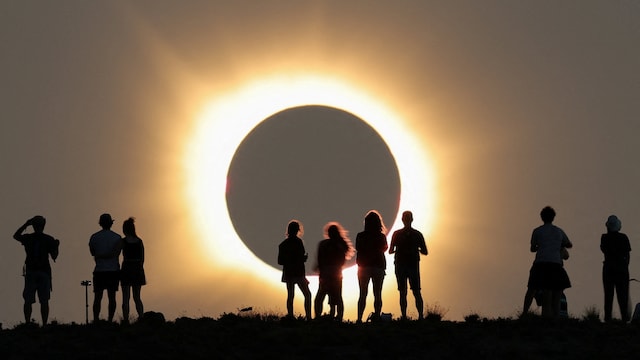
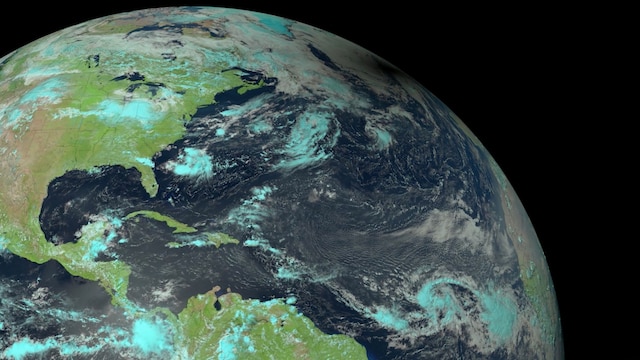
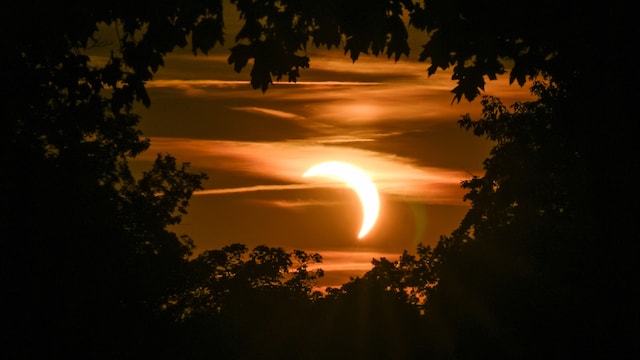
1/10Eclipse Begins: The total solar eclipse on August 12, 2026, crossed northern Russia, Greenland, Iceland, the Atlantic Ocean, northern and central Spain and a small part of Portugal. A partial eclipse was visible across much of the Northern Hemisphere, including parts of the US from Alaska to North Carolina, most of Canada, much of Europe and north-western Africa. In some western areas, the Sun set while still partially eclipsed.
 2/10
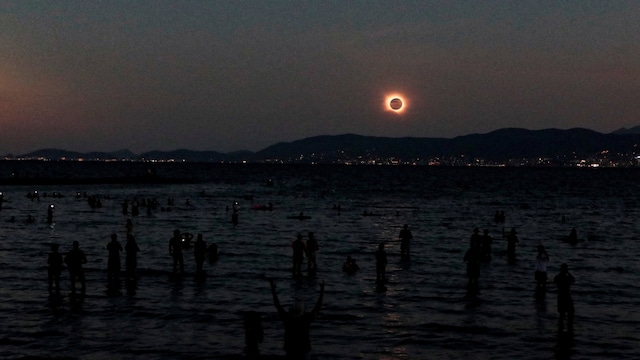
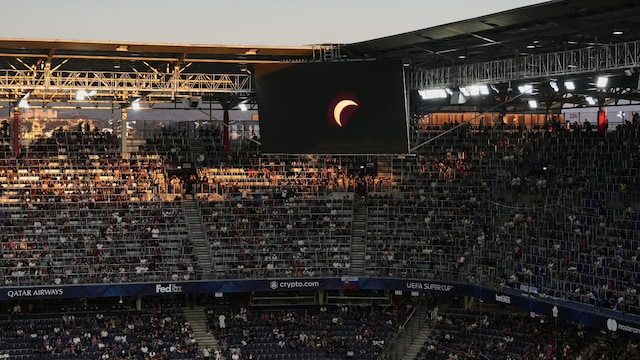
2/10Spain Goes Dark: Millions gathered across Spain as the Moon passed between the Sun and Earth, briefly turning day into night. It was Spain’s first total solar eclipse in more than a century and the first total eclipse visible from mainland Europe since 2006. The lunar shadow crossed northern Spain before moving towards the Mediterranean and the Balearic Islands, where people watched from towns, parks and beaches.
 3/10
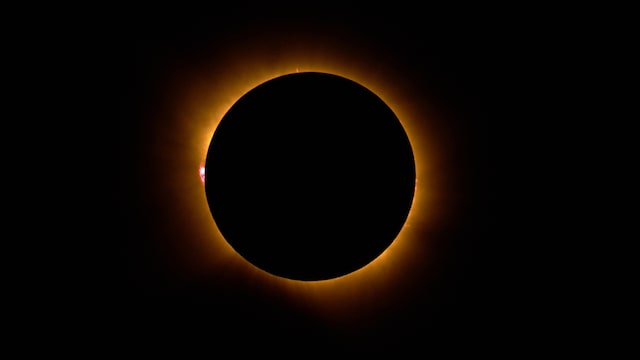
3/10Totality Peaks: Totality lasted less than 2½ minutes along the eclipse path, reaching its maximum duration in the Atlantic near Iceland. On land, the longest totality was about 2 minutes 13 seconds at Látrabjarg in western Iceland, while Reykjavik experienced just over a minute. In Portugal and Spain, totality shortened to about a minute in some locations before sunset. The Moon’s shadow then moved towards the Mediterranean.
 4/10
4/10Spain Draws Visitors: Spanish authorities expected around 450,000 additional visitors, while other estimates put the increase at close to half a million. Hotel demand rose along the path of totality, including in A Coruña, Bilbao and Santiago de Compostela. The government prepared about 350 official viewing sites across the interior. Authorities also mounted a large security operation, with official planning figures citing 33,500 law enforcement personnel and AFP reporting nearly 25,000 police mobilised.
 5/10
5/10Heat And Fires: The eclipse coincided with high temperatures and wildfire concerns across Spain. Temperatures rose above 35°C in many viewing areas. A recent wildfire in Ávila had burned about 500 square kilometres and forced tens of thousands of people to evacuate, while several smaller fires remained active in southern and central areas. Clear skies helped visibility in much of Spain, although authorities continued to monitor fire risks during the event.
 6/10
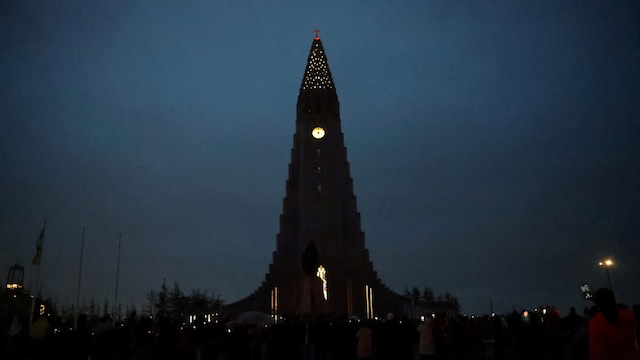
6/10Iceland Falls Dark: Western Iceland experienced total darkness despite cloud and rain in several locations. In Reykjavik, hundreds gathered near Hallgrímskirkja in raincoats as the light faded, with some relying on phone screens when the Sun became obscured. Totality reached Keflavik at 5:47 pm local time. The eclipse was the first total one visible from Reykjavik since 1433, and the next is not expected there until 2196.
 7/10
7/10Glasses Sell Fast: Special eclipse glasses were widely used because looking directly at the Sun can cause eye damage, including during the partial phase. Shops, museums and planetariums across Spain had sold or distributed the glasses for months, while some pharmacies ran out before August 12. Demand was also high in Britain, Europe, Canada, the northern US and north-western Africa, where people could see a partial eclipse.
 8/10
8/10Greenland Cruise: Near Greenland, MS Spitsbergen captain Sverre Rud circled Rypefjord while trying to position the ship for its 126 passengers. The group was on a 17-day cruise that had spent much of its time north of the Arctic Circle, where passengers had experienced 24 hours of daylight. The eclipse brought about two minutes of darkness. Rud said passengers had spent the day checking whether the ship had reached the right position.
 9/10
9/10Tourism Peaks: Iceland had about 75,000 foreign tourists during the eclipse, while more than 30 cruise ships brought about 53,000 passengers. Helicopter flights were fully booked and Reykjavik airport saw more private jets than usual. Hotel rooms in Reykjavik averaged about $1,012 a night, roughly twice 2025 rates and 212% above the city’s 2026 average. One hotel in western Iceland received its first eclipse booking 14 years ago.
 10/10
10/10Science In Focus: The eclipse also gave scientists an opportunity to study the Sun’s outer atmosphere, including its solar winds and magnetic field, while NASA and the European Space Agency livestreamed the event. The Moon’s shadow travelled across Earth at about 3,430 kilometres per hour, producing brief changes in daylight, temperature and animal behaviour. Another total eclipse will cross southern Spain and northern Africa in 2027, followed by an annular eclipse over the Iberian Peninsula in 2028.