

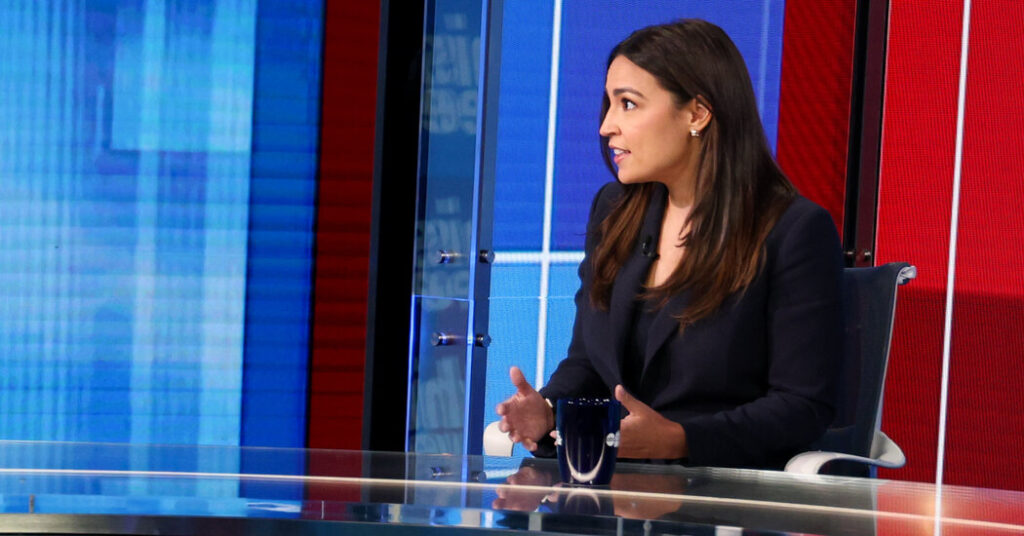
“Woke 1.0 was crazy,” Representative Alexandria Ocasio-Cortez of New York said in a recent interview.
The congresswoman, speaking on ABC’s “This Week” on Sunday, seemed to distance herself from the positions of an era of Democratic politics around 2020, shortly after she rose to prominence. Some on the left now see the rhetoric of that time as ineffective and divisive. There has been a widespread retreat on diversity, equity and inclusion efforts among corporations. And some public officials, including Mayor Zohran Mamdani of New York, have walked back their calls to defund the police.
If Woke 1.0 is in the past, when did it die? And has Woke 2.0 risen from its ashes?
When did the term Woke 1.0 surface?
Ocasio-Cortez said on “This Week” that she was quoting Chi Ossé, a far-left New York City councilman, when she described the so-called Woke 1.0. (Ossé posted about the “crazy” era on X in May. )
That era is sometimes referred to colloquially as peak woke. In May, Yemisi Egbewole, a former Biden White House aide, posted on X praising Texas State Representative James Talarico, who is running for a Senate seat, after he walked back statements from that era.
“I think it’s great that Talarico is calling some of his high-net-woke comments cringe,” Egbewole wrote. “Honestly, more young people running for office are probably going to have to do this. Peak woke got weird. It’s okay to say that!”
Though the word “woke” itself originated in Black slang and had been around for decades in grass roots movements, in recent years it has been used pejoratively by some Republicans and moderate Democrats as a way to describe policies they view as out of touch.
Woke 1.0 retroactively describes the age of the #MeToo movement, and backlash against sexual assault and discrimination, and the aftermath of the murder of George Floyd, which led to widespread protests against police violence and racial injustice, said Spencer Goidel, a political science professor at Auburn University.
“This is what activists are prone to do, they overreach,” said Goidel, adding that the movements had bipartisan support. “They say, ‘This is our moment.’” Goidel published a paper in 2025 about “ordinary Americans’ understandings of wokeness.”
For many survey respondents in his research, Ocasio-Cortez was a symbol of Woke 1.0, he said, as well as groups like Black Lives Matter.
How the tide turned
Erik Bleich, the chair of the department of political science at Middlebury College, said some voters were turned off by a shift during the late 2010s to more “symbolic politics,” or debates that appeared to focus on language.
Goidel, the Auburn professor, said that President Trump’s victory in the 2024 election was an important moment in the move away from Woke 1.0. “I think that’s kind of a wake-up call where Democrats then have to self-reflect and go, ‘Oh, we aren’t speaking to the common person,’” he said. “I do think there’s this active effort within the party now to kind of silence a little bit the academic-ese.”
Bleich also pointed to the calls to defund the police as a divisive goal. Years after the large-scale racial justice protests, efforts to cut funding for police departments or get rid of traditional policing proved unpopular and were largely abandoned.
He pointed to President Biden’s call to “fund the police” during his 2022 State of the Union address.
But many in the Democratic Party emphasize that the era, despite some attention-grabbing policies that never gained widespread approval, led to positive change. “The doors were really open in trying to entertain any and every policy that was going to get us to a better place,” Ocasio-Cortez said on ABC, describing the discussions of that era as “fruitful.”
Progressives are pivoting. But is it Woke 2.0?
In the ABC interview, Ocasio-Cortez was asked why she had not endorsed Francesca Hong, a Wisconsin state assemblywoman and democratic socialist, who lost the Democratic primary for governor this week despite being ahead in polling.
Hong once called for abolishing the police and said the country should “cancel Thanksgiving,” but has since walked back those statements. (Her opponent in the primary, David Crowley, is a moderate Democrat.)
“I think that what’s important is that we have to assess what a candidate is saying now,” said Ocasio-Cortez, who has also softened previous stances on the police.
For Bleich, the congresswoman’s comments are emblematic of a shift in the party, saying “Hey, OK, we know that went too far. We know that we progressives essentially wound up demobilizing and neutralizing what could have been and should have been our allies on the left,” he said, “and made an opening for the right to really use that term publicly against the goals that many people on the left share.”
As for when Woke 1.0 officially died? Perhaps it was Ocasio-Cortez’s interview that delivered the fatal blow, Stu Loeser, a longtime Democratic communications strategist, said.
“In politics, like if they’re talking about it on ‘This Week,’ well, you know, then it’s dead.”