

By Citizen Bolaji O. Akinyemi
Credit: Inspired by Lasisi Olagunju’s “Bandit Rats in Our Big Budget,” Nigerian Tribune, 20 July 2026.
Leadership is ultimately a matter of stewardship. Public office is not merely an opportunity to wield power; it is a sacred trust to protect the commonwealth on behalf of the people. The higher the office, the greater the burden of accountability.
This principle becomes particularly important as Ogun State gradually turns its attention to the 2027 governorship election.
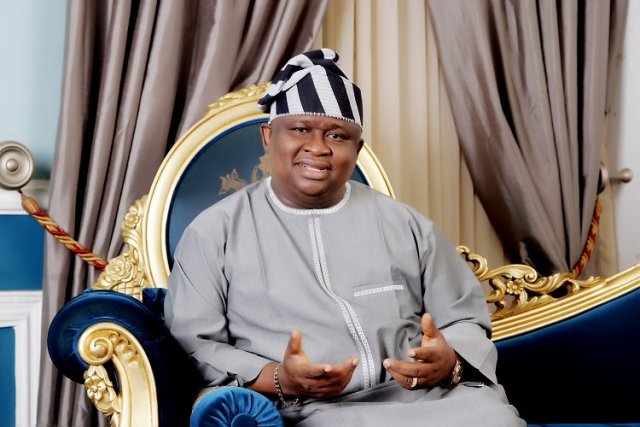
Among the leading aspirants is Senator Solomon Olamilekan Adeola, popularly known as Yayi. His aspiration deserves to be judged, not only by campaign promises, but also by his record of stewardship in the office he currently occupies as Chairman of the Senate Committee on Appropriations.
An insightful article by Lasisi Olagunju, titled “Bandit Rats in Our Big Budget,” published in the Nigerian Tribune of 20 July 2026, raises disturbing questions about the integrity of Nigeria’s 2026 Appropriation Act.
One example particularly caught my attention.
The budget reportedly contains an allocation of ₦70 million for the repair of an “Ijebu–Remo Road” in Ogun State.
As an indigene of Ogun State, who schooled at Iperu Remo and lived at Ilisan Remo and had ride bicycle to all the towns and villages in Remo land, I immediately asked a simple question:
Which road is Ijebu–Remo Road?
Ijebu Remo is an historical division comprising many towns connected by numerous roads. There is no commonly known road officially designated as “Ijebu–Remo Road.”
If the project description is inaccurate, then Nigerians deserve an explanation.
If such a road truly exists under an official designation unfamiliar to the public, government should identify its precise location so citizens can verify it.
But Yayi is too highly exalted to answer to commoners from the State whose vote he is begging for. My petition to his office before now, remains to be answered.
I will not be deterred by his exhibition of arrogance of power. The relevant legitimate questions will consistently be raised before the people of Ogun State and Nigerians.
The issue is not merely about ₦70 million.
It is about the integrity of Nigeria’s budgeting process.
A national budget is the country’s most important financial policy document. Every project listed in it should be clear, identifiable and capable of public verification. When descriptions become vague or unverifiable, public confidence in the entire appropriation process is weakened.
This naturally raises another important question.
At what stage of the budget process was this project inserted?
Was it contained in the Executive’s original budget proposal?
Was it introduced during legislative consideration?
Was it an administrative error?
Or was it simply a poor description of an existing project?
These questions deserve answers—not speculation.
Because the Appropriation Bill passes through both the Executive and the National Assembly, accountability cannot stop at one institution.
The Minister of Budget and Economic Planning, Senator Atiku Bagudu, coordinates the preparation of the national budget.
The President exercises constitutional authority in presenting and signing the Appropriation Bill into law.
The National Assembly scrutinises, amends and approves it before passage.
Within that legislative process, the Senate Committee on Appropriations occupies a uniquely strategic position.
As Chairman of that Committee, Senator Solomon Olamilekan Adeola bears significant institutional responsibility for ensuring that the budget presented to Nigerians meets acceptable standards of transparency, coherence and accountability.
This observation is not an allegation of misconduct;
neither is it a conclusion of wrongdoing. Rather, it is an acknowledgement that leadership carries responsibility.
Those entrusted with oversight must themselves be open to oversight.
Indeed, this is the very essence of democracy.
The questions become even more compelling because Senator Adeola now seeks a higher office.
Every aspirant for the governorship should welcome scrutiny.
Citizens are entitled to ask whether the stewardship demonstrated at the national level reflects the standards expected of a Governor.
That is neither persecution nor politics.
It is democratic accountability.
The broader concern extends beyond Ogun State.
Lasisi Olagunju’s article highlights other examples of questionable allocations, including agencies executing projects outside their statutory mandates and unusually large personnel budgets that deserve public explanation.
If these observations are accurate, they point to a deeper challenge within Nigeria’s budgeting culture.
The discovery of one anomaly should encourage a comprehensive review of the entire budget.
Transparency is strengthened when government answers questions, not when it dismisses those who ask them.
The Presidency has already ordered an investigation into the controversy surrounding the alleged fictitious Presidential Foreign Intervention Promotion Council (PFIPC).
That investigative spirit should not stop there.
The 2026 Appropriation Act itself deserves careful examination.
Every questionable project description.
Every off-mandate allocation.
Every unexplained personnel expenditure.
Every insertion that appears inconsistent with public interest.
Democracy survives when citizens are vigilant.
Good governance flourishes when public officials welcome accountability.
As 2027 approaches, Ogun people must assess every governorship aspirant on one enduring principle:
Stewardship precedes promotion.
Higher office should never be awarded merely because of political popularity, financial strength or electoral calculations.
It should be entrusted to those whose previous stewardship inspires confidence.
The questions raised by Lasisi Olagunju deserve answers.
The people of Ogun deserve answers.
Indeed, all Nigerians deserve answers.
For public, trust remains the greatest currency of democratic leadership, and accountability is the first qualification of anyone who seeks to govern.