

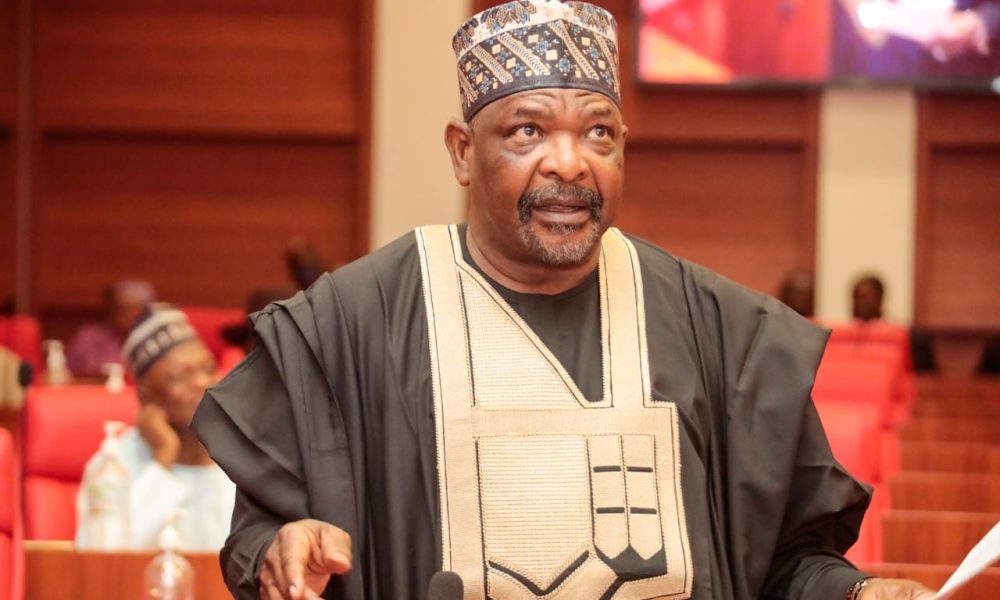
Senator Abdul Ningi, who represents Bauchi Central Senatorial District, has called on the Federal Government to sever diplomatic relations with South Africa over the recurring killings of Nigerian nationals in the country.
Ningi made the call during Tuesday’s plenary of the Senate while contributing to a motion on the recent deaths of Nigerians in South Africa, arguing that repeated condemnations by successive governments had failed to stop the attacks or secure justice for victims.
The lawmaker said Nigeria must move beyond issuing travel advisories and statements of concern, insisting that stronger diplomatic measures were now necessary.
“Nigerians are being killed left, right, and centre, and there has never been any action except condemnation. What does the government mean by caution? Caution for what? Are we not Nigerians? Don’t Nigerians deserve to live like citizens of other countries?” he asked.
He urged the Senate to press the Federal Government to take decisive action by ending diplomatic relations with South Africa.
“There has to be action. Let’s sever diplomatic relations with South Africa. If we do that, we are sending a signal. This chamber must rise to this occasion and tell the Federal Government that enough is enough. Sever relations with South Africa—completely,” Ningi said.
His remarks come days after the Federal Government condemned the killing of two Nigerian nationals in South Africa and warned that continued attacks on Nigerians could compel it to adopt stronger diplomatic measures beyond routine engagements.
The Federal Government identified one of the victims as Emeka Charles Iroegbu, who allegedly died after what it described as brutal interrogation by officers of the Tshwane Metro Police in Sunnyside, Pretoria, on June 28.
The second victim, Musa Yunana Joe, popularly known as “Big Joe,” was reportedly shot dead in front of his shop in Witbank, Mpumalanga, on the same day.
READ ALSO: Counter-protest erupts as white South Africans confront anti-immigrant demonstrators
South African authorities, however, have disputed aspects of the first incident. Police said the Nigerian national was arrested for allegedly possessing drugs and later collapsed while in custody, maintaining that his death was not linked to the recent wave of anti-migrant violence.
Ningi’s demand adds to growing calls for tougher measures against South Africa following the latest killings.
Last month, the founder and Chief Executive Officer of Air Peace, Allen Onyema, urged Nigerians to boycott South Africa economically by withholding investments in the country while encouraging South African companies to continue investing in Nigeria.
While the calls reflect mounting public concern over the safety of Nigerians living in South Africa, analysts warn that any decision to downgrade diplomatic ties or encourage an economic boycott could have significant consequences for bilateral trade and investment.
According to trade data, South Africa remained Nigeria’s largest source of imports within Africa in the first quarter of 2026, with imports valued at N155.26 billion, representing an 18.2 per cent increase from N131.32 billion recorded in the fourth quarter of 2025.
Major imports from South Africa included cargo vehicles, polypropylene, apples, industrial odoriferous mixtures and beverage flavouring extracts, underscoring the extensive commercial relationship between the two countries.
Policy analysts say that while stronger diplomatic measures may increase pressure on South Africa to address the safety of foreign nationals, any disruption in bilateral relations would also affect trade, investment and broader economic cooperation between Africa’s two largest economies.
They note that both governments may ultimately seek to balance diplomatic pressure with efforts to preserve longstanding commercial ties while addressing security concerns affecting Nigerian citizens in South Africa.