

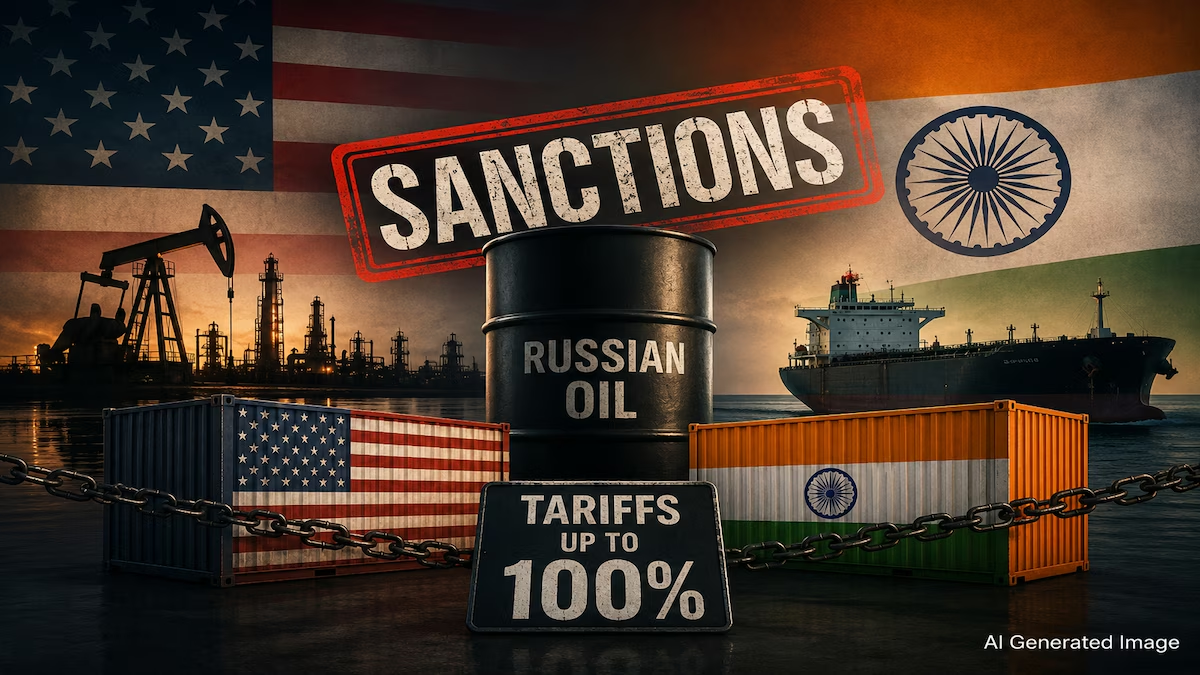
If enacted, the legislation would allow the US president to impose tariffs of up to 100% on imports from countries that continue to purchase Russian energy. India, which has become one of the largest buyers of discounted Russian crude since 2022, is among the countries that could be affected.
The proposal comes at a sensitive time. India and the United States are negotiating a bilateral trade agreement while simultaneously expanding cooperation in areas such as defence, critical technologies, semiconductors and the Indo-Pacific.
So, what does the bill seek to achieve, why has it generated debate, and what could it mean for India?
What is the proposed US sanctions bill?
The legislation seeks to tighten economic pressure on Russia by making it more costly for other countries to continue buying Russian energy.
Alongside sanctions on Russian officials and entities, the bill would authorise the US president to impose tariffs of up to 100% on imports from countries that purchase Russian oil and gas. India and China are widely seen as the primary countries that could be affected because both have significantly increased imports of Russian crude since Western sanctions were imposed on Moscow.
The Senate has voted to advance the legislation, but it must still complete the remaining legislative process before becoming law.
Why has India continued buying Russian oil?
India has consistently argued that energy security and affordability are its primary concerns.
As the world’s third-largest importer of crude oil, India relies heavily on overseas supplies to meet domestic demand. Following Western sanctions on Russia in 2022, Russian crude began trading at substantial discounts, prompting Indian refiners to increase purchases and reduce import costs.
The policy was not initially opposed by Washington. Earlier US administrations acknowledged that keeping Russian oil flowing into global markets, albeit under sanctions, helped avoid sharp increases in international oil prices.
Former Foreign Secretary Kanwal Sibal pointed to that earlier approach during an interview with CNBC-TV18.
“The previous administration was encouraging India to buy Russian oil so as to keep a check on oil prices. Even the Trump administration had been giving waivers because they wanted to keep the price of oil low.”
Why is the bill proposing tariffs on countries like India?
Supporters of the legislation argue that Russia continues to earn substantial revenue from oil exports despite Western sanctions. They believe increasing the economic cost for countries buying Russian energy could reduce those revenues and increase pressure on Moscow.
Critics, however, argue that such measures effectively extend US sanctions to third countries, forcing them to align their energy policies with Washington’s foreign policy objectives.
For countries such as India, the debate is not only about Russia. It also raises questions about national sovereignty, energy security and the extent to which one country should influence another’s trade decisions.
Why is the presidential waiver provision attracting attention?
One of the most closely watched provisions in the bill is the presidential waiver.
Even if the legislation becomes law, the president would not necessarily have to impose tariffs immediately. The bill allows the White House to waive or suspend those measures under certain circumstances, giving it flexibility in dealing with allies and strategic partners.
Supporters argue that this flexibility allows Washington to balance diplomatic, economic and security considerations.
Sibal, however, believes the waiver provision could become a negotiating tool rather than simply a safeguard.
Drawing on his experience as India’s ambassador to Washington, he argued that the threat of tariffs itself could be used to secure concessions during wider negotiations.
“They will hang a Damocles’ sword over the heads of the countries they want to target, make those countries come to the United States to plead for waivers.”
According to Sibal, that could allow Washington to seek additional concessions on issues such as trade before deciding whether to grant exemptions.
Why has the bill attracted criticism?
Beyond the proposed tariffs, critics have questioned whether the legislation applies its principles consistently.
Some have argued that while countries such as India could face severe penalties for importing Russian oil, the United States and several European countries continue to retain certain exemptions for their own strategic or commercial needs.
Sibal believes this weakens the broader argument behind the legislation.
“It is the sovereign right of any independent country to decide whom it should trade with. Who is the United States or the US Senate to impose restrictions on independent countries and decide who their trading partners should be?”
Supporters of the bill, however, argue that tougher sanctions are necessary because Russia’s energy exports continue to finance its military operations in Ukraine. In their view, reducing global demand for Russian oil is an important part of increasing economic pressure on Moscow.
How could it affect the India-US trade deal?
The timing of the proposal has added another layer of uncertainty to trade negotiations between India and the United States.
The two countries have been trying to resolve differences over tariffs, market access and digital trade. The possibility of additional tariffs linked to Russian oil imports could complicate those discussions further.
A tariff of up to 100% would significantly increase the cost of affected imports into the United States, potentially making many products less competitive if the measure were ever enforced.
Sibal believes the sanctions proposal and the trade negotiations are closely connected.
“With the threat of 100% tariffs looming over India, how can you have a trade deal?”
Whether the tariffs are ultimately imposed or not, the possibility of their use could influence the tone and direction of future negotiations.
What could it mean for the broader India-US relationship?
Over the past two decades, India and the United States have steadily expanded cooperation across defence, technology, clean energy and critical supply chains. Both governments have repeatedly described each other as important strategic partners.
However, legislation that explicitly targets countries buying Russian energy has the potential to create friction in a relationship that is already navigating differences over trade and economic policy.
Sibal also questioned the perception that support for India enjoys unanimous backing across the US political spectrum, arguing that the legislation demonstrates that strategic convergence does not eliminate differences over national interests.
What happens next?
The proposed legislation has not yet become law. It must still complete the remaining legislative process before reaching the president.
Even if enacted, much will depend on how the White House chooses to exercise the powers granted under the legislation, including whether tariffs are imposed, delayed or waived.
For India, the issue extends beyond Russian oil. It touches on energy security, strategic autonomy and the future of its economic partnership with the United States.
As the bill moves through Congress, New Delhi will be watching not only whether it becomes law but also how Washington chooses to use it. The outcome could determine whether India and the United States can continue to deepen their strategic partnership while managing growing differences over trade and energy policy.