

Health
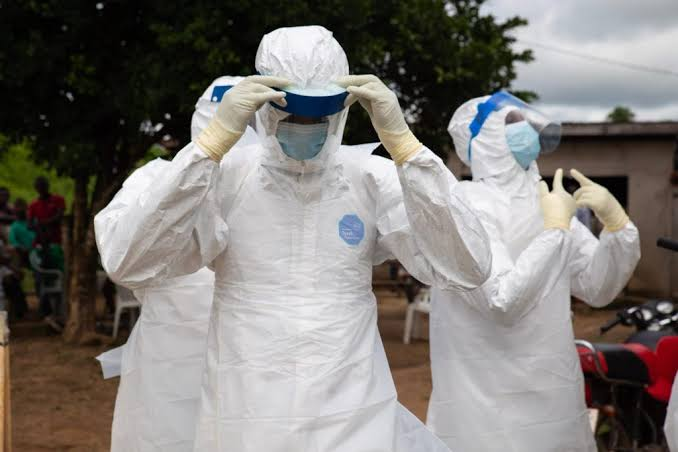
THE World Health Organisation (WHO) has called for urgent international support to contain the rapidly expanding Ebola outbreak in the Democratic Republic of the Congo (DRC), warning that the epidemic is outpacing the response.
Speaking during an online briefing on Thursday, WHO Director-General, Dr Tedros Ghebreyesus, said that the outbreak reached its two-month mark after being declared by the DRC government and had already become the third-largest Ebola outbreak ever recorded.
Ghebreyesus said that 2,073 Ebola cases and 796 deaths had been reported, with the outbreak spreading faster over the past month than any previous Ebola epidemic.
He noted that the 2018–2019 Ebola outbreak in the DRC took more than 10 months to reach 2,000 confirmed cases, underscoring the current outbreak’s unprecedented pace.
Ghebreyesus identified Ituri Province as the epicentre of transmission, where intense community spread continues to drive new infections.
According to him, more than 80 per cent of new infections are being detected outside known contact lists, indicating that several transmission chains remain undetected.
He added that nearly two-thirds of Ebola-related deaths were occurring in communities among people who never reach health facilities for treatment.
“In collaboration with Africa CDC and other partners, we are supporting the Congolese government to strengthen surveillance, treatment and emergency response activities,” he said.
The WHO boss reported that treatment capacity had increased to more than 800 beds, while laboratory capacity had expanded from one laboratory to 16 across affected areas.
“Contact tracing has also improved, with follow-up rates approaching 80 per cent, while more than 21,000 community health workers are being trained to support response efforts.
“Safe and dignified burial practices have improved significantly, helping to reduce infections associated with unsafe funeral practices,” he said
The director-general highlighted encouraging progress in research with clinical trials already underway for the monoclonal antibody MBP134 and the antiviral drug remdesivir.
He announced the launch of the first safety trial of the ChAdOx1 Ebola vaccine, led by the University of Oxford, alongside a new trial of the antiviral obeldesivir for post-exposure prophylaxis.
Ghebreyesus said 377 patients had recovered from Ebola during the outbreak, demonstrating that early diagnosis and appropriate medical care could significantly improve survival.
“In neighbouring Uganda, the country’s last confirmed Ebola patient is being discharged, marking the beginning of the 42-day countdown to declaring the outbreak over after recording 20 cases and two deaths.
“In spite of these gains, insecurity continues to undermine response operations, particularly in conflict-affected areas of eastern DRC,” he said.
According to him, an Ebola treatment centre in Bunia was attacked recently, further restricting access to affected communities and disrupting emergency operations.
He stressed that political support was needed alongside technical interventions to enable responders to safely reach communities experiencing active transmission.
According to him, priority actions include strengthening surveillance, improving clinical management, expanding community engagement and ensuring safe burials in Ituri and newly affected provinces.
He appealed to the international community to urgently provide financial support, noting that the joint WHO–Africa CDC Continental Preparedness and Response Plan still faces a funding gap exceeding 400 million dollars.
Ghebreyesus emphasised that investing in Ebola control is not charity but a critical investment in national, regional and global health security.
On immunisation he highlighted progress in global childhood immunisation, reporting that 90 per cent of infants received at least one dose of the diphtheria, tetanus and pertussis vaccine in 2025.
Ghebreyesu said that an estimated 13.5 million infants remained “zero-dose” children in 2025, warning that many still lack access to lifesaving routine vaccines despite gains from the Big Catch-Up initiative.
He further released updated guidelines on dementia prevention, urging countries to address modifiable risk factors and integrate brain health into primary healthcare and healthy ageing programmes.
The WHO boss called on governments to strengthen road safety ahead of the upcoming United Nations High-Level Meeting on Road Safety, urging countries to adopt comprehensive national strategies to reduce deaths and serious injuries by 2030.(NAN)
F.O
Tags: DRC Ebola outbreak WHO seeks urgent Global support