

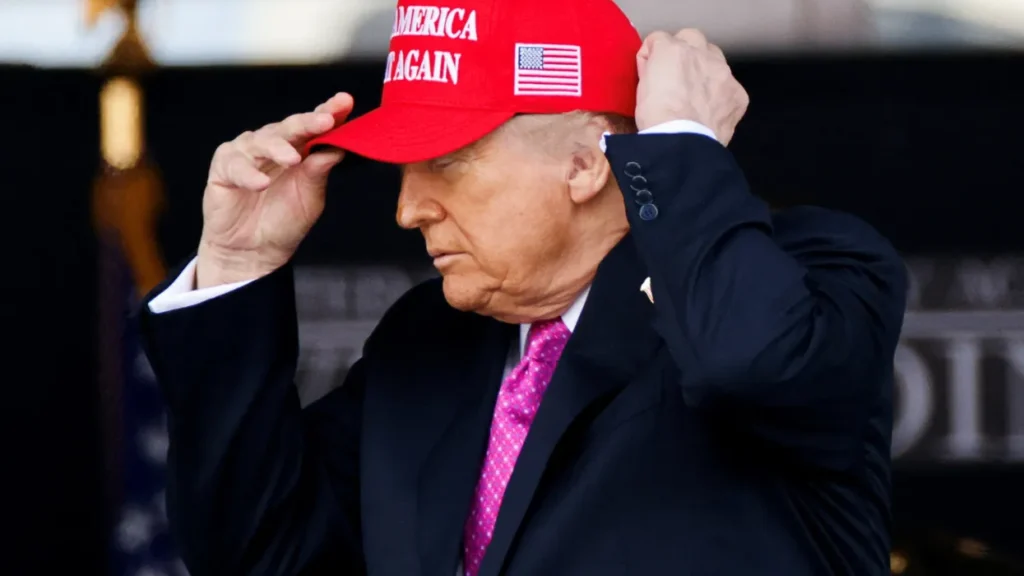
White House insiders fear one of President Donald Trump’s obsessions will make things worse for the GOP ahead of the midterm elections, Politico reported Thursday.
Trump’s decision to start ramping up his highly unpopular tariffs again is adding to Republican woes at a time when they need to have something to offer voters who are frustrated with the president’s economy, according to Politico.
“Everything that you do that’s not focused on affordability is not helpful,” an administration official confided to Politico. “Anything that you’re doing that is not on the plus side of the scale is a problem. When you announce new tariffs, it’s not like, okay, well, let’s see what they do. It’s, ‘Oh c—, those are the bad things.’”
The administration’s tariff threats are detonating inside the White House, according to the report. Republicans worry that new levies on Canadian goods and generic medications will inflame voters already blaming tariffs for persistent inflation as the midterm election approaches.
Proposed tariffs could drive up prices on items Americans buy regularly—”alcohol, bacon, heart medication”—exactly the kind of consumer pain Republicans cannot afford heading into November when economic anxiety dominates voter concerns, insiders told Politico.
Republican strategists think tariffs are electoral poison unless they’re being reduced and expansion sends the wrong message to exhausted voters, Politico reported.
A White House insider told Politico they are comfortable with the threat — with a caveat. “But actual revenue coming away from people’s pocketbooks is not what Republicans are happy with,” said the insider. “Any conversation about tariffs, unless it’s reducing them, is a bad conversation for Republicans.”
White House officials are attempting damage control, arguing the tariffs are “surgical and narrowly targeted,” with enough lead time before implementation to minimize consumer impact before voters head to the polls, according to Politico. They contend real affordability concerns center on housing and fuel costs, not sporting goods and spirits.
However, Canadian Senator Peter Boehm, chair of Parliament’s Senate Committee on Foreign Affairs and International Trade, expressed doubt that lower tariffs would reverse consumer behavior anyway.
“I think we’re getting into an ugly phase, if there are concessions about getting U.S. alcohol back on the shelves,” he told Politico. “There’s no guarantee that the consumer is going to go out and buy them.”
Maine business leaders warn of broader consequences.
Peter Woodcock, CEO of the Maine Chamber of Commerce, cautioned that tariffs on Canadian goods—paper, wood products, and other essentials—would ripple through Maine’s economy regardless of administration assurances.
“We do not go unscathed from this,” Woodcock warned. “There are hundreds of Maine companies that will be reviewing this and assessing its own impact on them today. If this escalates and starts encompassing additional products that would be particularly concerning.”