

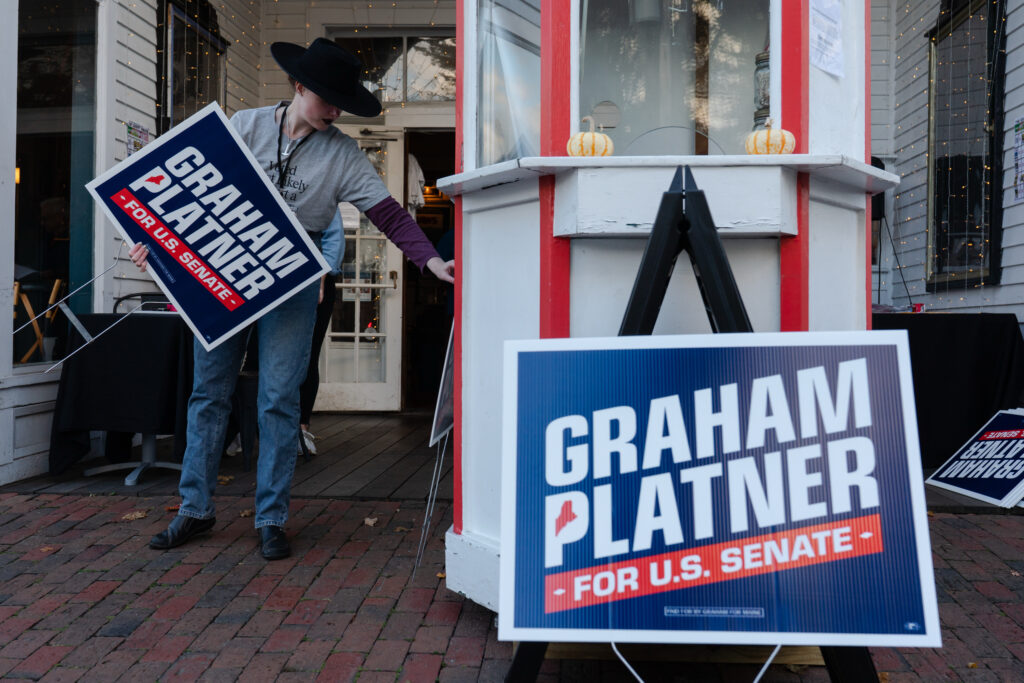
The fatal miscalculation by the liberal activists who fueled the rise of an unknown 41-year-old Maine oyster farmer and combat veteran was not that they failed to vet Graham Platner.
It was that, in today’s win-at-all-costs political environment, they didn’t think they needed to.
His backers were dazzled both by the prospect of putting forward a talented political outsider to take his shot at flipping a must-win Senate seat — and by the rebuke it would be to their own party’s entrenched establishment.
Though a rushed early scrub of Platner’s background had revealed a few potential problems, including some offensive posts that he had made on social media, his top strategist, Daniel Moraff, argued in a June interview with the Wall Street Journal that Mainers would actually view his flaws as selling points in his bid to unseat Republican incumbent Susan Collins.
“If what the voters wanted were people who were grown in vats and had never done or said anything that they might regret their entire lives, we’d have a very different country,” Moraff told interviewer Aaron Zitner. “Part of our thesis here is that people do not want their candidates grown in vats. They want people who are real human beings, and they want people who do not look and sound like the vat-grown people who’ve been leading this country off a cliff.”
And when red flags arose, the response of Platner and those behind his campaign was to lash out at the accusers and discount the evidence against him as politically motivated.
One problem with today’s electoral environment is that “we feel like once we have bought in, not only do we have to defend everything, but we also attack other people” who raise doubts and concerns, said Christina Reynolds, who led rapid response for Barack Obama’s and Hillary Clinton’s presidential campaigns. “Online and in social media are places where you are all-or-nothing.”
This kind of mentality has gained a foothold in both parties, she said, and added: “I don’t think Platner is going to be the only one to be an internet and online-activist favorite and prove to be an incredibly flawed candidate.”
For a while, the packaging of Platner as the platonic ideal of an insurgent champion seemed to work. He crushed the state’s sitting governor, Janet Mills, in the Democratic primary, proving so formidable against the candidate whom Senate Minority Leader Chuck Schumer (D) had recruited that Mills suspended her campaign 41 days before the election.
But revelations about Platner’s not-so-distant past had piled up. They included that for two decades he wore a skull-and-crossbones tattoo known to be Nazi imagery (a connection he claimed to have been unaware of); that he had been sending sexually explicit texts to multiple women while he was married and until shortly before announcing his campaign; and reporting by the New York Times that he had exhibited violent behavior in past romantic relationships.
On Monday came what appears to be a final, unsurvivable blow for Platner: Jenny Racicot, a woman who said she previously dated him, alleged in interviews with multiple news outlets, including The Post, that he had sexually assaulted her in her home in 2021.
Even before Racicot went public with her allegation, polls were showing his image was already in negative territory. In a New York Times/Portland Press Herald/Siena survey conducted late last month, 76 percent said they had heard a lot about controversies surrounding Platner, with 52 percent saying the information meant they couldn’t support him or had questions about whether they could.
Platner adamantly denied having engaged in “nonconsensual behavior” with Racicot, but said he recognizes the growing reality of his situation. “We are taking the time to reflect on the best path forward for the state that I love, the people that I love, the movement I belong to, and the goal of defeating Susan Collins,” he said in a video.
Meanwhile, there has been a stampede of other Democrats — including Sen. Elizabeth Warren (D-Massachusetts), who once called Platner “my kind of man” — withdrawing their endorsements.
“With so much at stake, the best path forward is for Graham Platner to step aside as the Democratic nominee and address these serious allegations outside this Senate race,” Warren said in a statement.
Maine’s Democratic Party and the Senate Democratic campaign arm also pulled their support and called for Platner to step aside.
The question has now all but certainly become not if, but when Platner will do it. Maine law stipulates he must by Monday, if the state party is to have an opportunity to put a replacement on the ballot.
Democrats, meanwhile, will have to reckon with the very real possibility they have squandered their opportunity to pick up what had once been considered a highly winnable Senate seat, and with it, their chance of regaining control of Congress.