

Foreign
The United States and Iran have exchanged fresh military strikes following attacks on three oil tankers in the Strait of Hormuz, marking the most serious escalation between the two countries since they signed an interim agreement in June.
According to a report by the BBC, authored by Amy Walker and Tabby Wilson, the U.S. Central Command (Centcom) on Tuesday launched what it described as “powerful” strikes against more than 80 Iranian military targets.
The report said the strikes targeted air defence systems, coastal radar installations, missile launch sites, command centres and fast attack boats.
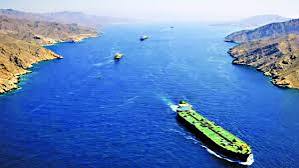
Centcom said the operation was in response to attacks on three commercial oil tankers transiting the Strait of Hormuz.
It said the action was intended to impose “heavy costs” on those responsible for targeting commercial shipping in the strategic waterway.
The BBC reported that Iran retaliated on Wednesday by launching missiles and drones at U.S. military facilities in Bahrain and Kuwait.
Iran’s Islamic Revolutionary Guard Corps (IRGC) said about 85 U.S. military sites, including a U.S. Navy headquarters and an air base in Kuwait, were targeted.
Iranian state media reported that U.S. strikes also hit Qeshm Island, Bandar Abbas and Sirik in southern Iran, with several people reportedly injured by shrapnel.
The report added that an Iranian Guardsman, Mohammadreza Khazini, was killed while responding to what authorities described as enemy drone attacks.
Following the renewed hostilities, global oil prices rose, with Brent crude increasing by more than three per cent to about 76 dollars per barrel.
The BBC reported that NATO Secretary-General Mark Rutte described the U.S. military action as “absolutely necessary,” arguing that Iran had violated the ceasefire following attacks on commercial vessels.
Meanwhile, Washington revoked its temporary suspension of sanctions on Iranian oil sales.
Iran’s Parliament Speaker, Mohammad Bagher Ghalibaf, accused the United States of breaching the Memorandum of Understanding signed between both countries last month.
He said the sanctions reversal and military strikes demonstrated what Tehran described as U.S. bad faith.
“The era of bullying and extortion is over. It leads nowhere. We don’t fold,” Ghalibaf was quoted as saying.
Iran’s Foreign Ministry also condemned the sanctions decision, saying it violated the June memorandum and reflected the “bad faith, inconsistency and unreliability” of the U.S. government.
The ministry warned that Tehran would take whatever measures it considered necessary to safeguard its national interests and security.
The BBC further reported that talks on a permanent agreement between both countries remain suspended following the death of Iran’s Supreme Leader, Ayatollah Ali Khamenei.
Funeral ceremonies are ongoing, with burial scheduled in Mashhad on Thursday.
The report said it remains unclear when negotiations would resume following the latest military escalation.
According to the BBC, Qatar and Saudi Arabia also condemned attacks on oil tankers linked to their countries, accusing Iran of responsibility.
Iran, however, rejected the allegations, insisting it remained committed to ensuring safe navigation through the Strait of Hormuz while warning that vessels operating outside agreed maritime procedures faced safety risks.
The BBC recalled that the United States and Iran had signed a 14-point Memorandum of Understanding in June aimed at extending a ceasefire and restoring stability in the region.
The agreement also provided for future discussions involving Iran, Oman and other Gulf states on the administration and maritime services in the Strait of Hormuz.
Source: BBC report by Amy Walker and Tabby Wilson.
F.O
Tags: US/Iran Air strike