

Burnham separately appointed Jonathan Reynolds as Secretary of State for Business, Innovation, Science and Trade, dissolving the Department for Science, Innovation and Technology, or DSIT, and merging it with the Department for Business and Trade that Reynolds had previously overseen.
The Culture Department will also expand, overseeing digital transformation and online harms, which had also been a part of DSIT.
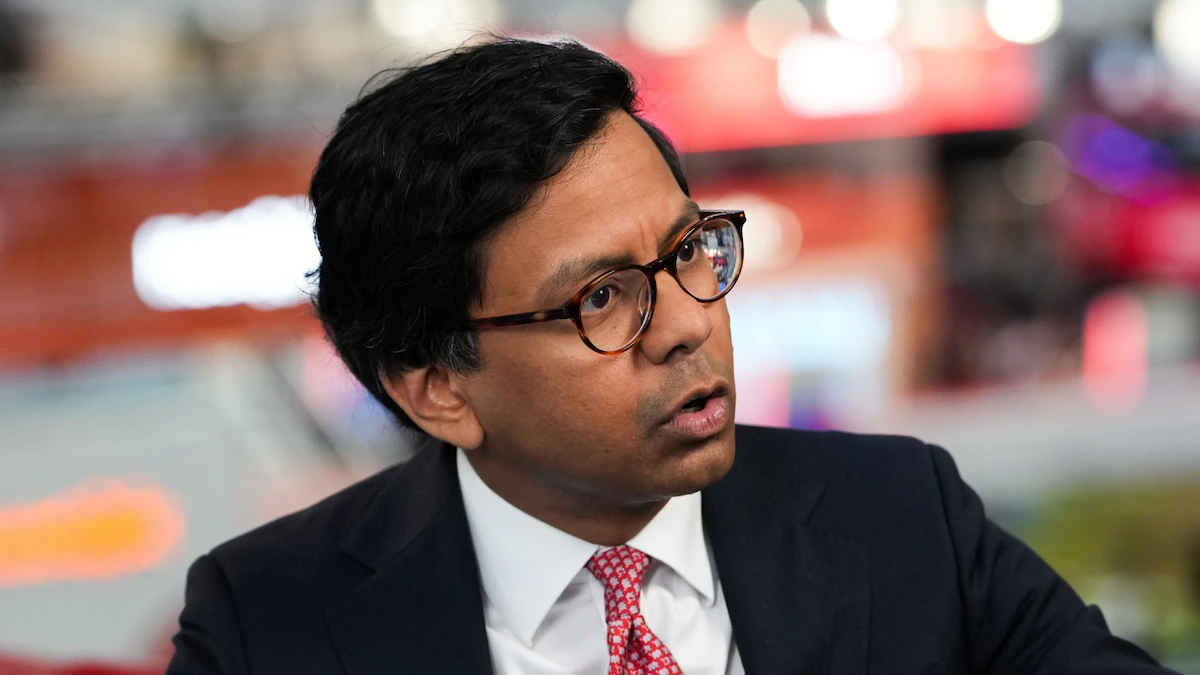
Narayan, a Labour politician from Wales, was appointed minister for AI and online safety in September 2025 under Burnham’s predecessor Keir Starmer. As a junior minister, he served under technology secretary Liz Kendall, who was ousted by Burnham on Monday alongside senior ministers who served under Starmer.
The UK’s artificial intelligence strategy is being watched closely beyond its borders. It’s home to a swath of venture capitalists, prominent AI operators — including Google DeepMind and startups like ElevenLabs and Wayve — as well as a coveted engineering talent pool.
After Brexit, the country tried positioning itself as a welcome hub for overseas tech investment, with a lighter regulatory touch than the European Union.
Still, Britain’s leaders have faced criticism for flip-flopping on tech initiatives and under-investing in computing resources. Some marquee digital infrastructure projects, including a planned OpenAI data centre, have been shelved or put on hold, in part because of the country’s high energy prices.
Britain isn’t the first G7 nation to appoint a high-level AI minister, with France and Canada establishing similar roles over the last two years.
Burnham, who took over on Monday after Starmer resigned this summer, has said little about his AI and tech strategy.
He and Narayan will be forced to take a position on the tech sovereignty debate in Europe. Officials in France and Germany want the continent to rely as little as possible on models and software from Silicon Valley, a call fueled by Washington’s willingness to cut off foreign access to cutting-edge models.
DSIT was formed in 2023 by Starmer’s predecessor, Conservative leader Rishi Sunak. The department has backed research programs in quantum computing and clean energy.
It also set up AI Growth Zones, designated areas for building data centres with approval processes and access to power. One of the first big projects — a campus from OpenAI and British cloud provider Nscale — hit a snag earlier this year after the ChatGPT creator pulled out, citing regulation and high energy costs.
At the time, Narayan pushed back on the idea that Britain’s rules and electricity prices were prohibitively high for large data centres.
The department oversaw the creation of the Sovereign AI Fund, a €500 million ($571 million) state-backed venture unit that has invested in a handful of British AI companies, including Ineffable Intelligence — a new AI model developer from a DeepMind alum and Alphabet Inc.’s Isomorphic Labs.