
Transcript: Former FDA commissioner Dr. Scott Gottlieb on "Face the Nation with Margaret Brennan," July 26, 2026

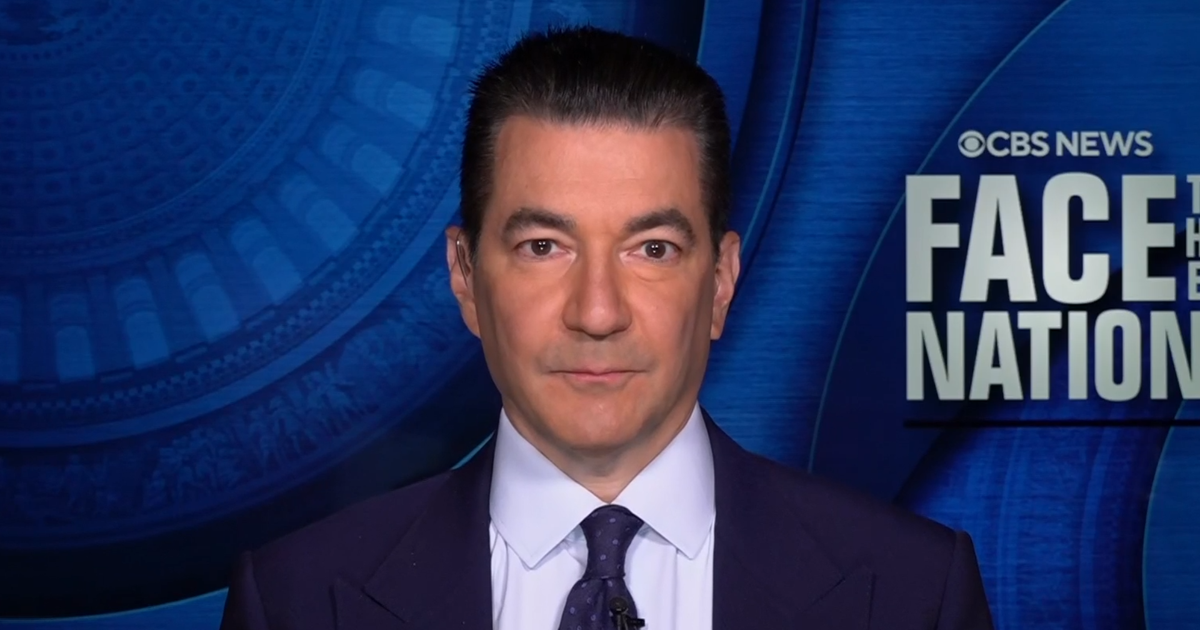
The following is the transcript of an interview with U.S. Ambassador to the United Nations Mike Waltz that aired on “Face the Nation with Margaret Brennan” on July 26, 2026.
MARGARET BRENNAN: We turn now to former FDA Commissioner Dr. Scott Gottlieb. He sits on the boards of Pfizer and UnitedHealth. Dr. Gottlieb, it’s good to have you back. We’ve got cyclospora outbreaks in nine states. It is now one of the nation’s largest foodborne illness outbreaks. HHS Secretary Kennedy says it’s under control. Do you think it is?
DR. SCOTT GOTTLIEB: I don’t think it’s under control yet, per se. I think that they’ve done a good job, FDA has, isolating this to central Mexico and some specific farms as well. It appears that a lot of these cases are emanating from farms in central Mexico, and there was probably some kind of event there. Remember, this particular parasite-the only known reservoir for it is human fecal matter, so probably sewage got onto those growing fields in central Mexico and contaminated those crops. Nobody’s sure how yet. And so by isolating it to that region, a lot of restaurants, a lot of wholesalers, retailers have been able to cut off supplies from central Mexico, and I think that mitigates the risk. I don’t think this is fully under control yet because we don’t know for sure that that’s the only growing region where this is coming from. But it does seem to be the case at this point. Some of the cases that are being reported right now probably are cases happening from other parts of the- the world and other parts of the country that are normal background cases that you see. There’s probably increased reporting, but clearly the bulk of these cases appear to be coming from that central Mexican region. It’s worth noting that Mexican authorities, public health authorities, deny that they’re responsible for this.
MARGARET BRENNAN: Well, I saw you recommended people buy heads of lettuce, not pre-chopped bags, buy locally, not from the grocery store. Why aren’t we hearing more from the current FDA commissioner on that kind of advice?
DR. SCOTT GOTTLIEB: Yeah, look, I think that there is some challenges with communications from the FDA. I think FDA has done a good job isolating this, and they were fast to do this. This is a hard pathogen to detect. There’s no really good test for it, so you can’t test for it in food. But there hasn’t been as much communication from the agency as you might expect. There are things that consumers can do. You can buy a whole head of lettuce, like you said, and chop it up rather than buying bag lettuce. There’s higher risk with bag lettuce. You can source locally. There haven’t been known outbreaks from locally sourced produce. Prior to 2016, 2017, we never saw this particular species in U.S. sourced produce. It started to appear in California produce, but certainly in lower levels than what you see in Mexico and South America. There is a weather component here.
MARGARET BRENNAN: There is, though, as you know, a public- public confidence crisis here when it comes to our health agencies. Our polling showed 47% of Americans do not have much confidence in the FDA to deal with the outbreak. That must hit hard as the former FDA commissioner. But it’s also in part in the public space. They’re looking not just at the personnel cuts, but like the Wall Street Journal is reporting that Taylor Farms, one of the companies that is- has been identified as- as selling some of the lettuce, at least that is in question. They contacted the White House to request a delay in announcing a recall, and the White House had the FDA join that call. That is not standard operating procedure, is it?
DR. SCOTT GOTTLIEB: No, it’s not, and it wasn’t standard operating procedure when I was at FDA. I dealt with outbreaks in romaine lettuce and spinach as well, E. coli in spinach and romaine lettuce. I never heard from the White House on those things, other than to have discussions to inform them of what we were doing, so that they were properly briefed and could respond to questions that they were getting. So it’s unusual. I don’t think it really led to a significant delay in the ability of FDA to communicate in this case, based on that reporting, probably days, certainly not weeks. I think the breakdown here really was with CDC in identifying that initial cluster. By and large, we were dependent upon public health officials in Michigan to isolate that cluster. CDC really didn’t seem to be as involved as the agency normally would be. Michigan public health officials led that response. Once they- once they isolated the cluster, however, the traceback to the farm and to the particular food source happened relatively fast. We had an outbreak of E. coli in romaine lettuce back in 2018. It took us many weeks to isolate that to a specific growing region. They were able to do that in a matter of, maybe days here, certainly weeks. So I think FDA worked pretty quickly to do it.
MARGARET BRENNAN: I want to ask you about the CDC announcement that there are now more measles infections in 2026 than in the past 35 years. The American Academy of Pediatrics warns it’s America’s children that are going to pay the price for this. Ninety-three percent of this year’s cases are among the unvaccinated, or the vaccination status is unknown. Should we, at any point, expect the Trump administration to lead a national campaign to get your kid vaccinated against measles, or did that die with MAHA?
DR. SCOTT GOTTLIEB: Yeah, look, I think we need to accept that measles elimination is no longer the policy of this administration or certainly Secretary Kennedy, and I wouldn’t expect any kind of concerted effort so long as he is in that position. This is his stated policy to, in some cases, discourage vaccination, but certainly not encourage it. And the children who aren’t getting vaccinated right now are babies. Once they age into settings where they can contract that disease – kindergarten, preschool, daycare – you’re going to see cases continue to rise in this country. It’s not going to go down; it’s going to continue to go up. Look at flu, for example. We had a record number of pediatric flu deaths last year, 298 pediatric flu deaths. We have almost 200 this year, and the secretary has said children don’t need to get vaccinated for flu. So this is across the board; it’s not just measles. These infections are very serious. There’s a lot of long-term sequelae, even if you survive the infection.
MARGARET BRENNAN: Let me quickly ask you. Supplement makers don’t have to do what pharmaceutical companies do in terms of proving through clinical trials that products are safe. There’s this push for this advisory board at the FDA to make, I guess, six peptides be added to a list of substances pharmacies can compound and produce. Is that wider access a good thing or a bad thing?
DR. SCOTT GOTTLIEB: Well, I think it’s a bad thing from the standpoint that there’s not any proven benefits from these compounds that are in question. These are compounds being formulated by pharmacies. They’re compounded products. They’re peptides that people inject. There’s risks associated with that, and there aren’t any proven benefits. The most popular of these is the substance called PBC-157,* which people have ascribed a whole range of health benefits to. The only clinical study that the FDA was able to review was a 30-patient clinical study in a setting of ulcerative colitis, where they found no benefit. So there isn’t clinical data associated with these, so I think there’s risk with no- no demonstrated benefit that people are going to derive.
MARGARET BRENNAN: Dr. Gottlieb, I’ve got to leave it there. Always good to talk to you. We’ll be right back.
EDITOR’S NOTE: This was in reference to the peptide BPC-157, not PBC-157.