

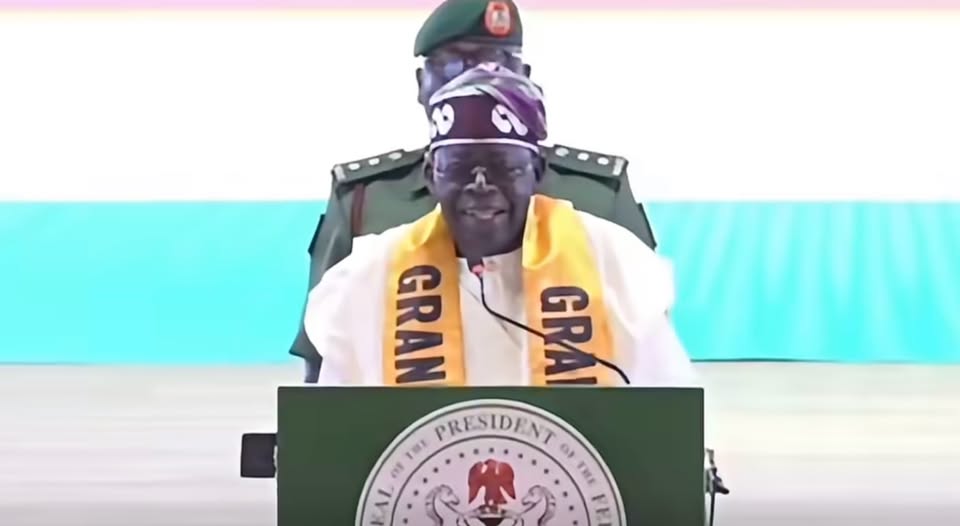
President Bola Ahmed Tinubu has urged Nigerian journalists to uphold the highest standards of professionalism by prioritising facts, accuracy and responsible reporting, warning against amplifying messages that could undermine national security.
Speaking on Thursday at the maiden State House Media Dinner in Abuja, the President cautioned media practitioners against becoming channels for misinformation or propaganda from individuals seeking to destabilise the country.
“We must not undermine our country with irresponsible reporting. If we do, we will have no safe space left, especially at a time when our nation is tackling security threats, neutralising thousands of criminal elements, and rescuing hostages. The media should not become an amplifier for those who wish to harm us,” Tinubu said.
He acknowledged that disagreements between the government and the media are an essential feature of democracy, stressing that both institutions have complementary roles in nation-building.
“There is always tension between the government and the press, but that is the nature of democracy. The government must act, the media must watch, the government must explain, and the media must question,” he said.
The President expressed concern over the increasing spread of misinformation, disinformation, fake news, deepfakes, voice and facial cloning, describing them as some of the major challenges of the digital era.
He urged journalists to resist the temptation to circulate unverified information or content capable of endangering national security.
Tinubu reaffirmed his long-standing support for press freedom, noting that he has consistently defended the rights of the media throughout his public life.
However, he maintained that freedom of expression and press freedom must be exercised responsibly and should not be used to spread falsehoods or deliberately mislead the public.
“While press freedom and free speech remain the bedrock of an open and democratic society, journalists and citizens must also not forget the imperative of balancing rights with responsibility and the duty they hold to society to report with care, accuracy and respect for facts,” he said.
READ ALSO: Tinubu’s NYSC reform agenda draws mixed reactions from Corps members
He further urged media organisations to choose “fact over falsehood, substance over sensation, and credibility over clickbait and the endless race for followers, likes and viral outrage.”
According to the President, professional journalism has become even more important in an era where artificial intelligence-generated content, misinformation and manipulated digital content are increasingly common.
“The public depends on journalists not merely to report events but to separate fact from fiction, truth from speculation, and evidence from opinion,” he said, adding that “in a world where everyone with a smartphone is now a journalist, the responsibility of professional journalism has never been greater.”
Tinubu also stressed that freedom of expression should not be interpreted as freedom to defame or intentionally mislead the public.
Describing the relationship between the government and the media as one of “partnership and healthy rivalry,” the President said both institutions share a common responsibility to strengthen democracy.
He explained that while government is responsible for providing leadership and public service, the media’s duty is to scrutinise those in authority, ask difficult questions and hold public officials accountable.
The President also defended existing laws regulating the digital space, including the Cybercrimes Act, saying they are designed to protect citizens from cyberstalking, identity theft and malicious falsehoods rather than restrict press freedom.
“These safeguards are not intended to weaken press freedom. Rather, they exist to protect citizens and preserve the integrity of our information ecosystem,” he said.
On the economy, Tinubu expressed optimism that his administration’s reforms were beginning to produce positive results, citing improved public revenues, increased allocations to state governments, renewed investor confidence, stronger foreign reserves and fresh investments in the oil and gas sector.
He also highlighted ongoing tax and fiscal reforms, describing them as critical foundations for sustainable economic growth.
Addressing security, the President said military operations had intensified across various parts of the country, supported by improved intelligence gathering and stronger collaboration among security agencies.
According to him, thousands of terrorists and other criminal elements have been neutralised, numerous hostages rescued and several communities reclaimed from criminal groups.
Tinubu concluded by calling for greater cooperation between the government and the media while preserving the press’s constitutional role as a watchdog.
“Let us replace needless hostility with constructive engagement. Let us replace sensationalism with professionalism. Let us replace the pursuit of outrage with the pursuit of truth,” he said.
He urged journalists and government officials alike to work together in building a nation where truth, accountability and democracy continue to thrive.