

The 2026 FIFA World Cup has produced plenty of winners on the pitch. Off it, one of the biggest might be Telemundo.
As the tournament delivers record audiences across broadcast television, Peacock and digital platforms, NBCUniversal’s Spanish-language network is doing more than posting blockbuster ratings. The World Cup is becoming the clearest demonstration yet that Hispanic audiences are among the most influential forces in American media — and that Telemundo has evolved into one of the industry’s most important platforms for reaching them.
The significance extends well beyond soccer. For years, Spanish-language television was often viewed as a complementary piece of national media plans, aimed at multicultural audiences rather than the mainstream. The World Cup is challenging that assumption. Record audiences, growing appeal among English-dominant viewers and unprecedented advertiser demand all point to the same conclusion: Hispanic consumers are increasingly central to how media companies and brands think about the American audience.
The World Cup has become the clearest proof of that shift.
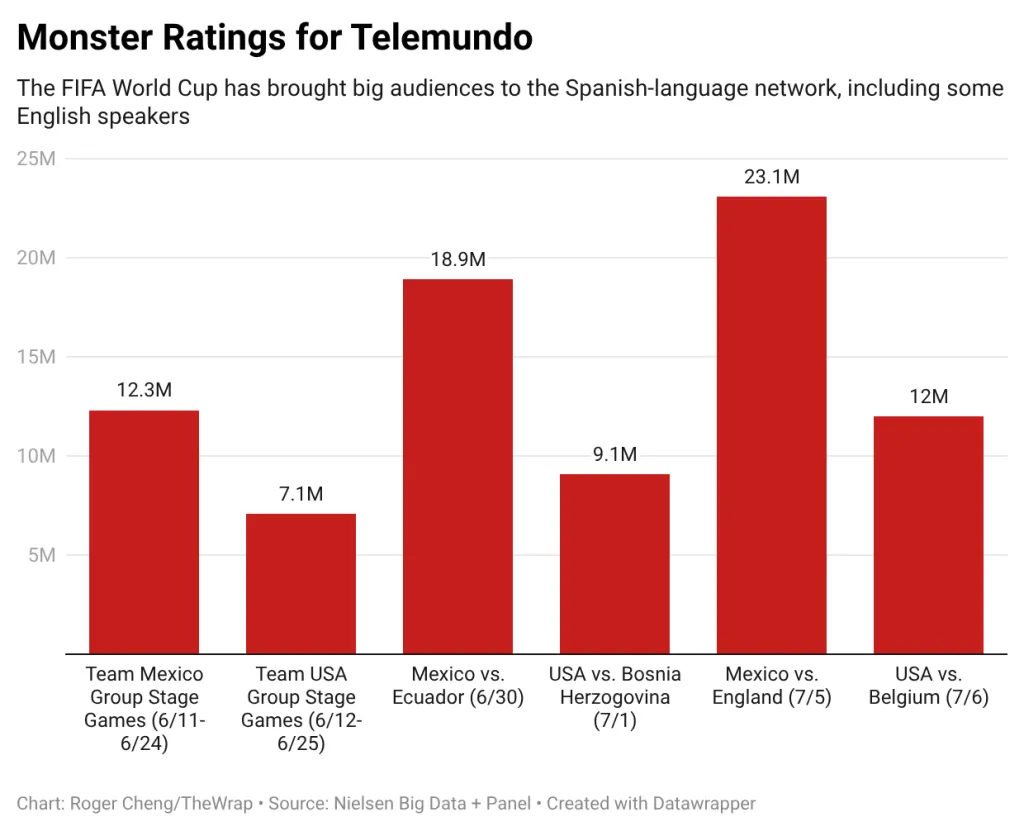
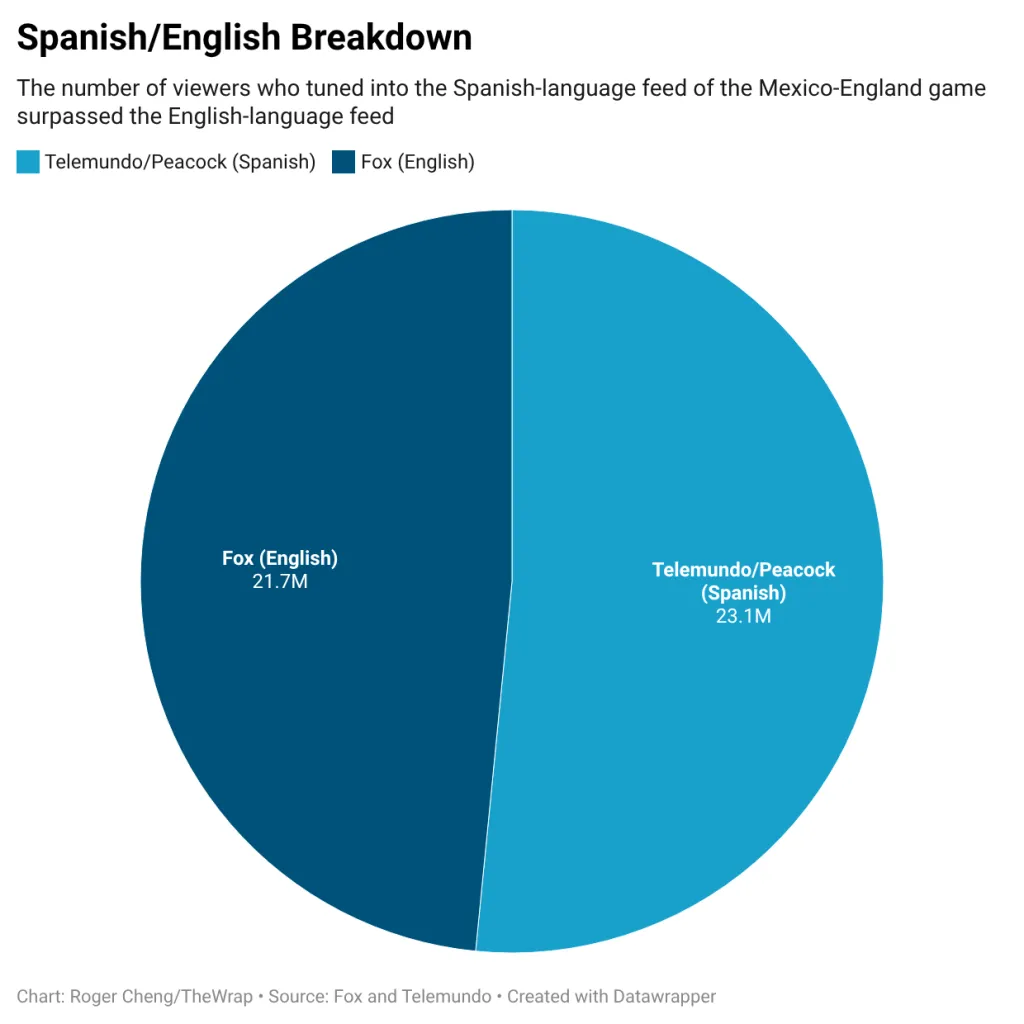
Telemundo has paired massive match audiences with a multiplatform strategy spanning broadcast television, Peacock, digital and social media, keeping fans engaged throughout the day instead of only during the matches. Nearly half of U.S. World Cup viewers are watching the tournament in Spanish, with the Round of 32 averaging 7.4 million viewers. The Mexico vs. England match was a high point for Telemundo, nabbing 23.1 million viewers across all platforms.
The audience itself reflects how the network’s reach is evolving. According to Nielsen, roughly 20% of Telemundo’s World Cup audience consists of viewers who speak English as their primary language, illustrating that the tournament’s appeal now extends well beyond traditional Spanish-speaking households.
The timing is particularly significant for NBCUniversal. Last month, Comcast announced plans to separate NBCUniversal into an independent publicly traded company, leaving the media and entertainment business to stand on its own after roughly 15 years under Comcast ownership. As executives make the case for NBCUniversal’s future as a standalone company, Telemundo’s World Cup performance provides a high-profile example of the strength of its broadcast, streaming and sports portfolio.
Tapping into a cultural moment
That success reflects a strategy NBCUniversal has spent years building.
“These results reinforce what we’ve believed from the beginning: today’s fans want to experience the World Cup on their terms — whether that’s on broadcast television, streaming, digital or social,” Telemundo Sports EVP and head of streaming, Joaquín Duro, said in a statement. “Our strategy has been to build a truly integrated experience across every platform, and it’s incredibly rewarding to see audiences responding the way they have.”
Duro said Telemundo has ranked as the No. 1 Spanish-language broadcast network in Total Day viewership since the World Cup began, reflecting engagement that extends beyond the matches through highlights, analysis and other tournament programming.
The advertising market has taken notice.
“For advertisers, this World Cup has felt fundamentally different because brands recognized from the outset that bringing the tournament to North America would create one of the biggest cultural moments of the year,” WPP Media head of sports investment and content partnerships, Marty Blich, told TheWrap.
According to Blich, most WPP clients committed to World Cup advertising 18 to 24 months before kickoff — compared to roughly six months ahead of the 2022 tournament in Qatar — while overall client investment has tripled.
“That kind of growth only happens when brands and their agency partners approach an event like this as part of a long-term marketing strategy, rather than a short-term media buy,” Blich said.
The power of the Hispanic market
The surge in advertising isn’t noteworthy simply because it represents additional revenue for NBCUniversal. It also reflects how marketers increasingly value Hispanic audiences. Rather than treating Spanish-language media as a separate multicultural investment, brands are increasingly viewing Hispanic consumers — and the bilingual households that make up a growing share of Telemundo’s audience — as central to national campaigns.
NBCUniversal’s own sales figures reinforce that trend. Ahead of the tournament, the company said it had sold roughly 90% of Telemundo’s World Cup advertising inventory and doubled advertiser commitments compared with the 2022 World Cup, while also reporting strong demand across Peacock and digital platforms.
The company also says advertisers are seeing measurable returns. According to MediaProbe research commissioned by NBCUniversal, viewers of Telemundo and Peacock’s Spanish-language World Cup coverage became increasingly receptive to participating brands as the tournament progressed. By the knockout rounds, viewers were 12% more likely to view World Cup advertisers favorably, 12% more likely to consider those brands relevant and 16% more likely to recommend them than they were during the tournament’s opening week.
For Blich, those trends are unlikely to disappear with the final whistle.
“This tournament became a true cultural platform because of a unique convergence of factors: soccer’s continued rise in the U.S., strong audience demand and a team that gave fans reason to rally,” he said.
WPP expects brands to continue investing in premium live sports and culturally significant moments, including women’s soccer and other major international competitions.
The World Cup will end, but its broader significance for the media business is likely to endure.
More than anything, the tournament has demonstrated that Telemundo is no longer simply the Spanish-language home of soccer. It has emerged as a mainstream media platform whose growing reach, cultural relevance and increasingly diverse audience reflect the changing face of America.
The advertisers followed that audience this summer. The rest of the industry is positioned to do the same.