


For the health of the American economy, tax rates on wealthy Americans will need to rise in the coming years. The rates have fallen over the past half-century even as the incomes of the wealthy have soared. And the United States has a large and growing federal debt that will require a mix of tax increases and spending cuts to reduce. Raising taxes on the very rich is among the most obvious, least economically damaging and most politically popular ways to address the problem.
Yet any attempt to raise taxes on the wealthy inevitably inspires political pushback from the wealthy. The core argument tends to be the same: Tax increases on us will end up hurting the economy and, by extension, everybody else. The argument is not always wrong, but it often is.
The recent debate over a tax on high-priced second homes in New York City, known as the pied-à-terre tax, offers a useful case study. The State Legislature approved the tax in May, with the support of both Gov. Kathy Hochul and Mayor Zohran Mamdani, and it has gone into effect this month, helping to pay for priorities such as expanded preschool.
The pied-à-terre tax involves local and state governments, rather than the federal government. Still, it has inspired a version of an argument that the country will need to have repeatedly in the coming years — overtaxing the wealthy. The outcome should offer hope to anybody who is concerned about government deficits or inequality. In New York, the better economic argument prevailed.
The tax, imposed only on expensive second homes, is not a new idea. In New York, its advocates began pushing for it more than a dozen years ago. The city of Vancouver, British Columbia, enacted its version, known as the Empty Homes Tax, in 2017. Toronto, Montana and Rhode Island followed in the last several years, with Rhode Island’s version known as the Taylor Swift tax, after her mansion on the state’s coast. Singapore and Paris have had such taxes for even longer.
In New York, the tax applies to homes that are not the owner’s primary residence and are worth about $5 million and above. Part of the rationale is that the owners of these homes often do not have to pay the city’s income tax, which applies only to people who spend at least 184 days a year in the city. As a result, these part-timers benefit from New York’s services and infrastructure — garbage collection, snow plowing, public transportation, policing and so on — without paying their fair share.
The tax addresses a pernicious form of tax avoidance. Many top earners carefully structure their lives to spend fewer than 184 days in New York while basing much of their activity here. The new tax tells them they can no longer have it both ways. It also takes a small step toward reducing the city’s vast income inequality.
The tax will be assessed annually, and by the second half of 2028 it will impose a rate of 0.8 percent on homes with a sales value between $5 million and $15 million. Somebody who owns a $10 million second home, for example, will face an annual bill of $80,000, on top of the existing property tax rate. The new rate will rise to a maximum of 1.3 percent a year, for homes worth more than $25 million.
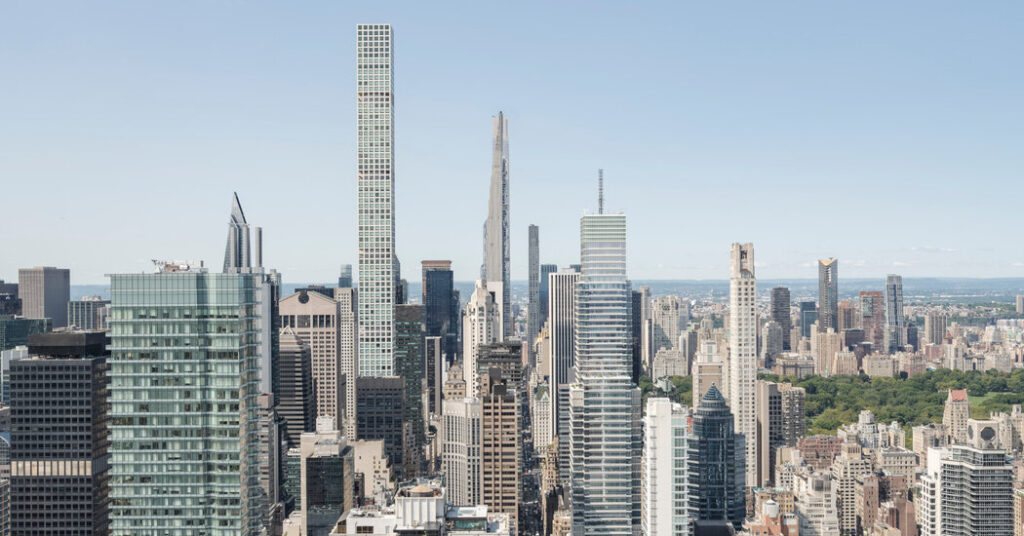
The most notorious home involved in the debate is the 24,000-square-foot apartment on Central Park South that Ken Griffin, the hedge fund manager, bought for $238 million in 2019, the most expensive home sold in the United States. Mr. Mamdani singled out the apartment in a video about the pied-à-terre tax, infuriating Mr. Griffin. When added to Mr. Griffin’s current property tax bill, the new tax means that he will pay a total property rate of about 1.7 percent, which is only slightly above the city average for apartments. Until now, because the property tax system has been too lenient for expensive homes, Mr. Griffin has paid far below the average rate.
Nonetheless, he is one of the people who claim that the tax will significantly harm the city’s economy. He was so angry about it and the video that he briefly threatened to reconsider the construction of a $6 billion tower his company plans to build on Park Avenue. Real estate executives and lobbyists have spread their own scare stories. They say that the tax will lead wealthy people to flee, hurting the city’s finances and causing a slowdown in construction that will raise home prices for everybody.
Those claims make little sense. For one thing, the tax will apply to a tiny share of New York City’s housing units — fewer than 13,000 out of 3.6 million, according to the city’s most recent housing survey. The market for these luxury homes is too niche to shape the broader market. And the luxury market itself may not weaken much. The soaring inequality of recent decades means that many of these apartment owners have more money than they can easily spend. A modestly higher tax bill will not cause them to abandon their second home in New York’s pre-eminent social, cultural and business scene.
Mr. Griffin, after all, has not fled the city. He still owns his apartment and is proceeding with his new corporate tower.
The exaggerated claims about the pied-à-terre tax fit with a long history of anti-tax arguments. Whenever the federal government raises taxes on the wealthy, opponents claim that the economy will tank. They are usually wrong. Indeed, gross domestic product growth and job growth have been faster under Democratic presidents (who tend to raise taxes) in recent decades than under Republican presidents.
It is true that tax increases can bring trade-offs. If taxes rise too high, especially state and local taxes, wealthy people sometimes flee to other places. But New York’s pied-à-terre tax is both modest in size and narrowly targeted.
The tax leaves many problems unresolved. It will not pay for anywhere near all of the city’s needs, and the city still faces a large budget gap in the coming years. Nor will the tax solve the city’s convoluted and deeply unfair property tax system, which effectively taxes high-end brownstones and condos at a lower rate than single-family homes in working-class neighborhoods. The effective tax rate on rental units is also unfairly high.
The new tax will also not solve the city’s dire housing shortage. City and state leaders should take other steps to stimulate the construction of apartment buildings and to ease building regulations. As we have noted in recent editorials, the biggest determinant of a region’s housing costs is its supply, and New York has fallen behind other major cities.
But the appropriate yardstick of a new policy is not whether it solves every problem but whether it represents progress, and the pied-à-terre tax does. Ms. Hochul and Mr. Mamdani deserve credit for finding common ground between them. On several policy issues, the mayor has shown an admirable tendency for pragmatic compromise since taking office.
The state legislators who voted for the tax deserve praise, too. They did not allow themselves to be intimidated by fearmongering from some of New York’s most influential people. Most New Yorkers will benefit as a result.
The Times is committed to publishing a diversity of letters to the editor. We’d like to hear what you think about this or any of our articles. Here are some tips. And here’s our email: [email protected].
Follow the New York Times Opinion section on Facebook, Instagram, TikTok, Bluesky, WhatsApp and Threads.