

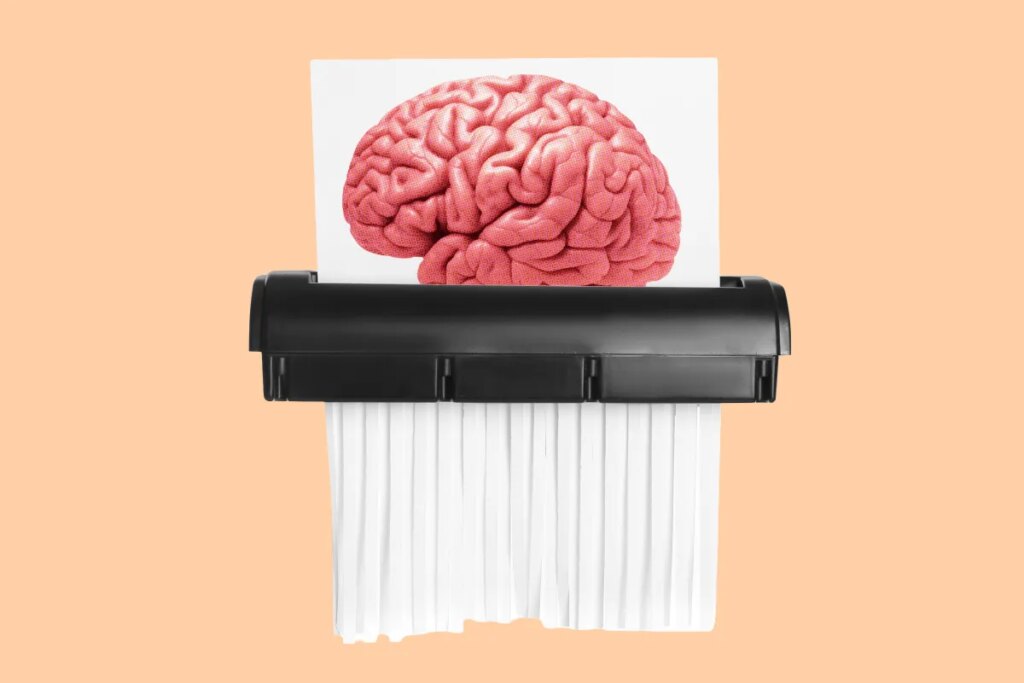
Our feeble simian brains simply aren’t built for the “polycrisis” of modern life, a new review of existing scholarship suggests.
This hypothesis, outlined in a new study published in the journal Behavioral Sciences, could partly explain why we feel so much stress and loneliness by understanding these mental states as a consequence of an “evolutionary mismatch.”
In a nutshell, we evolved to thrive in small, close-knit communities, and it’s backfiring now that we live in sprawling cities and have huge social networks. Long before we had smartphones to nuke our cerebrums, we relied on being finely attuned to the emotions and signals of others around us, at a time when a bad apple could doom the survival of everyone in the group or community. These same instincts are now overwhelming us, with technology making us more interconnected than ever before. If the invention of the telephone meant that everyone was now just a call away, now the vanity panopticon of social media means we’re constantly mindful of what everyone is doing — or acts like they’re doing — even if they aren’t immediately part of our lives.
That brings us to what may be the biggest factor at play: our unending sense of competition. Competition is useful to keep everyone honest, but at such a large scale it can make us feel judged and listless. That can come from work or popular culture at large. You might be making a fine enough living, but this competitive drive could leave you feeling unfulfilled.
“Competition is not new, but modern life can make it feel constant,” study lead author Jose Yong, a lecturer at James Cook University, Singapore, in a statement about the work. “An evolutionary perspective may help explain why people respond so strongly to comparison and the fear of falling behind, even when those signals come from strangers or screens rather than a small social group.”
There’s also just too much “stuff” happening in the world now, too, and we’re cursed to be aware of all it. Take the news. “In pre-digital societies,” the researchers write in the study, “awareness of conflicts and economic disruptions occurring elsewhere in the world remained low, but individuals today regularly encounter news about geopolitical escalation, financial turmoil, natural disasters, and social unrest.” We have such a preponderance of “stuff” going on the world that our new pastimes are prediction markets where we bet on the outcome of events as varied and random as the number of tweets Elon Musk will make in a week or if Cristiano Ronaldo will cry at the World Cup.
This study is a review, so it’s not bringing new data to the table. Still, it could be useful to for re-examining how we want to address the stress of modern life. We could focus on reshaping society, instead of insisting that someone who’s overwhelmed is to blame for their own diffidence.
“Stress, loneliness and anxiety are often treated as personal or lifestyle problems,” coauthor Sarah Chan, a research fellow at the Lee Kuan Yew Centre for Innovative Cities at the Singapore University of Technology and Design, said in the statement. “But they may also reflect a mismatch between the environments people live in and the conditions our minds and bodies evolved to navigate. That means we should think not only about individual resilience, but also about how cities and communities are designed.”
More on evolution: Scientists Publish Extremely Serious Research About Whether Tickling Apes Makes Them Giggle