

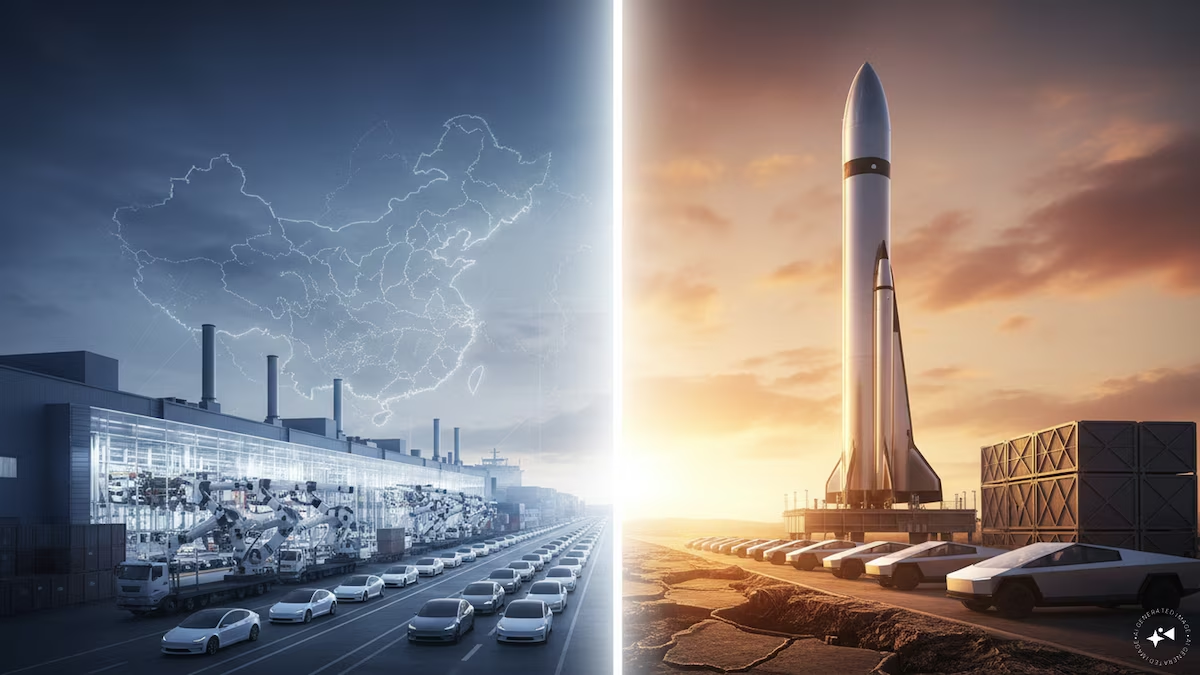
Some Tesla executives have reportedly been asked to prepare for the split, with advisers said to be weighing a spin-off, an outright sale, or even shutting the unit down. Nothing has been finalised, and the timeline for any move remains unclear, the report added.
Talk of a tie-up between Tesla and SpaceX has grown since SpaceX went public last month following a $75 billion listing that valued it at $1.48 trillion, comfortably above Tesla’s $1.22 trillion market capitalisation.
The two firms already work closely together — Tesla supplies Megapack batteries and Cybertrucks to SpaceX, while SpaceX’s chatbot Grok features in some Tesla cars. SpaceX also folded Musk’s AI venture xAI, now called SpaceXAI, into its fold back in February.
Musk has repeatedly hinted at combining the businesses without confirming anything. Earlier in July, he pointed to growing overlap between his companies rather than ruling out a merger outright.
On Tesla’s second-quarter earnings call last week, he went further, noting “more and more overlap, especially with Terafab,” before steering the discussion to Tesla’s legal team. Shareholder questions on a potential merger reportedly went unanswered during the same call.
SpaceX president Gwynne Shotwell has struck a similar tone, telling CNBC in June that merging the firms “might make Elon’s life a little easier.”
China roadblock
The complication is SpaceX’s status as a major US defence contractor, handling sensitive national security and satellite work. Tesla, by contrast, runs fully owned factories inside China — a combination that would raise regulatory red flags on both sides.
Splitting off the China unit would build a firewall between that business and Tesla’s American operations, addressing exactly this conflict.
Musk has reportedly told Tesla executives for years to keep a clear divide between the US and China arms of the company, so that if relations between the two countries soured, the American side could survive intact.
Options being discussed include a standalone sales entity for exports out of Shanghai and separate IT systems that would stop China-based staff accessing the rest of the company.
JPMorgan analysts have flagged the regulatory hurdles as a genuine sticking point, citing what they called a “practical bottleneck” given Washington’s scrutiny of SpaceX’s ownership and defence ties.
Shanghai’s weight
Any separation would be significant given how central Shanghai is to Tesla’s business. The plant is Tesla’s biggest and busiest globally, typically producing over half of all Tesla deliveries worldwide, with capacity beyond 950,000 vehicles a year, and it ships cars to Europe, Canada and Australia.
It also crossed four million China-built vehicles in December. China ranks as Tesla’s second-largest market after the US, though competition from local rival BYD is intensifying.
Tesla has long enjoyed unusual freedom there too, being the first foreign carmaker allowed to operate without a local joint-venture partner, unlike Volkswagen or General Motors.
More than 400 domestic suppliers back its Shanghai output, keeping costs low, with over 95% of parts for the Model 3 and Model Y sourced locally.
Musk joined other US executives, including Apple’s Tim Cook and Boeing’s Kelly Ortberg, on President Trump’s Beijing visit earlier this year.
(With input from agencies)