

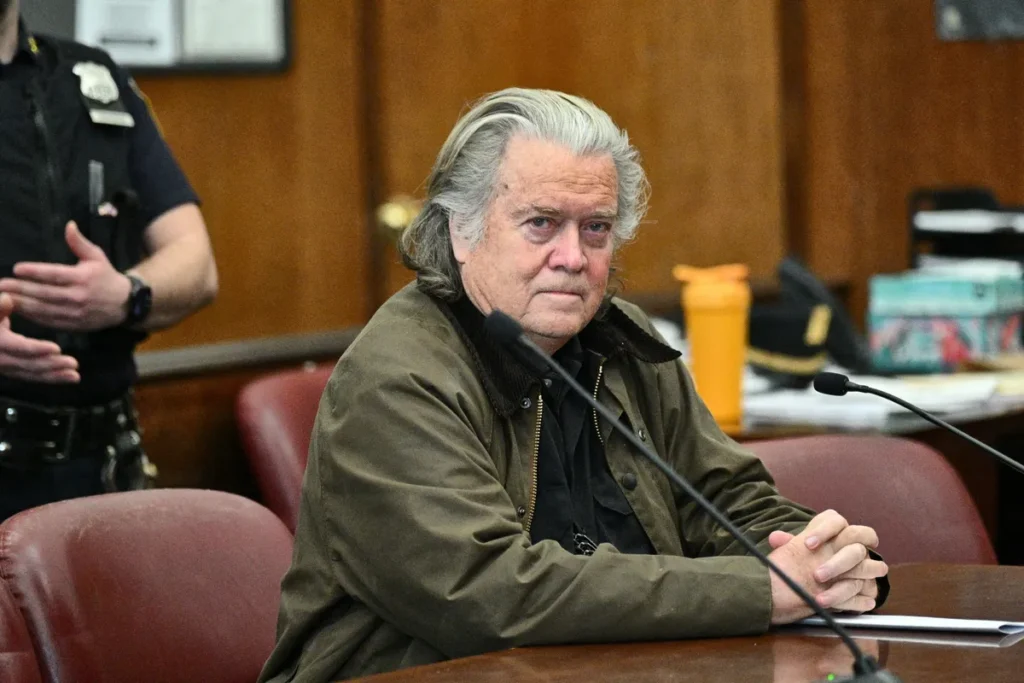
New court documents allege that pro-MAGA podcaster Steve Bannon was a secret operative helping President Donald Trump and the White House extort nearly $1 billion from the nation’s top law firms.
Trump’s personal lawyer, Boris Epshteyn, is also named alongside Bannon.
Bloomberg Law reported on Tuesday that Epshteyn connected at least two firms to the Commerce Department for trade work.
Neither man holds an official government job — and that’s the problem. The American Bar Association’s court filing argues that their communications with the White House cannot be shielded by executive privilege, the legal protection that lets presidents keep internal advice secret, because they are private citizens.
“Let me repeat this: There [are] major law firms in Washington, D.C.,” Bannon said in a televised interview. “What we are trying to do is put you out of business and bankrupt you.”
On March 19, 2025, White House senior policy strategist May Mailman sent an urgent message to White House counsel and Justice Department officials with a draft executive order attached — subject line: “ASAP Paul Weiss Order.” Internal government emails produced in the case confirm that Trump was personally directing the effort.
“Per POTUS, this EO needs to be ready now,” Mailman wrote with a draft titled “Solving_Paul_Weiss_v2.docx.”
The Trump administration targeted law firms with executive orders that stripped their employees of security clearances, cut their government contracts, and barred their lawyers from federal buildings. Nine firms ultimately paid — collectively promising nearly $1 billion in free legal work for causes Trump chose — to make the orders stop.
Sen. Sheldon Whitehouse (D-RI) has called the scheme “extortion.” And Lawfare explained that the term was legally defensible because prosecutors could argue “that the Trump administration extorted the law firms by accepting pro bono legal services, knowing that the law firms promised such services in the hope that President Trump would be influenced not to issue an executive order targeting the firms.”
The government is now fighting the American Bar Association’s attempt to subpoena Epshteyn for a deposition in a New York federal court. The White House has refused to hand over any of the 16 categories of documents the ABA requested, claiming the demands are too broad.
“Retaliation against [law firms],” one ruling warned, “casts a chill over the whole of the legal profession, leaving lawyers around the country weighing the necessity of vigorous representation against the peril of crossing the federal government.”