

By Princess Ose Aluede
Spain has deployed military personnel to support border authorities after thousands of migrants crossed into the Spanish enclave of Ceuta from neighbouring Morocco on Thursday, triggering one of the territory’s largest migration surges in recent years and intensifying debate over immigration, border security and humanitarian responsibilities.
Spanish media, citing government officials, estimated that between 2,000 and 3,000 migrants entered Ceuta within hours, although authorities said the final number was still being verified. The influx overwhelmed local reception facilities and prompted urgent appeals from regional leaders for additional resources.
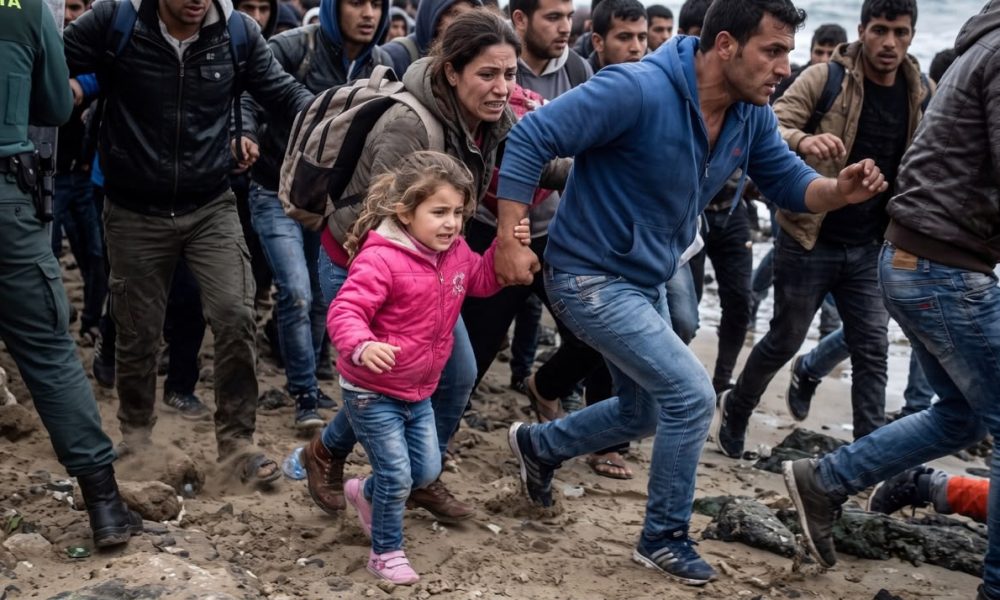
Many of the migrants reached Ceuta by swimming around the Tarajal coastal barriers, while others crossed on foot through border checkpoints. Images from the enclave showed large groups arriving along the shoreline as police, Civil Guard officers, soldiers and emergency responders worked to manage the rapidly evolving situation.
Ceuta, a Spanish territory on the northern coast of Africa, shares the European Union’s only land border with Africa through neighbouring Morocco. Along with Melilla, it has long been one of Europe’s most sensitive migration routes and a recurring flashpoint in Spain-Morocco relations.
The sudden influx quickly stretched Ceuta’s reception system beyond capacity. Juan Jesús Vivas, president of the autonomous city, described the situation as “unsustainable” and appealed to Spain’s central government for emergency assistance and additional security personnel, warning that local resources were insufficient to cope with the scale of arrivals.
Spain’s Interior Ministry said it was reinforcing security in coordination with Moroccan authorities and would continue processing or returning migrants in accordance with Spanish, European Union and international law. Prime Minister Pedro Sánchez was also expected to visit Ceuta as the government sought to contain the crisis.
Authorities also expressed concern over the humanitarian impact of the crossings. Reuters reported that nine bodies were recovered on Thursday, adding to dozens of migrant deaths recorded in the area in recent months.
The latest influx has reignited political debate in Spain, with opposition parties accusing Sánchez’s government of failing to secure the country’s borders, while government officials argue that criminal smuggling networks are exploiting vulnerable migrants and recent legal developments affecting migration enforcement. Authorities are examining whether a recent Supreme Court ruling limiting the summary return of some migrants who arrive by sea contributed to the surge.
The incident has drawn comparisons with the May 2021 Ceuta migration crisis, when more than 8,000 migrants entered the enclave in just two days, triggering a diplomatic dispute between Spain and Morocco and prompting a large-scale security response.
With Spanish and Moroccan authorities working to prevent further crossings, officials remain on high alert amid concerns that additional attempts could follow in the coming days.