

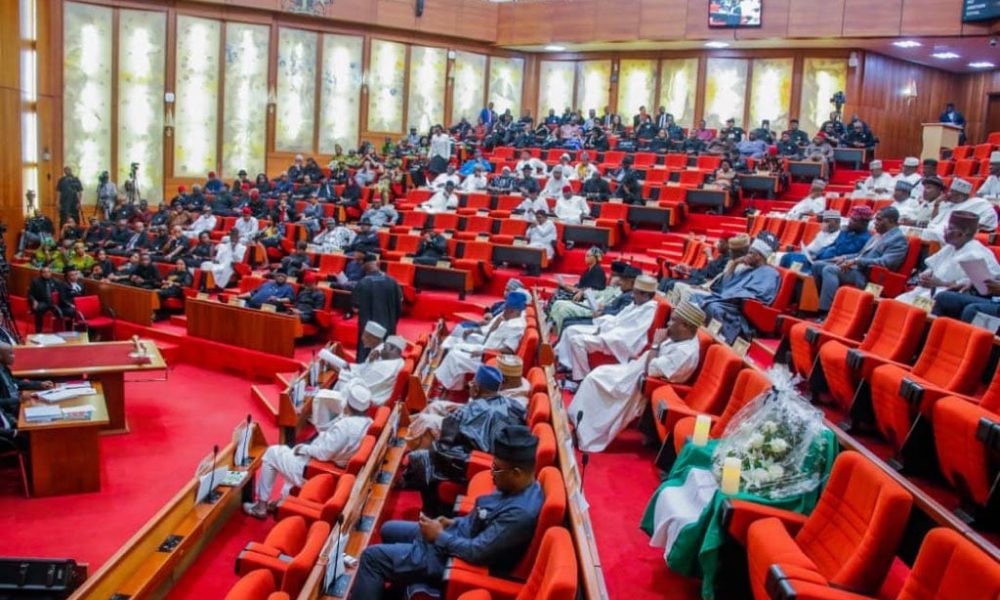
The Chairman of the Senate Committee on Media and Public Affairs, Yemi Adaramodu, has dismissed allegations that the National Assembly inserted a budgetary allocation for the Presidential Foreign Intervention Promotion Council in the 2026 Appropriation Act.
Adaramodu clarified that the budget provision in question was not created or introduced by the legislature, insisting that the controversy surrounding the allocation is an executive matter.
Speaking on the issue, the Senate spokesman said the upper legislative chamber would not make further comments because the matter is already the subject of legal proceedings before a competent court.
According to him, the Senate has no intention of commenting on issues that are currently under judicial consideration, in line with the principle of sub judice.
“The allocation was not created or inserted by the legislature. It is an executive matter, and since the issue is already before the court, the Senate will not comment further,” he stated.
The clarification follows public debate over the budgetary allocation for the Presidential Foreign Intervention Promotion Council, with questions being raised in some quarters over how the provision found its way into the 2026 federal budget.
Although the Senate declined to provide additional details, Adaramodu maintained that the controversy does not stem from legislative action.
The matter is expected to be resolved through the judicial process.
Public finance and governance experts say the controversy highlights the need for greater transparency throughout Nigeria’s budget preparation and appropriation process.
READ ALSO: PFIPC Saga: Gbajabiamila threatens N10bn lawsuit against Adeyemi
According to fiscal policy analysts, the federal budget passes through multiple stages—including preparation by the executive, legislative scrutiny, amendment and final approval—making it important for all institutions involved to maintain comprehensive records of any adjustments made during the process.
They note that public disputes over budget allocations can erode confidence in the appropriations process if not addressed promptly through clear documentation and institutional accountability.
Legal experts also observe that once a matter becomes the subject of ongoing litigation, public officials often refrain from making substantive comments in line with the doctrine of sub judice, which seeks to avoid statements that could prejudice judicial proceedings.
Governance specialists further argue that stronger digital tracking systems for budget proposals and amendments could improve transparency by allowing citizens to trace the origin of budgetary provisions from the executive proposal through legislative consideration to final approval.
They add that open budget practices and timely public disclosure of budget documents remain critical to strengthening accountability, reducing misinformation and enhancing public trust in Nigeria’s fiscal management system.