

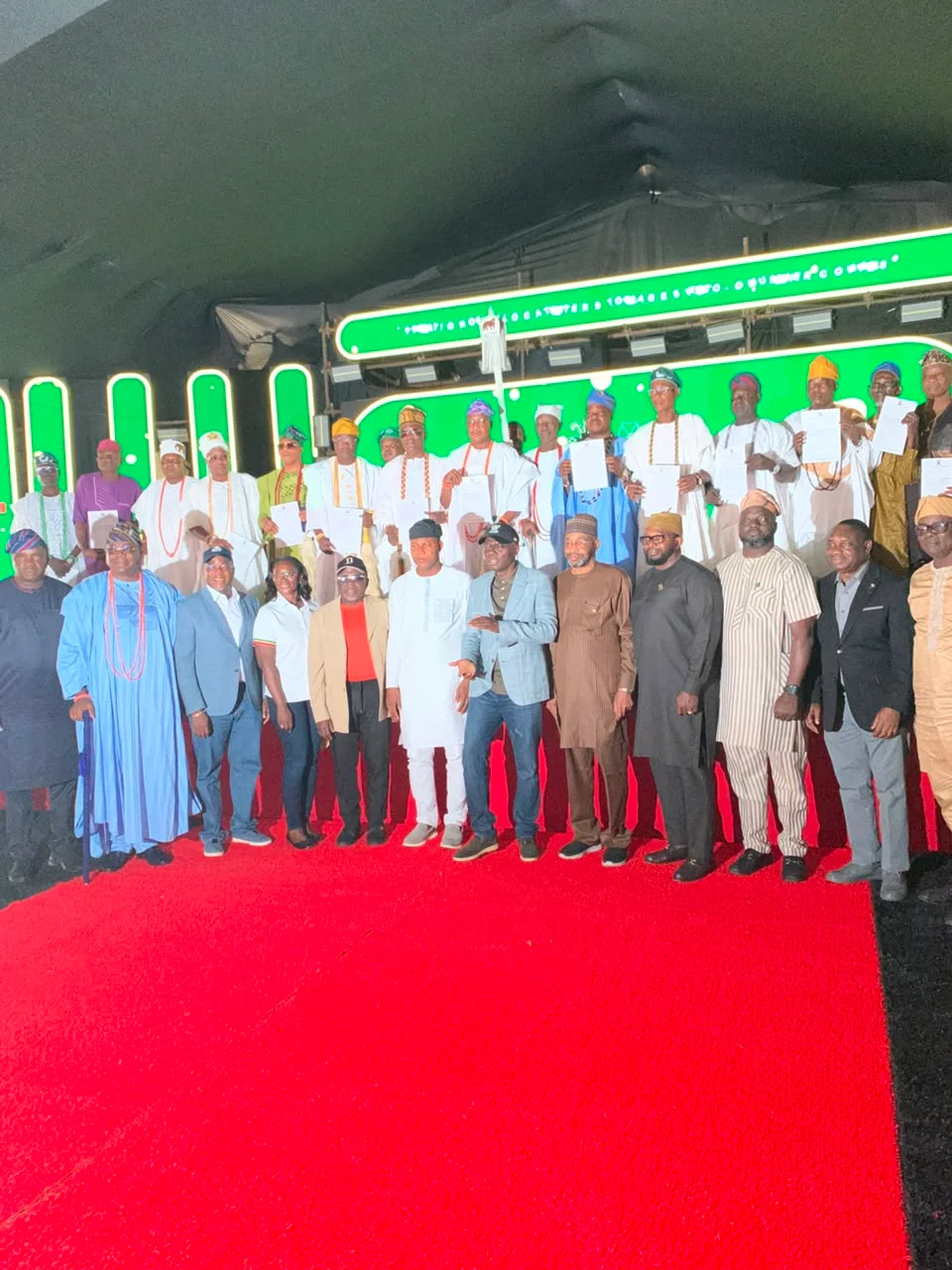
Governor Babajide Sanwo-Olu of Lagos State has presented land allocation letters to 98 villages within Ito-Omo and its environs, a move he described as a landmark step in integrating long-established settlements into the state’s future development and investment plans.
The initiative followed years of consultations with traditional rulers, community leaders, residents, and government agencies, alongside detailed surveys and planning by the New Town Development Authority (NTDA).
The presentation ceremony took place on Wednesday, at the Ito-Omo Link Bridge in Sangotedo, with traditional rulers, community leaders, and state officials present, reflecting the gathering years of consultations and planning.
Sanwo-Olu emphasized that the allocations recognize the communities’ contributions to the history and growth of areas such as Sangotedo, Epe, Ibeju-Lekki, and Eti-Osa.
“This act demonstrates our resolve to ensure that indigenous communities remain important stakeholders of the Government’s transformational projects,” he said.
The governor explained that the plan aligns with the state’s agenda, promoting orderly urban planning, improved infrastructure, economic growth, and sustainable development.
He reaffirmed his administration’s commitment to transforming Eti-Osa into a world-class urban hub, describing it as the “future Lagos” that will benefit both present and future generations.
General Manager of NTDA, Olakunle Aboyeji, noted that earlier proposals dating back to 1991 were stalled by accessibility issues.
He explained that in April 2020, NTDA presented a new development proposal to Sanwo-Olu, which was approved in August 2020, covering 16,300 hectares across 98 communities in Ibeju-Lekki and Epe.
Permanent Secretary of the Land Bureau, Kamar Olowosago, applauded the governor’s efforts and congratulated the beneficiaries, urging them to work hand in hand with the government to ensure sustainable development.
He stressed that the allocations provide greater security of tenure while preserving heritage and encouraging responsible growth.
This initiative underscores Lagos State’s determination to balance modernization with inclusivity, ensuring that indigenous communities are not displaced but instead integrated into the state’s ambitious urban transformation.