

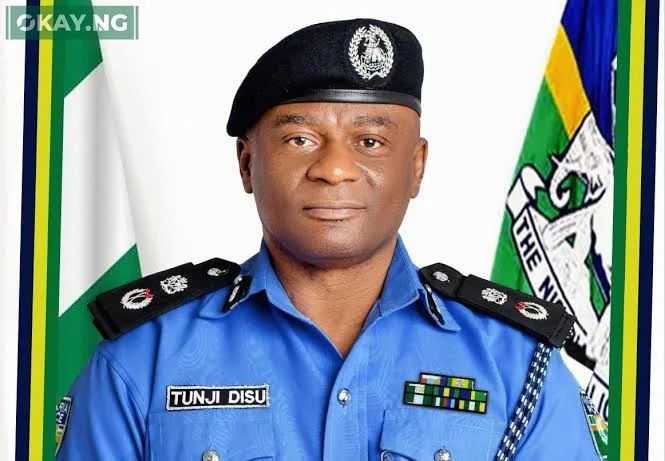
Nobody knows what to make of last week’s visit of the Inspector General of Police (IGP), Olatunji Rilwan Disu, to Osun State, nor the response of the sitting governor, Ademola Nurudeen Jackson Adeleke, to his entreaties. Whichever way we choose to look at it, there is a clear dysfunction here. In a country with strong institutions – or, better still, to borrow from Chapter 9 of South Africa’s post-apartheid constitution, a country with independent institutions supporting constitutional democracy – this exchange would not have taken place in the first instance.
The Constitution of South Africa specifically establishes independent state institutions to safeguard its democracy, including the Electoral Commission and various rights commissions. If we enjoyed that same standard of autonomous institutional health, our IGP would have simply ordered a thorough inquiry into the security situation in Osun State, tracing back six or seven months. Imbalances would have been corrected, and those found complicit, culpable or collaborating with lawbreakers would have been identified and rounded up. By now, they would be facing courts of competent jurisdiction.
Given the current climate, what truly happens next now that the IGP has concluded his high-level interactions with the governor and other critical stakeholders? Will the political thuggery and partisan lawlessness finally grind to a halt, and will the looming threats to public order be permanently banished? If the status quo remains unchanged, strategic victory and the political janjaweeds may well become Siamese twins.
It is deeply disturbing that the IGP told the governor that he merely “heard” rumours of thugs “hibernating in the Government House.” As the nation’s chief law officer – a man trained in command and operations – he should know that such a statement dents our national security architecture. In a functional democracy, his intelligence unit should have had an unambiguous, clear picture of the exact situation inside the state’s seat of power long before he arrived in Osun. A police chief has no business trading hearsay for hard intelligence.
There are dozens of personnel working in the Government House of any state. Elementary security logic dictates that, in a functional security landscape, some of them would act as informants feeding the police authorities as to the goings-on inside the seat of power. Based on such intelligence, the IGP should have issued a categorical order – one that the governor, carapaced by constitutional immunity, could not easily ignore or dismiss without creating a crisis. This is standard security practice in any democracy.
By the way, the response could have been more adequate for – and befitting of – the state’s helmsman if the governor had played his ace card by voluntarily offering the IGP a full inspection of the State House premises, or anywhere else he desired. By so doing, he would have evidenced a willingness to waive his rights. But he never did, leaving a cloud of suspicion over whether thugs had been harboured on the premises.
Be that as it may, the governor ought to realize that his primary duty as Chief Security Officer is to the entire state, not to any partisan entanglements – be it PDP, PDAccord, or any other party whatsoever. Given his constitutional responsibility for the security and welfare of all indigenes and residents, he owes it to posterity to choose to be a statesman who heals fractures, rather than a partisan divider. So, it should be in the governor’s best interest to be attractive, sharpen his strategies and fiercely reject any insinuation that his administration relies on informal, non-state actors operating as makeshift security outfits.
Beyond the heavy vocabulary of statecraft and defensive press statements, the street corner at Oke-Fia beats to its own rhythm. The ordinary man knows the unvarnished realities of the town: that structural gaps between the palace and the pavement remain unbridged. When institutional friction gets soaked in a mere spectacle of optics, it ends up keeping the security of the state hostage. Yet, even as leaders balance interests with ideals, the common turf at the bottom bears the strain.
Without mincing words, the encounter between the IGP and the governor was a clear indication of a fault line in Nigeria’s security landscape and a terrible blow to the proposed state policing system, even before it gets off the ground. What transpired at the State Government House on Friday, July 3, 2026, could best be described as a comic interlude of egregious dimensions. It speaks to a long road ahead with no good options, and it is a pity.
Nihil amplius.
May the Lamb of God, who takes away the sin of the world, grant us peace in Nigeria!
Email: [email protected].
Mobile: 08033614419 SMS only.