

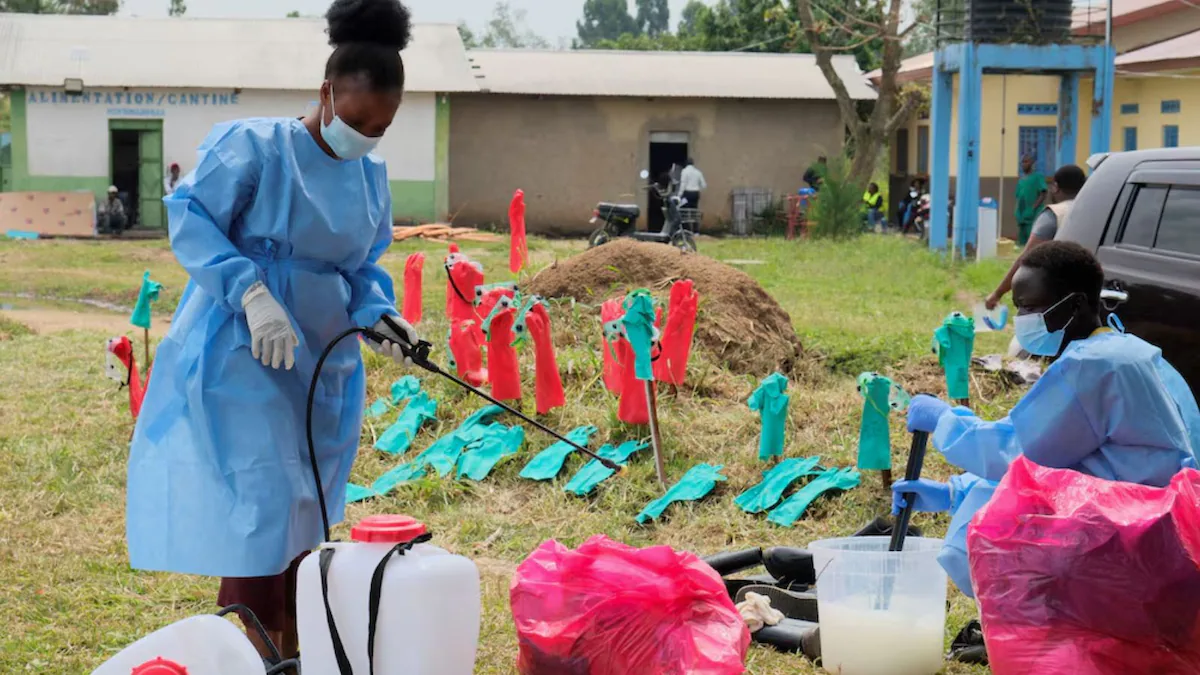
The early-stage trial, known as BD-Ebov, will evaluate the safety and immune response of the ChAdOx1 BDBV vaccine in 50 healthy adults aged 18 to 55 in Oxford, the university said on Monday.
Here are the details:
• Recruitment has begun, with vaccinations expected to start in the coming weeks pending regulatory approval.
• The vaccine was developed by scientists at Oxford’s Vaccine Group and Pandemic Sciences Institute using the same viral vector platform as the Oxford/AstraZeneca COVID-19 shot.
• Serum Institute of India, which is partnering on the programme, said it manufactured and stockpiled about 620,000 doses of the vaccine candidate within two weeks and supplied 4,000 investigational doses for the early-stage study.
• In May, the World Health Organization recommended prioritising ChAdOx1 BDBV vaccine, alongside a single-dose candidate known as rVSV Bundibugyo, being developed by the International AIDS Vaccine Initiative, for clinical evaluation as part of the response to the ongoing outbreak.
• The Coalition for Epidemic Preparedness Innovations said it would initially invest up to $8.6 million for the development of the shot.
• Preparations are also under way for additional clinical studies in Uganda, subject to regulatory approval, through partnerships including the Medical Research Council/Uganda Virus Research Institute and the London School of Hygiene and Tropical Medicine Uganda Research Unit.
• If the early-stage trial is successful, CEPI said it would work with Oxford and Serum Institute to support late-stage studies needed to seek emergency-use authorisation or full regulatory approval.
• The partners said they aim to ensure rapid and affordable vaccine supplies for affected countries.