

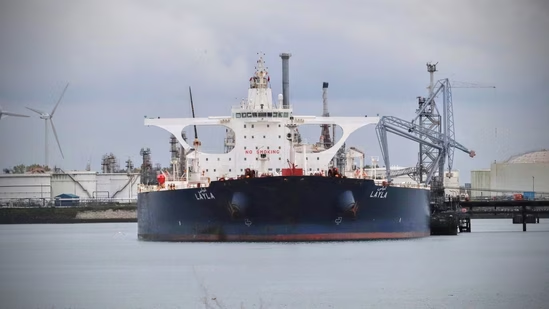
For a few weeks this summer you could look at the oil price and forget the Iran war had ever happened. In June America signed a deal with Iran, waiving sanctions on its enemy’s oil exports in exchange for ships’ safe passage through the Strait of Hormuz. As tankers rushed to exit the Gulf, a sudden “mini-glut” pushed Brent futures, the international benchmark, down to their pre-war level of $72 a barrel.
The squeeze is suddenly on again. After renewed Iranian attacks on tankers and 13 nights of American strikes Hormuz traffic has dwindled. In Yemen, Iran-allied Houthi rebels have declared a blockade of Saudi Arabia’s Red Sea ports, in retaliation for the Saudis’ own blockade of ports they control and strikes on the airport in Sana’a, the capital. They claim to have fired drones and missiles at Saudi oil facilities (though the Saudis have not commented). On July 23rd Brent touched $102 a barrel. Though it fell to $92 by July 27th that is still around 30% higher than on July 1st. Unless traffic resumes soon, it could top the $139 intraday high of 2022, after Russia’s invasion of Ukraine, and rise towards $150 by September, warns Jorge León of Rystad Energy, a consultancy.